
Tagged: Christianity
Does God have a body?
 Mormons teach that God the Father has a body of flesh and bones. And Jehovah’s Witnesses say Jehovah has a “spiritual body” that prevents Him from being omnipresent.
While these unbiblical views from our LDS and JW friends are not surprising, it may come as a shock to hear that some leaders of the Christian Word-Faith movement hold a similar view – and quote the Bible to support it
A case in point: Kenneth Copeland and Isaiah 40:12.
Copeland, perhaps more than any other prosperity preacher, has gone into great detail about God’s alleged bodily existence.
In a letter responding to an inquiry on the subject, Copeland lists a number of God’s bodily attributes, including back parts, a heart, hands, a finger, nostrils, a mouth with lips and a tongue, feet, eyes and eyelids, a voice, breath, ears, hair, head, face, arms, and loins.
Further, says Copeland, he wears clothes, eats, sits on His throne, and walks. Copeland has made the outrageous claim that God lives on a planet, of which the earth is an exact copy, only smaller. Says the televangelist: Earth is “a copy of the mother planet.”
The Gospel according to Mark
 Note: Names of people and tribes in this column are changed or abbreviated for security reasons.
He was born into the “T” tribe, known and feared as the Defenders of Islam on the Philippine island of Mindanao.
His father was an Imam, a Muslim spiritual leader.
And it was expected that he would follow in his father’s footsteps, joining his tribesmen in defending the religion Muhammad established 1400 years ago.
But then Mark went to trade school on the Island of Cebu to train in auto mechanics.
Is Mormonism necessary?
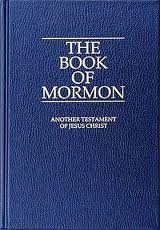 As the official version of the story goes, in 1820, 14-year-old Joseph Smith went into the woods near his home in rural New York to pray. There, God the Father and Jesus Christ appeared to him.
Caught up in the Protestant revivalism of his day, Smith inquired as to which of the Christian denominations he should join. None of them, he was told, because they were all wrong. “The Personage who addressed me said that all their creeds were an abomination in his sight,” Smith later recalled.
Smith was urged to take heart. God would use him to reinstate the true church, which had fallen into complete apostasy after the death of the apostles.
The Church of Jesus Christ of Latter-day Saints professes to be the restored true church. Its leaders claim that Joseph Smith faithfully rediscovered proper church organization – that is, the Aaronic and Melchizedek priesthoods – and the true gospel, which was lost due to “designing priests” that removed its “plain and precious” truths.
In short, the LDS Church declares itself the one true church, while all other forms of Christianity remain apostate.
And a third angel followed them – Revelation 14:9-11
Previously: A second angel followed – Revelation 14:8
The scripture
Rev. 14:9 – And a third angel followed them and spoke with a loud voice: “If anyone worships the beast and his image and receives a mark on his forehead or on his hand, 10 he will also drink the wine of God’s wrath, which is mixed full strength in the cup of His anger. He will be tormented with fire and sulfur in the sight of the holy angels and in the sight of the Lamb, 11 and the smoke of their torment will go up forever and ever. There is no rest day or night for those who worship the beast and his image, or anyone who receives the mark of his name.” (HCSB)
 A third angel followed them

A third angel follows the other two and pronounces woe on those who worship the beast and his image and receive a mark on their foreheads or hands. The consequences of rejecting God – who has revealed Himself in creation, conscience, Christ, and the canon of scripture – are spelled out plainly. The one who embraces the beast will experience the consequences of his or her rebellion.
First, the beast worshiper will “drink the wine of God’s wrath, which is mixed full strength in the cup of His anger” (v. 10a). The Greek word for “cup,” poterion, is used 82 times in the New Testament (HCSB) and denotes a drinking vessel of any sort. Commonly, a cup is a small bowl made of pottery, wider and shallower than today’s tea cups. However, the wealthy enjoy their drinks in goblet-shaped cups of metal or glass. The cup used at the Last Supper likely is an earthenware bowl large enough for all to share.
Figuratively, however, throughout the Bible the word “cup” may describe a measure of blessings or wrath divinely allotted to people or nations:
- In Psalm 16:5, David calls the Lord “my portion and my cup of blessing.”
- In Psalm 116:12-13, the writer declares, “How can I repay the Lord for all the good He has done for me? I will take the cup of salvation and call on the name of Yahweh.”
- But in Isaiah 51:17, the prophet warns, “Wake yourself, wake yourself up! Stand up, Jerusalem, you have drunk the cup of His fury from the hand of the Lord; you who have drunk the goblet to the dregs – the cup that causes people to stagger.”
- In the Garden of Gethsemane, as Jesus agonizes over His impending suffering and death, He prays, “My Father! If it is possible let this cup pass from Me. Yet not as I will, but as You will” (Matt. 26:39).
- And moments later, after Peter cuts of the ear of the high priest’s slave, Jesus tells him, “Sheathe your sword! Am I not to drink the cup the Father has given Me?” The cup Jesus endures, of course, is His sacrificial and substitutionary death on the cross to secure our salvation, a most bitter cup as “the One who did not know sin [became] sin for us so that we might become the righteousness of God in Him” (2 Cor. 5:21). It’s also a cup Jesus endures “for the joy that lay before Him” because it results in our salvation (Heb. 12:2).
But now in Revelation the cup, which the Babylonians entice the world to drink, is turned into the cup of God’s wrath.
I heard a sound from heaven – Revelation 14:2
Previously: With Him were 144,000 – Revelation 14:1
The scripture
Rev. 14:2 – I heard a sound from heaven like the sound of cascading waters and like the rumbling of loud thunder. The sound I heard was also like harpists playing on their harps. (HCSB)
I heard a sound from heaven
John sees the Lamb and the 144,000 together on Mount Zion. Then, he writes, “I heard a sound from heaven like the sound of cascading waters and like the rumbling of loud thunder. The sound I heard was also like harpists playing on their harps” (v. 2).
 Several times in Revelation we are confronted with either the sound of waterfalls or of thunders. When these sounds are heard in heaven they result in worship and praise, but when they are directed to activities on earth these sounds seem to herald God’s judgment. Observe:
Rev. 1:15 – “His voice [was] like the sound of cascading waters.” This is the voice of Jesus, which, along with His appearance, causes John to fall at His feet as a dead man.
Rev. 4:5 – “Flashes of lightning and rumblings of thunder came from the throne …” This is accompanied by the worship of four living creatures who never stop saying, “Holy, holy, holy, Lord God, the Almighty, who was, who is, and who is coming” (v. 8).
 OnceDelivered.net