
Tagged: Mount Zion
Key Features of New Jerusalem – Part 2
This is another in a series of excerpts from The Book of Life: What the Bible Says about God’s Registry of the Redeemed from High Street Press and available at Amazon. This except comes from Chapter 15: Assembly of the Firstborn: Hebrews 12:23.
The previous post intoduced us to some of the key features of Mount Zion, also known as New Jerusalem. Now, we examine more features of the heavenly city.
New Jerusalem lacks a temple, stellar lights, a closing time, and anything unclean (Rev. 21:22-27)
After a detailed description of New Jerusalem’s exterior, John turns his attention inside the city walls. He notes first the absence of a temple “because the Lord God the Almighty and the Lamb are its temple” (v. 22).
Historical Jerusalem is known as the city of God because his presence resides there in the temple (1 Kings 8:10-13). The people of God approach him through a mediator, a high priest who offers atoning sacrifices for the peoples’ sins in the holy of holies on the Day of Atonement.
The atoning blood is carried through a thick veil and sprinkled on the mercy seat, above which the Shekinahglory blazes. There, the wrath of God is satisfied, and his mercy is extended to sinful creatures. All this activity inside the cube-shaped holy of holies bears forward-looking significance. The day is coming when God himself provides a sacrifice: the Lamb of God who takes away the sin of the world (John 1:29).
Continue readingKey Features of New Jerusalem – Part 1
This is another in a series of excerpts from The Book of Life: What the Bible Says about God’s Registry of the Redeemed from High Street Press and available at Amazon. This except comes from Chapter 15: Assembly of the Firstborn: Hebrews 12:23.
The previous post intoduced us to Mount Zion, which stands in contrast with Mount Sinai. In this post, we note several key features of this heavenly city, also known as New Jerusalem.
New Jerusalem is a holy city (Rev. 21:2, 10)
Humans have built many great cities over the centuries, from ancient Babylon to modern-day Tokyo. But New Jerusalem is unique in that it is a city built without hands. The writer of Hebrews tells us Abraham saw New Jerusalem from afar. He may have lived in tents as a foreigner in the Promised Land, but “he was looking forward to the city that has foundations, whose architect and builder is God” (Heb. 11:10).
New Jerusalem is a holy city because it is the city of God. It is his home, and he invites us to live there forever with him. It is a holy place because God is holy – set apart, unique, perfect, and righteous. God’s otherness sets him apart from all creatures. He is eternal, all-knowing, all-powerful, everywhere present, unchanging, and transcendent. Wherever God visits creation, that place is holy ground, as Moses and Joshua experienced (Exod. 3:5; Josh. 5:15).
In our future resurrection and glorification, we’re fully conformed to the image of Christ. That is, we are perfected in body, soul, and spirit, prepared to take up everlasting residence in the holy city.
Continue readingMount Zion
This is another in a series of excerpts from The Book of Life: What the Bible Says about God’s Registry of the Redeemed from High Street Press and available at Amazon. This except comes from Chapter 15: Assembly of the Firstborn: Hebrews 12:23.
Mount Zion
The writer of Hebrews contrasts Mount Sinai and Mount Zion. God descends in a thick cloud on Mount Sinai and delivers the Law to the Israelites (Exod. 19ff). In many respects, it’s a terrifying time:
For you have not come to what could be touched, to a blazing fire, to darkness, gloom, and storm, to the blast of a trumpet, and the sound of words. Those who heard it begged that not another word be spoken to them, for they could not bear what was commanded: If even an animal touches the mountain, it must be stoned. The appearance was so terrifying that Moses said, I am trembling with fear. (Heb. 12:18-21; cf. Exod. 19:12; Deut. 9:19).
Mount Zion, however, stands in stark contrast to Mount Sinai. It beckons the believer and promises great blessings. While Sinai is restricted to Moses and a few others, Zion is the scene of angelic and human worshipers, basking in the glory of the triune God. While death threatens those who touch Sinai, eternal life adorns the inhabitants of Zion. And while even God’s chosen leader – Moses, who is a type of Christ – is terrified as he approaches Sinai, followers of Jesus are reminded that we should not be afraid (e.g., Matt. 10:26-31; Mark 5:36; Luke 5:10; 12:32; John 6:20; 14:27).
Continue readingThey were redeemed as the firstfruits – Revelation 14:4
Previously: They have kept their virginity – Revelation 14:4-5
The scripture
Rev. 14:4 – These are the ones not defiled with women, for they have kept their virginity. These are the ones who follow the Lamb wherever He goes. They were redeemed from the human race as the firstfruits for God and the Lamb. (HCSB)
They were redeemed … as the firstfruits
We should note that John refers to the 144,000 as people “redeemed from the human race as the firstfruits for God and the Lamb.” In what way are they firstfruits?
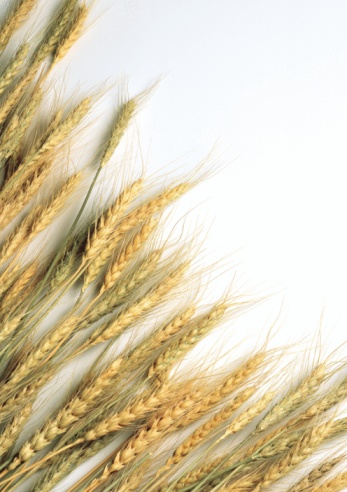 In the Old Testament, the first sheaf of ripe grain is to be offered to the Lord, and is waved before Him by the priest, expressing gratitude to God and acknowledging that He – the Owner and Giver of all things – will grant a bountiful harvest. A lamb also is sacrificed as a burnt offering (see Lev. 23:10-14). In addition, the Lord requires the first of the Israelites’ flocks, and even their first-born children, although a redemption price is accepted in their stead. All of this is designed to teach God’s people that He is their sovereign Lord who demands their first and best, yet who watches over them as a gracious landowner, husbandman and shepherd.
In this respect, the word “firstfruits” involves two ideas: 1) that which is first, the beginning, or that which has the priority of time; and 2) that which is part of the whole to follow, and which is the earnest or pledge of the whole. The first sheaf of ripe grain therefore is not only the first in order of time, but is the earnest or pledge of the entire harvest that surely will come in.
Consider the feast of firstfruits, one of seven major Jewish festivals. The first and best of the barley crop is offered to the Lord in thankfulness and in faith that He will grant the rest of the harvest to be bountifully reaped. More importantly, it is a shadow of the coming Messiah.
They have kept their virginity: Revelation 14:4-5
Previously: They sang a new song – Revelation 14:3
The scripture
Rev. 14:4 – These are the ones not defiled with women, for they have kept their virginity. These are the ones who follow the Lamb wherever He goes. They were redeemed from the human race as the firstfruits for God and the Lamb. 5No lie was found in their mouths; they are blameless. (HCSB)
They have kept their virginity
 Now John provides a further description of the 144,000: “These are the ones not defiled with women, for they have kept their virginity. These are the ones who follow the Lamb wherever He goes … No lie was found in their mouths; they are blameless” (vv. 4- 5).
Few commentators insist that John is speaking of celibate men. While some biblical saints are in fact virgins – and Jesus acknowledges that God has called some to remain so (see Matt. 19:11-12) – there is nothing in scripture that equates celibacy with a special degree of spiritual maturity. The “virginity” here clearly is symbolic of spiritual purity on the part of the 144,000.
W.A. Criswell puts John’s words in proper context: “Consider, for example, 2 Corinthians 11:2, where Paul says to the church at Corinth: ‘… for I have espoused you to Christ, that I may present you as a chaste virgin to our Lord.’ Now, does that mean that all those folks in the church at Corinth were unmarried, that all the men were bachelors and all the women were spinsters? … The idea is impossible. But we know what Paul means. He says to the Corinthians that the church is going to be presented to Christ as a chaste virgin. Likewise, when the text describes these men in Revelation as virgins, it refers to the fact that they separated themselves from the pollutions and corruptions of the earth. They were virgins unto God. They had given themselves in pure devotion to the Lord” (Expository Sermons on Revelation, Vol. 4, p. 147).
 OnceDelivered.net