
Tagged: Bible

The earth was harvested – Revelation 14:15-16
Previously: One like the Son of Man – Revelation 14:14
The scripture
Rev. 14:15 – Another angel came out of the sanctuary, crying out in a loud voice to the One who was seated on the cloud, “Use your sickle and reap, for the time to reap has come, since the harvest of the earth is ripe.” 16 So the One seated on the cloud swung His sickle over the earth, and the earth was harvested. (HCSB)
The earth was harvested
John picks up the narrative in verses 15-16: “Another angel came out of the sanctuary, crying out in a loud voice to the One who was seated on the cloud, ‘Use your sickle and reap, for the time to reap has come, since the harvest of the earth is ripe.’ So the One seated on the cloud swung His sickle over the earth, and the earth was harvested.”
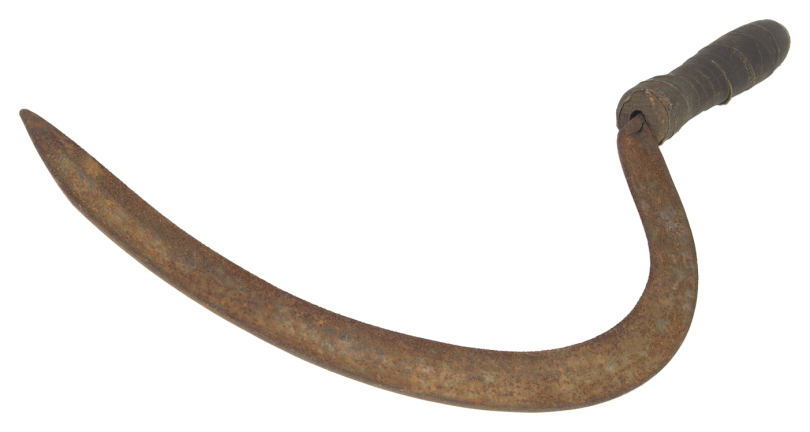 The harvest in these verses, though not stated explicitly, refers to wheat or barley. The word for ripe (Gr.: xeraino) describes dried heads of grain and is different than the word used of ripened grapes in verse 18.
The phrase “another angel” does not imply that the “One like the Son of Man” is an angel. John simply is continuing his observation from the point of the three angels in verses 6-13. This angel comes out of the sanctuary and heads straight for the One holding the sickle. He bears a message from God the Father, who is seated on His throne in the heavenly Holy of Holies (Rev. 6:9; 8:3; 11:19). The message is simple: The time to reap has come; the earth is ripe for harvest. The One seated on the cloud asks no questions, nor does He hesitate. He swings His sickle over the earth, and it is harvested.
No doubt this is a harvest of people on the earth. But who are they? Commentators differ in their understanding of this passage. Some believe this is the harvest of the just, coming before the harvest of the unbelievers (vv. 17-20); it is distinct just as the wheat harvest is distinct from the harvest of grapes. Others, however, argue that scripture normally speaks only of unbelievers being cut down. Therefore, both the One like the Son of Man and the angel with the sickle are engaged in destroying the wicked; one harvest, two perspectives.
Does God have a body?
 Mormons teach that God the Father has a body of flesh and bones. And Jehovah’s Witnesses say Jehovah has a “spiritual body” that prevents Him from being omnipresent.
While these unbiblical views from our LDS and JW friends are not surprising, it may come as a shock to hear that some leaders of the Christian Word-Faith movement hold a similar view – and quote the Bible to support it
A case in point: Kenneth Copeland and Isaiah 40:12.
Copeland, perhaps more than any other prosperity preacher, has gone into great detail about God’s alleged bodily existence.
In a letter responding to an inquiry on the subject, Copeland lists a number of God’s bodily attributes, including back parts, a heart, hands, a finger, nostrils, a mouth with lips and a tongue, feet, eyes and eyelids, a voice, breath, ears, hair, head, face, arms, and loins.
Further, says Copeland, he wears clothes, eats, sits on His throne, and walks. Copeland has made the outrageous claim that God lives on a planet, of which the earth is an exact copy, only smaller. Says the televangelist: Earth is “a copy of the mother planet.”
Is Mormonism necessary?
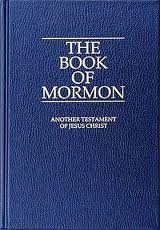 As the official version of the story goes, in 1820, 14-year-old Joseph Smith went into the woods near his home in rural New York to pray. There, God the Father and Jesus Christ appeared to him.
Caught up in the Protestant revivalism of his day, Smith inquired as to which of the Christian denominations he should join. None of them, he was told, because they were all wrong. “The Personage who addressed me said that all their creeds were an abomination in his sight,” Smith later recalled.
Smith was urged to take heart. God would use him to reinstate the true church, which had fallen into complete apostasy after the death of the apostles.
The Church of Jesus Christ of Latter-day Saints professes to be the restored true church. Its leaders claim that Joseph Smith faithfully rediscovered proper church organization – that is, the Aaronic and Melchizedek priesthoods – and the true gospel, which was lost due to “designing priests” that removed its “plain and precious” truths.
In short, the LDS Church declares itself the one true church, while all other forms of Christianity remain apostate.
This demands the perseverance of the saints – Revelation 14:12
Previously: And a third angel followed them – Revelation 14:9-11
The scripture
Rev. 14:12 – This demands the perseverance of the saints, who keep God’s commands and their faith in Jesus. (HCSB)
This demands the perseverance of the saints
 Verse 12 reads, “This demands the perseverance of the saints, who keep God’s commands and their faith in Jesus.” This is similar to the message of Rev. 13:10: “This demands the perseverance and faith of the saints.” In both passages, the Lord reminds the persecuted saints – and perhaps even their persecutors – that He will judge the wicked. Yes, the beast will wield great power, ascend to a worldly throne, and command people of every nationality to bend the knee to him. Yes, he will harangue, imprison, torment and slaughter those who refuse to worship him. At times it will seem that faithfulness to Jesus is unbearable and unrewarded. But those who “keep God’s commands and their faith in Jesus” one day will be vindicated. Those who take Christians captive will be imprisoned themselves. Those who harass God’s people will find there is no rest for them in this life or the life to come. Those who take the sword and extinguish the lives of the faithful will long for death themselves but find it illusive as they suffer God’s wrath.
“In the fiery ordeal of persecution which awaits all who will not worship the beast, the faith and patience of the followers of God and Jesus shall be put to the test, and proved” (R. Jamieson, A.R. Fausset, D. Brown, A Commentary, Critical an Explanatory, on the Old and New Testaments, Rev. 14:12).
The saints who persevere will be rewarded for their godly works at the judgment seat of Christ (2 Cor. 5:10). Jesus urges His followers to lay up treasure in heaven, where it is kept safe and will endure (Matt. 6:20). The apostle Paul informs us that our works of faithfulness, like gold, silver and precious stones, will be refined in the fires of judgment and emerge purified (1 Cor. 3:11-15). And in Revelation Jesus reminds us that our faithfulness will be rewarded (Rev. 2:23; 22:12).
And a third angel followed them – Revelation 14:9-11
Previously: A second angel followed – Revelation 14:8
The scripture
Rev. 14:9 – And a third angel followed them and spoke with a loud voice: “If anyone worships the beast and his image and receives a mark on his forehead or on his hand, 10 he will also drink the wine of God’s wrath, which is mixed full strength in the cup of His anger. He will be tormented with fire and sulfur in the sight of the holy angels and in the sight of the Lamb, 11 and the smoke of their torment will go up forever and ever. There is no rest day or night for those who worship the beast and his image, or anyone who receives the mark of his name.” (HCSB)
 A third angel followed them

A third angel follows the other two and pronounces woe on those who worship the beast and his image and receive a mark on their foreheads or hands. The consequences of rejecting God – who has revealed Himself in creation, conscience, Christ, and the canon of scripture – are spelled out plainly. The one who embraces the beast will experience the consequences of his or her rebellion.
First, the beast worshiper will “drink the wine of God’s wrath, which is mixed full strength in the cup of His anger” (v. 10a). The Greek word for “cup,” poterion, is used 82 times in the New Testament (HCSB) and denotes a drinking vessel of any sort. Commonly, a cup is a small bowl made of pottery, wider and shallower than today’s tea cups. However, the wealthy enjoy their drinks in goblet-shaped cups of metal or glass. The cup used at the Last Supper likely is an earthenware bowl large enough for all to share.
Figuratively, however, throughout the Bible the word “cup” may describe a measure of blessings or wrath divinely allotted to people or nations:
- In Psalm 16:5, David calls the Lord “my portion and my cup of blessing.”
- In Psalm 116:12-13, the writer declares, “How can I repay the Lord for all the good He has done for me? I will take the cup of salvation and call on the name of Yahweh.”
- But in Isaiah 51:17, the prophet warns, “Wake yourself, wake yourself up! Stand up, Jerusalem, you have drunk the cup of His fury from the hand of the Lord; you who have drunk the goblet to the dregs – the cup that causes people to stagger.”
- In the Garden of Gethsemane, as Jesus agonizes over His impending suffering and death, He prays, “My Father! If it is possible let this cup pass from Me. Yet not as I will, but as You will” (Matt. 26:39).
- And moments later, after Peter cuts of the ear of the high priest’s slave, Jesus tells him, “Sheathe your sword! Am I not to drink the cup the Father has given Me?” The cup Jesus endures, of course, is His sacrificial and substitutionary death on the cross to secure our salvation, a most bitter cup as “the One who did not know sin [became] sin for us so that we might become the righteousness of God in Him” (2 Cor. 5:21). It’s also a cup Jesus endures “for the joy that lay before Him” because it results in our salvation (Heb. 12:2).
But now in Revelation the cup, which the Babylonians entice the world to drink, is turned into the cup of God’s wrath.
 OnceDelivered.net