The earth was harvested – Revelation 14:15-16

Previously: One like the Son of Man – Revelation 14:14

The scripture

Rev. 14:15 – Another angel came out of the sanctuary, crying out in a loud voice to the One who was seated on the cloud, “Use your sickle and reap, for the time to reap has come, since the harvest of the earth is ripe.” 16 So the One seated on the cloud swung His sickle over the earth, and the earth was harvested. (HCSB)

The earth was harvested

John picks up the narrative in verses 15-16: “Another angel came out of the sanctuary, crying out in a loud voice to the One who was seated on the cloud, ‘Use your sickle and reap, for the time to reap has come, since the harvest of the earth is ripe.’ So the One seated on the cloud swung His sickle over the earth, and the earth was harvested.”
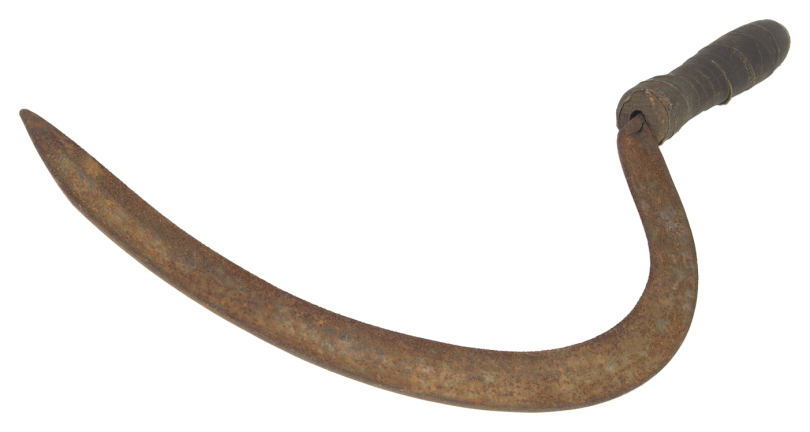
sickleThe harvest in these verses, though not stated explicitly, refers to wheat or barley. The word for ripe (Gr.: xeraino) describes dried heads of grain and is different than the word used of ripened grapes in verse 18.

The phrase “another angel” does not imply that the “One like the Son of Man” is an angel. John simply is continuing his observation from the point of the three angels in verses 6-13. This angel comes out of the sanctuary and heads straight for the One holding the sickle. He bears a message from God the Father, who is seated on His throne in the heavenly Holy of Holies (Rev. 6:9; 8:3; 11:19). The message is simple: The time to reap has come; the earth is ripe for harvest. The One seated on the cloud asks no questions, nor does He hesitate. He swings His sickle over the earth, and it is harvested.

No doubt this is a harvest of people on the earth. But who are they? Commentators differ in their understanding of this passage. Some believe this is the harvest of the just, coming before the harvest of the unbelievers (vv. 17-20); it is distinct just as the wheat harvest is distinct from the harvest of grapes. Others, however, argue that scripture normally speaks only of unbelievers being cut down. Therefore, both the One like the Son of Man and the angel with the sickle are engaged in destroying the wicked; one harvest, two perspectives.

Continue reading

Does God have a body?

GODMormons teach that God the Father has a body of flesh and bones. And Jehovah’s Witnesses say Jehovah has a “spiritual body” that prevents Him from being omnipresent.

While these unbiblical views from our LDS and JW friends are not surprising, it may come as a shock to hear that some leaders of the Christian Word-Faith movement hold a similar view – and quote the Bible to support it

A case in point: Kenneth Copeland and Isaiah 40:12.

Copeland, perhaps more than any other prosperity preacher, has gone into great detail about God’s alleged bodily existence.

In a letter responding to an inquiry on the subject, Copeland lists a number of God’s bodily attributes, including back parts, a heart, hands, a finger, nostrils, a mouth with lips and a tongue, feet, eyes and eyelids, a voice, breath, ears, hair, head, face, arms, and loins.

Further, says Copeland, he wears clothes, eats, sits on His throne, and walks. Copeland has made the outrageous claim that God lives on a planet, of which the earth is an exact copy, only smaller. Says the televangelist: Earth is “a copy of the mother planet.”

Continue reading

One like the Son of Man – Revelation 14:14

Previously: The harvest and the vintage – Revelation 14:14-20

The scripture

Rev. 14:14 – Then I looked, and there was a white cloud, and One like the Son of Man was seated on the cloud, with a gold crown on His head and a sharp sickle in His hand. (HCSB)

One like the Son of Man

Seated on the cloud is “One like the Son of Man.” He wears a gold crown on His head and wields a sharp sickle in His hand. There is little doubt that this is Jesus, who calls Himself the Son of Man more than 80 times in the Gospels. The name is not exclusive to Jesus in scripture. For example, the Lord calls Ezekiel “son of man” more than 90 times, and the angel Gabriel once refers to Daniel by the same moniker. But there is no doubt that in specific contexts “Son of Man” refers to the second person of the Godhead.

Jesus with lambThe Son of Man clearly is a divine being in Dan. 7:13, and Jesus’ claim to be the Son of Man who will come on the clouds of heaven (Matt. 26:64) is sufficient testimony to convict Him of blasphemy and condemn Him to death in the eyes of Caiaphas. It’s important for us to understand that in preferring to call Himself “Son of Man” rather than “Son of God,” Jesus is communicating His incarnation. He is neither denying His deity nor exalting His humanity; rather, He is demonstrating that He is one person with two natures: divine and human.

As Ron Rhodes writes, “First of all, even if the phrase ‘Son of Man’ is a reference to Jesus’ humanity, it is not a denial of His deity. By becoming a man, Jesus did not cease being God. The incarnation of Christ did not involve the subtraction of deity, but the addition of humanity. Jesus clearly claimed to be God on many occasions (Matthew 16:16, 17; John 8:58; 10:30). But in addition to being divine, He was also human (see Philippians 2:6-8). He had two natures (divine and human) conjoined in one person” (found at http://christiananswers.net/q-eden/son-of-man.html).

The name “Son of Man” is found almost exclusively in the mouth of Christ in the New Testament. The apostles and other writers avoid the term, with a couple of exceptions. In Acts 7:55 Stephen exclaims, “Look! I see the heavens opened and the Son of Man standing at the right hand of God!” And, of course, in Rev. 14:14 John sees “One like the Son of Man” seated on a white cloud.

The early church fathers are of the opinion that Jesus uses the expression “Son of Man” out of humility and to demonstrate His humanity. Others think He adopts the title so as not to offend His enemies until His hour is at hand. Then, associating this lowly title with Dan. 7:13 and tying it to His deity forces the hands of both His accusers and followers to acknowledge Him as Messiah or reject Him as a pretender. At last, this title is “capable of being applied so as to cover His Messianic claims – to include everything that had been foretold of the representative man, the second Adam, the suffering servant of Jehovah, the Messianic king” (The Catholic Encyclopedia, “Son of Man”).

Continue reading

How Islam makes peace

IslamIn the wake of 9/11 and subsequent acts of terror in the name of Allah, many Muslim leaders labor to buff the tarnished image of the religion Mohammad founded nearly 1,400 years ago.

Their key message: Islam is a religion of peace.

No doubt many of the world’s Muslims prefer peace to the sword, decrying the acts of Islamist terrorists as perversions of true Islam.

And to be fair, Islam is a religion of peace, as long as peace is defined in Muslim terms.

A case in point: dhimmitude.

Continue reading

The harvest and the vintage – Revelation 14:14-20

Previously: The dead who die in the Lord – Revelation 14:13

GrapesThe scripture

Rev. 14:14 – Then I looked, and there was a white cloud, and One like the Son of Man was seated on the cloud, with a gold crown on His head and a sharp sickle in His hand. 15 Another angel came out of the sanctuary, crying out in a loud voice to the One who was seated on the cloud, “Use your sickle and reap, for the time to reap has come, since the harvest of the earth is ripe.” 16 So the One seated on the cloud swung His sickle over the earth, and the earth was harvested.

17 Then another angel who also had a sharp sickle came out of the sanctuary in heaven. 18 Yet another angel, who had authority over fire, came from the altar, and he called with a loud voice to the one who had the sharp sickle, “Use your sharp sickle and gather the clusters of grapes from earth’s vineyard, because its grapes have ripened.” 19 So the angel swung his sickle toward earth and gathered the grapes from earth’s vineyard, and he threw them into the great winepress of God’s wrath. 20 Then the press was trampled outside the city, and blood flowed out of the press up to the horses’ bridles for about 180 miles. (HCSB)

Introduction

Following the proclamation of the three angels, we next encounter “One like the Son of Man” seated on a white cloud. He wears a gold crown on His head and wields a sharp sickle in His hand. An angel beckons Him to use the sickle, and He does, harvesting the earth.

Then, a different angel comes out of the sanctuary. He, too, bears a sharp sickle, and at the bidding of a third angel, he swings the sickle to the earth, gathers the grapes from its vineyard, and casts them into the great winepress of God’s wrath. Finally, we are told the blood gushes out of the winepress at a depth approaching the horses’ bridles and for a length of 180 miles.

This is a graphic scene of harvest and vintage, and it raises many questions:

  • What is the significance of the white cloud?
  • Who is the “One like the Son of Man?”
  • What does the sickle represent?
  • Why do both the “One like the Son of Man” and the angel wield sickles on the earth?
  • Who or what are the grapes that are gathered and thrown into the winepress?
  • And does blood really flow several feet deep for 180 miles?

Let’s see if we can find answers.

Continue reading