
Seven gold bowls – Revelation 15:7
Previously: The heavenly sanctuary was opened – Revelation 15:5-6
The scripture
Rev. 15:7 – One of the four living creatures gave the seven angels seven gold bowls filled with the wrath of God who lives forever and ever. (HCSB)
Seven gold bowls
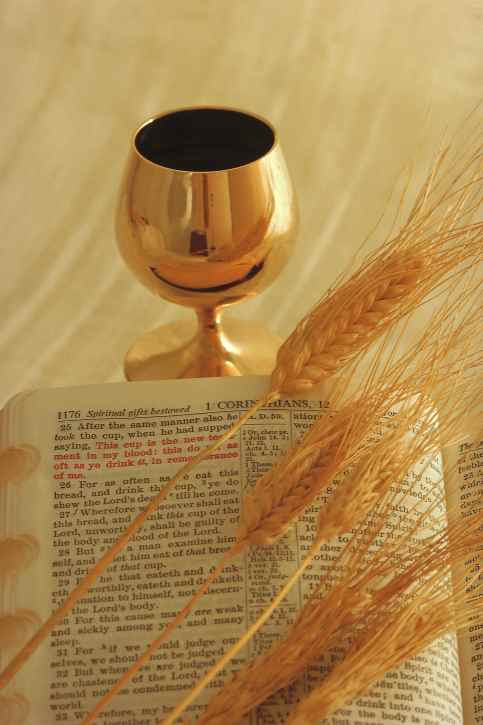
 In verse 7 John writes, “One of the four living creatures gave the seven angels seven gold bowls filled with the wrath of God who lives forever and ever.” The King James Version uses the term “vials” instead of “bowls,” as though they are bottles. The Greek word is phiale, which denotes a shallow pan or broad-rimmed chalice. Some commentators call them censers, the receptacles into which coals from the altar are placed and mingled with incense to burn unto God. “The breadth of the vials in their upper part would tend to cause their contents to pour out all at once, implying the overwhelming suddenness of the woes” (A Commentary, Critical and Explanatory, on the Old and New Testaments, Rev. 15:7).
Note that one of the four living creatures gives these bowls to the angels. In Revelation 6 the four living creatures announce the first four seal judgments. The first living creature thunders, “Come!” and the white horse and its rider emerge. The second creature says “Come!” and the rider on the red horse bursts onto the scene. The third creature shouts “Come!” and the horseman on a black horse appears. Finally, the fourth creature says “Come!” and Death comes riding a pale green horse with Hades in hot pursuit. While the living creatures reside closely to the throne of God and lead angels and people in worship, they also are the standard bearers of God’s holiness as revealed in His wrath.
Continue reading

 Following are a few examples of Scriptures prosperity preachers twist to promote their health-and-wealth gospel. A more complete treatment is available in The Apologist’s Tool Kit, available at mobaptist.org/apologetics.
 In verse 5 John writes, “After this I looked, and the heavenly sanctuary – the tabernacle of testimony – was opened.” We last read about the heavenly sanctuary in Rev. 11:19 in connection with the sounding of the last trumpet. The previous uses of the word “tabernacle” – in Greek, skeyney – are revealing. In Rev. 7:15, the One seated on the throne will “shelter” the ones coming out of the great tribulation; that is, He will tabernacle (skeyney) with them – pitch His tent with them and spread His tent over them, providing His presence as comfort and security. In Rev. 13:6, the beast from the sea begins to blaspheme God’s name and His “dwelling – those who dwell in heaven.” Again, the word is skeyney, and here it refers to believers around the throne in heaven.
 The Word-Faith movement, also known as the Prosperity Gospel, is leading millions of people to embrace false teachings.
 Those who have won the victory over the beast, his image, and the number of his name now sing the song of God’s servant Moses and the song of the Lamb (vv. 3-4). It appears these are two songs with a common theme. They show the unity of the Old Covenant and the New Covenant in redemption. The song of Moses alludes to Ex. 15:1-19, where Moses thanks God for deliverance from the Egyptians at the Red Sea. However, it’s possible that John has Deuteronomy 32 in mind because the first phrase – “Great and awe-inspiring are Your works, Lord God, the Almighty; righteous and true are Your ways, King of the Nations” – may be drawn from Deut. 32:3-4.
 OnceDelivered.net