
Tagged: Mormonism
The Apologist’s Tool Kit
 Thank you, Missouri Baptists, for enthusiastically supporting the MBC’s new apologetics ministry. Over the last year, I have been privileged to speak or lead workshops in many churches across the state to help Christians “earnestly contend for the faith” (Jude 3).
Topics have ranged from “How do I know the Bible is true?” to “What do false prophets have in common?”
As many of you know, apologetics simply is “a reasonable defense of the Christian faith.” For followers of Jesus there has never been a more important time to know what we believe, why we believe, and how to share our faith with an increasingly skeptical world.
The apostle Peter urges us to “set apart the Messiah as Lord in your hearts, and always be ready to give a defense to anyone who asks you for a reason for the hope that is in you” (1 Peter 3:15).
Test your knowledge of world religions and cults

Do you know the difference between Scientology and Christian Science? Buddhism and Baha’ism? Rastafarianism and Ralph Laurenism? (Okay, I made that one up). Here’s a chance to test your knowledge. The correct answers are at the end of the quiz.
1. Which of the following is not a Hindu scripture:
a) Rig Veda
b) Sama Veda
c) Yajur Veda
d) Darth Veda
Answers at your fingertips
 The Bible instructs Christians to “always be ready to give a defense to anyone who asks you for a reason for the hope that is in you” (1 Peter 3:15). But with so many competing belief systems out there – from Wahhabism to Rastafarianism – it’s good to know where to go for help.
There are many outstanding books and web resources that may help you earnestly contend for the faith. Here are a few of my favorites.
On Mormonism. Mormonism 101 and Answering Mormons’ Questions, both by Bill McKeever and Eric Johnson, are excellent books that address key issues pertaining to the LDS Church in easy to understand language. McKeever’s website, www.mrm.org (Mormonism Research Ministry), is filled with helpful tools.
On Jehovah’s Witnesses. Ron Rhodes has put together a helpful book that provides biblical responses to questions from our friends in the Watchtower. It’s called Reasoning from the Scriptures with the Jehovah’s Witnesses. David Reed has authored two useful books: Jehovah’s Witnesses Answered Verse by Verse and Answering Jehovah’s Witnesses Subject by Subject.
Is Mormonism a cult?
This column appeared Sept. 12, 2012, in The Pathway, the official news service of the Missouri Baptist Convention.
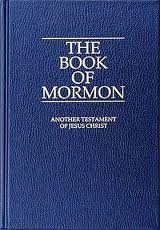 With the national conventions behind us and the November elections on the horizon, Mitt Romney’s Mormonism increasingly finds its way into conversations. And that’s a good thing because it prompts all of us to learn more about a belief system that remains shrouded in mystery despite its American roots nearly 200 years ago.
At the end of the day, your friends may ask you point-blank: Is Mormonism a cult?
It’s a dicey question. If you answer yes, you may be accused of political incorrectness – or worse, religious bigotry. If you answer no, you may be tacitly approving of Mormonism as just another Christian denomination, which it’s not.
The Great Impostor
This article appeared June 20 in The Pathway of the Missouri Baptist Convention.
 He was known as “The Great Impostor” and inspired a 1961 film by the same name.
Ferdinand Waldo Demara began his nefarious career during World War II by borrowing an Army buddy’s name, going AWOL and faking his suicide. A string of pseudo careers followed in which Demara portrayed a sheriff’s deputy, a doctor of applied psychology, and a child-care expert.
He was best known for masquerading as a surgeon aboard a Canadian Navy destroyer during the Korean War, successfully completing a string of operations. His final gig: a Baptist minister.
Demara’s life is a fascinating but sad story of one man’s quest for respectability. His success as an impostor also exposes the soft underbelly of a society whose people are easily duped by one who talks smoothly and claims to serve the greater good.
For Christians, Demara’s story is a warning to be on guard against those who disguise themselves as “servants of righteousness” (2 Cor. 11:15). But how can we know a religious impostor when we see one? The apostle Paul gives us three clear markers in 2 Cor. 11:4. False teachers proclaim “another Jesus … a different spirit … a different gospel.”
To illustrate, let’s look briefly at three belief systems: Islam, Mormonism, and the Watchtower (Jehovah’s Witnesses) – each of which teaches unbiblical doctrines concerning Jesus, the Holy Spirit and the gospel.
Islam
Jesus. Muslims say Jesus was one of God’s greatest prophets but inferior to Muhammad. The Koran denies that Jesus is the Son of God, and any Muslim who believes in the deity of Jesus has committed shirk – a sin that will damn that person to hell. Muslims do not believe Jesus died on the cross but was called to heaven by Allah before His death and was perhaps replaced by Judas Iscariot or someone else who looked like Jesus.
Holy Spirit. Islam denies the deity of the Holy Spirit, whom the Koran describes as “the angel which brought revelation.” The Koran also calls the Holy Spirit “Gabriel” (2:97).
The gospel. Islam teaches that Jesus was neither crucified for our sins nor resurrected; therefore salvation cannot possibly be attained through faith in Christ. Salvation in Islam is a combination of works and fate. Muslims pursue the five Pillars of Religion and hope Allah is kindly disposed toward them.
Mormonism
Jesus. Mormons say Jesus preexisted in heaven as a spirit child of Heavenly Father (Ehohim) and one of his goddess wives (as did Lucifer and all pre-existent human beings). He then took on a human body through sexual relations between Heavenly Father and Mary. Mormonism recognizes the Trinity only as one in “purpose,” arguing instead for a multitude of gods.
Holy Spirit. Founder Joseph Smith taught that the Father, Son and Holy Spirit “constitute three distinct personages and three Gods.” He further said, “The Holy Ghost is yet a spiritual body and waiting to take to himself a body as the Saviour did or as the gods before them took bodies.”
The gospel. Jesus’ atonement secured “salvation” (meaning resurrection) for nearly all people, but “men will be punished for their own sins” (Article of Faith #2 by Joseph Smith). People may earn “eternal life” (godhood) by “obedience to the laws and ordinances of the gospel,” meaning works (Article of Faith #3 by Joseph Smith).
The Watchtower
Jesus. Jesus was the first and direct creation of Jehovah. Jesus then created all “other” things (Col. 1:16 New World Translation). Jehovah’s Witnesses deny the Trinity, speaking of Jesus as “a god” or “mighty god” but not divine. They deny His incarnation, death on the cross (he died on a “torture stake”) and physical resurrection. Jesus returned invisibly in 1914 and is working today to overthrow Satan’s kingdom.
Holy Spirit. The “holy spirit” (always lower case) is the invisible active force of God that moves His servants to do His will. Jehovah’s Witnesses deny the personhood and deity of the Holy Spirit, proclaiming such beliefs to be inspired by Satan.
The gospel. Salvation in the Watchtower is a combination of faith and works, but there is no eternal security and virtually no hope of today’s Witnesses ever entering heaven, which is reserved for the 144,000 in the “anointed class.” The “other sheep” may, through faithfulness to Watchtower teachings and hard work, be brought back to life after an indefinite period of soul sleep and populate Paradise Earth.
In each of his roles, Ferdinand Waldo Demara was confronted with the truth – in some cases by the persons whose identity he had stolen – and exposed as a fraud. For Christians who encounter an array of false teachings today, our best defense is the truth of God’s Word.
The writer of Hebrews put it best: “For the word of God is living and effective and sharper than any two-edged sword, penetrating as far as to divide soul, spirit, joints, and marrow; it is a judge of the ideas and thoughts of the heart. No creature is hidden from Him, but all things are naked and exposed to the eyes of Him to whom we must give an account” (4:12-13).
 OnceDelivered.net