
Tagged: Christian
Isaiah 54: I Will Take You Back
LISTEN: Isaiah 54 – I Will Take You Back (mp3)
Prologue
Where we are:
| Part 1: Judgment | Part 2: Historical Interlude | Part 3: Salvation |
| Chapters 1-35 | Chapters 36-39 | Chapters 40-66 |
When this takes place:
Chapter 54 is part of the second major section of Isaiah and deals less with Judah’s immediate plight than with its future deliverance from Babylonian exile and ultimate glory.
Key verses:
Isa. 54:7-8 – “I deserted you for a brief moment, but I will take you back with great compassion. In a surge of anger I hid Myself from you for a moment, but I will have compassion on you with everlasting love,” says the Lord your Redeemer.
Quick summary:
Israel is encouraged to burst into song because her punishment is over and the Lord, like a loving husband, is taking back His wayward bride and showering her with blessings. Her exile in Babylon was necessary because of her grievous sin, but it was only a temporary banishment because the Lord is faithful to His promises. Just as God honored His covenant with Noah, He will honor His “covenant of peace” with Israel. These verses await their complete fulfillment in the messianic kingdom.
Take note:
The imagery throughout this chapter is that of Yahweh, the faithful husband, forgiving Israel, the unfaithful wife, restoring her to her home and bestowing her with undeserved blessings. Warren Wiersbe comments: “Isaiah has used the marriage image before (50:1–3) and will use it again (62:4). Jeremiah also used it (Jer. 3:8), and it is an important theme in both Hosea (chap. 2) and Ezekiel (chaps. 16 and 23). The nation was ‘married’ to Jehovah at Mt. Sinai, but she committed adultery by turning to other gods; and the Lord had to abandon her temporarily. However, the prophets promise that Israel will be restored when Messiah comes and establishes His kingdom” (Be Comforted, S. Is 54:1).
Israel’s Numerical Growth (Isa. 54:1-3)
Israel is likened to a barren woman who experiences the shame of childlessness and knows full well the void it brings to her life. But the Lord promises that days of gladness lie ahead and that her tents will be expanded to accommodate the children who will be born to her. The image of expanding the tent reminds the people of God’s covenant with Abraham, who dwelled in tents and was called outside to count the stars as a sign of the Lord’s promise of offspring. In similar fashion, this ragtag band of post-exilic Jews will re-inhabit the Promised Land and fill it. God will do for them what He did for Abraham and Sarah (Isa. 49:18-21; 51:1-3).
“Jerusalem, once desolate and mourning (Lam. 1:1-5), will be revitalized and teeming with people. Also like a nomad who has so many children he has to enlarge his tent to accommodate them all, Israel’s descendants will increase and even settle in the cities of foreign nations because there will not be enough room for them in their homeland” (John F. Walvoord, Roy B. Zuck, The Bible Knowledge Commentary: An Exposition of the Scriptures, S. 1:1109). The complete fulfillment of this prophecy awaits the messianic kingdom.
Paul quotes Isa. 54:1 in Gal. 4:27 and applies the spiritual principle to the church. As God blesses Sarah and the Jewish remnant with children, He will bless His church, even though at present it is only a small company of faithful followers in a wayward world.
Israel’s Regathering (Isa. 54:4-8)
The Lord promises Israel He will take her back the way a gracious husband takes back an unfaithful wife. The people are urged not to fear for they will not be put to shame, and not to be humiliated for they will not suffer disgrace. While deserving of such consequences for their spiritual adultery, the Israelites will be welcomed into the arms of a faithful and forgiving Husband. And who is this Husband? Their “Maker – His name is Yahweh of Hosts … the Holy One of Israel … Redeemer … the God of all the earth” (v. 5).
Yahweh will not destroy the people He has created for His own glory. “He is their Redeemer and cannot sell them into the hands of the enemy. He is their Husband and will not break His covenant promises. As an unfaithful wife, Israel had forsaken her Husband; but He had not permanently abandoned her. He only gave her opportunity to see what it was like to live in a land where people worshiped false gods. God would call her back and woo her to Himself (Hosea 2:14–23), and she would no longer be ‘a wife deserted’ (Isa. 54:6, NIV). She felt forsaken (49:14), but God did not give her up” (Warren W. Wiersbe, Be Comforted, S. Is 54:1).
The husband / wife analogy is used frequently in Scripture to describe God’s relationship with Israel. Israel is the unfaithful wife who runs after pagan deities. In anger, God abandons Israel, but only for a time (see Jer. 31:31-34). He is faithful and compassionate. He will remain true to His promises. He will restore His people. In much the same way the New Testament writers refer to Christ as the bridegroom and the church as His bride. Unlike Israel, the church is not yet married to Christ. Rather, she is espoused, or engaged, and is expected to remain chaste and pure until the Bridegroom comes for Her. The apostle Paul, as a friend of the groom, urges his fellow believers to resist false teachings so they will not be enticed to embrace “another Jesus” and thus commit spiritual adultery (2 Cor. 11:4). Ultimately, a great day is in store for Christ and His church when they sit down together at the marriage feast of the Lamb (Rev. 19:7-9).
Israel’s Security (Isa. 54:9-10)
The Lord reminds Israel that His love, mercy and covenant promises remain even though the stinging memory of exile is fresh in the people’s minds. Yahweh has kept His word not to destroy the earth by flood again (Gen. 9:11-17), so His people may count on Him to faithfully carry out His promises of future national blessing. “Though the mountains move and the hills shake, My love will not be removed from you and My covenant of peace will not be shaken,” He assures them (v. 10). This does not mean the Lord will withhold future discipline from Israel, for we see the temple destroyed again in 70 A.D. and the Jews dispersed among the nations as a result of their rejection of Jesus as Messiah. But even then, the Lord has preserved a believing remnant, restored the Jews to their homeland (in 1948) and will bring about a spiritual revival in the land when the people He has chosen finally trust in Jesus as His Son and their Savior.
Israel’s Peaceful Future (Isa. 54:11-17)
Throughout the centuries, Jerusalem has experienced many sorrows, prompting the Lord to call her “storm-tossed, and not comforted” (v. 11). However, in coming days the Lord will build up the city with stones made of precious gems as a symbol of her great value. This also may be seen as foreshadowing the New Jerusalem, which comes down from heaven and is beautifully adorned with precious jewels (Rev. 21:9-27). The children will be taught by the Lord, experience great prosperity and stand securely on a foundation of righteousness. The people no longer will fear oppression from without or corruption from within, for the Lord will protect them.
No doubt this is a preview of the Millennium, during which time no nation will be allowed to defeat Israel. “If anyone attacks you, it is not from Me,” says Yahweh in verse 15, contrasting God’s use of Assyria to punish the northern kingdom (722 B.C.) and Babylon to discipline the southern kingdom (587 B.C.). Further, the Lord assures His people that “whoever attacks you will fall before you.” He continues in verse 17: “No weapon formed against you will succeed, and you will refute any accusation raised against you in court. This is the heritage of the Lord’s servants, and their righteousness is from Me.” It is always the righteousness of God that saves, not man’s own “filthy rags” (Isa. 64:6). We see this stated plainly and illustrated beautifully in the New Testament. In Jesus’ parable of the wedding banquet (Matt. 22:1-14), an invited guest is bound hand and foot and cast into outer darkness because he has refused to wear the wedding garment providing by the king. This shows that no one’s own righteousness merits entrance into the kingdom, only the righteousness of Christ. And in Rev. 7:9-17, an innumerable host of people, robed in white, stands before the throne and the Lamb. Their robes are white because “they washed their robes and made them white in the blood of the Lamb.”
D.A. Carson writes that “the righteousness of v 14 and the impregnability of vs 15–17 are deep rooted in personal discipleship, which is one of the marks of the new covenant. This is the true strength of God’s city, which is promised not immunity from attack but the unanswerable weapon of truth” (New Bible Commentary: 21st Century Edition, S. Is 54:11).
Closing Thought
Lawrence O. Richards comments about the covenant of peace in verse 10: “[T]he focus of this covenant is on security. God throws a protective covering over His people so that they will be safe. While this is an eschatological covenant, it has present application to you and me. God’s protective covering has been thrown over us as well. God the Holy Spirit is Himself ‘a deposit guaranteeing our inheritance until the redemption of those who are God’s possession’ (Eph. 1:14). Because we are God’s own we are safe and secure” (The Bible Readers Companion, electronic ed., Logos Research Systems, S. 440).
The Parable of the Sower
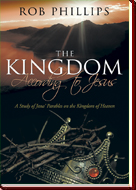
Following is chapter 3 of The Kingdom According to Jesus. You may order the entire study from a number of the nation’s leading booksellers.
 Matt. 13:1-9, 18-23 (HCSB)
1 On that day Jesus went out of the house and was sitting by the sea.
2 Such large crowds gathered around Him that He got into a boat and sat down, while the whole crowd stood on the shore.
3 Then He told them many things in parables, saying: “Consider the sower who went out to sow.
4 As he was sowing, some seeds fell along the path, and the birds came and ate them up.
5 Others fell on rocky ground, where there wasn’t much soil, and they sprang up quickly since the soil wasn’t deep.
6 But when the sun came up they were scorched, and since they had no root, they withered.
7 Others fell among thorns, and the thorns came up and choked them.
8 Still others fell on good ground, and produced a crop: some 100, some 60, and some 30 times [what was sown].
9 Anyone who has ears should listen!”
18 “You, then, listen to the parable of the sower:
19 When anyone hears the word about the kingdom and doesn’t understand it, the evil one comes and snatches away what was sown in his heart. This is the one sown along the path.
20 And the one sown on rocky ground—this is one who hears the word and immediately receives it with joy.
21 Yet he has no root in himself, but is short-lived. When pressure or persecution comes because of the word, immediately he stumbles.
22 Now the one sown among the thorns—this is one who hears the word, but the worries of this age and the seduction of wealth choke the word, and it becomes unfruitful.
23 But the one sown on the good ground—this is one who hears and understands the word, who does bear fruit and yields: some 100, some 60, some 30 times [what was sown].”
(This parable also is found in Mark 4:1-9, 13-20 and in Luke 8:4-8, 11-15.)
 The context

Jesus probably is staying with Peter at his home in Capernaum. He has just tussled with the scribes and Pharisees who accused him of eating “unlawfully” and of healing on the Sabbath. He has foiled a plot by the Pharisees to kill Him. He has cast a demon out of a man and then answered the Pharisees’ accusation that He is casting out demons by Satan’s power. He has rebuked the Pharisees for demanding a sign that He is the Christ. And he has denied his own family’s request to see Him by declaring that His family consists of all who believe in Him. Now, in chapter 13, the Scripture says in verse one, “On that day Jesus went out of the house and was sitting by the sea [of Galilee].”
It is significant that in chapter 12 Jesus shows clear evidence He is the Messiah and that His kingdom has invaded Satan’s kingdom:
- He declares Himself greater than the Temple and is indeed “Lord of the Sabbath.”
- He casts out demons and heals the sick.
- He foretells His death, burial and resurrection as the one sure sign He is the Son of God.
- He rebukes the Jews of His generation for their wickedness and foretells their judgment (which falls in 70 A.D.).
- And He declares that His true family is not earthly but heavenly, not of flesh and blood but of spirit.
Matt. 12:28 is crucial in setting the stage for Jesus’ parables in chapter 13: “If I drive out demons by the Spirit of God, then the kingdom of God has come to you.” Jesus declares that the long-awaited kingdom of heaven has come – but not in the way the Jewish leaders were expecting. Rather than as a political and military machine, the kingdom has come quietly and with great spiritual power, invading Satan’s kingdom and binding him (the “strong man” of Matt. 12:29) so that He may plunder the evil one’s kingdom.
The scribes and Pharisees will have none of this teaching and reject the King and His kingdom. So in chapter 13, as Jesus leaves Peter’s house and sits beside the sea, multitudes gather around Him, having witnessed His miracles and having heard His declaration that the kingdom of heaven has come. So Jesus gets into a boat – perhaps Peter’s boat or a boat made available for Jesus’ use whenever He needed it – and begins a series of eight parables on the kingdom of heaven. In this first parable – the parable of the sower – it is possible that farmers on the hillsides along the sea were in their fields sowing seed, with the ever-present birds hovering in the air above them.
Central theme
The central theme of this parable is that the kingdom of heaven has come among men and yet men can reject it. As George Eldon Ladd writes, “The mystery of the Kingdom is this: The Kingdom of God is here but not with irresistible power. The Kingdom of God has come, but it is not like a stone grinding an image to powder. It is not now destroying wickedness. On the contrary, it is like a man sowing seed. It does not force itself upon men…. This was a staggering thing to one who knew only the Old Testament…. One day God will indeed manifest His mighty power to purge the earth of wickedness, sin and evil; but not now. God’s Kingdom is working among men, but God will not compel them to bow before it. They must receive it; the response must come from a willing heart and a submissive will” (The Gospel of the Kingdom, pp. 56-57).
Central character
Christ no doubt is the sower, but in a sense every believer who shares the gospel is a sower as well. In Jesus’ day, farmers walked through their fields scattering seed by hand broadly across their property, knowing that a high percentage of the seed would not bear fruit. Normally, another member of the family would follow the sower closely and plow the seed under. But many of the seeds were eaten by birds as they fell on footpaths; others landed in shallow soil with a stratum of rock beneath; and others fell at the fringes of the property among thorn bushes that the farmers used to build small cooking fires. Still, the seed is broadcast widely, and some seed finds the good soil, thus raising up a crop.
Details
Jesus interprets the parable for His disciples:
- The seed is the word of God (Luke 8:11) – the good news that the kingdom has come in the Person of Jesus the Messiah and that all may enter into the kingdom by faith in Him, the Word (Logos, John 1:1).
- The birds represent Satan, who “takes away the word from their hearts, so that they may not believe and be saved” (Luke 8:12).
- The seed along the path stands for the impact of the word on hearers who do not understand. Their hearts are hardened like the footpaths winding through ancient wheat fields. They cannot believe because they will not believe, much like the Jewish leaders Jesus described in Matt. 13:12-15.
- The seed on the rocky ground represents the impact of the word on shallow, uncommitted hearers. They may have an emotional response to the gospel but walk away when the reality of kingdom living – which may include pressure or persecution – sets in. Jesus’ followers who left him in John 6:66 are examples of those who loved Jesus’ miracles but balked at the call to discipleship.
- The seed among the thorns illustrates the impact of the word on worldly hearers. Though understanding the gospel of the kingdom, they prefer the “worries, riches, and pleasures of life” (Luke 8:14). The rich young ruler who encountered Jesus falls into this category of hearers (Luke 18:18-23).
- The seed in the good ground represents the impact of the word on those who, “having heard the word with an honest and good heart, hold on to it and by enduring, bear fruit” (Luke 8:15) – “some 100, some 60, some 30 times [what was sown]” (Matt. 13:23).
Spiritual application
In Jesus’ day, farmers sowed widely across their fields, knowing that perhaps one in three seeds would grow to maturity. As believers, we are to sow the gospel of the kingdom widely and indiscriminately, trusting God to grant the harvest.
Regarding the kingdom, Jesus’ parable of the sower is a clear message that His kingdom would not at this time come in power and great glory; instead, it would reside in the hearts of willing believers and be resisted by many. This is not what the Jews were expecting, and many rejected Jesus and His call to the kingdom because He is not the political and military leader they are seeking. At the same time, Satan, whose kingdom Jesus has invaded, will hover watchfully and snatch the gospel away from those whose hearts are hardened against it, lest, person by person, he lose power as “the god of this age” (2 Cor. 4:4).
Comparing Islam and Christianity
Apologetics 101: Part 9
This is session nine in a 10-part series designed to help Christians defend their faith.
Islam and Christianity (audio)
Session 9 — Islam and Christianity (pdf)
Islam is the youngest and fastest-growing major world religion. It was founded by Arabian visionary Muhammad (570-632 AD), who was born in the city of Mecca in Arabia. Muhammad claimed he received supernatural revelations from God through the angel Gabriel. These revelations were written down by others and compiled into a book called the Koran (or Qur’an). Islam today is comprised of two main schools: the majority Sunni school and the minority Shi’ite school. In addition, there are millions of Muslim mystics called Sufis. Islam is the second largest religion in the world (behind Christianity) with about 1.5 billion followers. Interestingly, the four nations with the largest number of Muslims today are all outside the Middle East – Indonesia, Pakistan, Bangladesh, and India.
Purpose
The ultimate goal of Islam is to subjugate the world and then rule it according to Islamic law. Islam claims to be the restoration of true monotheism and thus supersedes both Judaism and Christianity. Islamic law teaches that conversion may be achieved through persuasion or subjugation, but some hold that if these fail, unbelievers (or “infidels”) may be eliminated if necessary. As such, hostility toward non-Muslims is accepted and even encouraged in some Islamic cultures, based on passages from the Koran such as, “O, true believers, take not the Jews and the Christians for your friends. They cannot be trusted. They are defiled – filth.”
Islam’s Beginnings
Islam began with the supernatural visions and revelations that Muhammad claimed he received from God through the angel Gabriel. Because Muhammad could neither read nor write, he claimed to have memorized these revelations and ordered his followers to write them down. These writings became Islam’s holy book, the Koran. Muhammad at first feared his revelations came from a jinn, or evil spirit, but later he accepted their source as divine and taught that he alone was the true recipient of Allah’s truth.
Muhammad was born in the Arabian city of Mecca in 570 A.D. Mecca was an important economic center, serving as a resting place for trading caravans. But is also was an important religious city because the Ka’bah was located there. The Ka’bah is a cubic structure that in the days of Muhammad housed 360 deities. Each Arabian tribe selected its own deity and came to Mecca each year to pay homage to its god. Muhammad’s monotheistic preaching threatened the economic and religious livelihood of Mecca and set him against his own tribe. He and about 100 Muslim families were forced to flee to Medina, a city 200 miles north of Mecca. Muslims look to the year of Muhammad’s flight, 622 A.D., as the beginning of the Muslim calendar. In 630, Muhammad and his army returned and took control of Mecca. He personally destroyed the idols in the Ka’bah and within a year succeeded in unifying the tribes of the Arabian Peninsula under Islam. Muhammad died in 632 A.D. without appointing a successor.
The Sects of Islam
The two major sects of Islam, Sunni and Shi’ite, originally were established after Muhammad’s death in a dispute over who should serve as his successor, or caliph. The Sunni Muslims insisted that Muhammad’s successor be elected, while the Shi’ite Muslims felt he should be of Muhammad’s blood line, which would have meant that Ali, Muhammad’s cousin and son-in-law, would have become caliph. The Sunnis prevailed and today account for about 80 percent of the Muslim population. Sunnis and Shi’ites differ in other ways as well:
- Authority. Sunnis emphasize the authority of the written traditions, which include the Koran and the Sunna (“custom”), from which they derive their name. They also receive guidance from a consensus of elders (ulama), who base their decisions on Islam’s writings. Shi’ites look more toward human authority. Initially, they believed Allah spoke through the Imam, roughly the equivalent of the Catholic Pope. In the ninth century, however, the twelfth Imam, known as the Mahdi, became hidden; Shi’ites today await his return, much as Christians await the return of Christ.
- Civil and religious power. Sunnis believe there should be a separation between civil and religious authorities, while Shi’ites believe the religious authorities should exercise both political and religious power. Iran’s Ayatollah Khomeini, for example, was a Shi’ite leader.
There is another significant sect of Islam known as Sufism, which is mystical in nature. Minor sects include the Wahhabis (primarily in Saudi Arabia), the Druze (mostly in Lebanon, Syria and northern Israel), the Alawites (mainly in Syria), and the Ahmadiyas (primarily in Pakistan). Beyond this, Islam has been influential in the founding of two other religions: Sikhism and Baha’ism.
Source of Authority
Muslims believe Allah has revealed many written works, including the Old and New Testaments. But these revelations ended with the Koran (Qur’an, “recitations”), which supersedes all others. For all practical purposes, Muslims accept only the Koran as the Word of God. They believe Allah’s earlier revelations in the Bible have been corrupted by Jews and Christians and therefore are not trustworthy, except as interpreted by the Koran. Sunni Muslims, as mentioned above, also place strong emphasis on the Sunna, which includes the Hadith, in which the sayings and conduct of Muhammad and his companions are recorded.
Basic Beliefs
Every Muslim must hold to six articles of faith:
- Faith in Allah. The central doctrine of Islam is that God is one and that no one may be associated with his deity. To associate someone, like Jesus, with Allah by calling Him God’s Son is to commit the unpardonable sin of shirk (see Surah 4:48).
- Belief in angels like Gabriel, whom they claim transmitted the Koran to Muhammad. Each person has two angels assigned to him or her – one to record the person’s good deeds and the other to record the person’s evil deeds. Muslims also believe in evil spirits called jinn, from which we get the word “genie.”
- Acceptance of the Koran. Four high-ranking prophets were given books by divine revelation. Moses was given the Tawrat (Torah); David, the Zabur (his Psalms); Jesus, the Injil (Gospel); and Muhammad, the Koran. Muslims teach that only the Koran has been preserved in perfection; Jews and Christians have corrupted the rest.
- Acceptance of Islam’s prophets, with Muhammad as the greatest. The Koran says Allah has sent prophets to every nation, proclaiming the truth of the one true God. In all, 124,000 prophets have been sent. Most are unknown, but many include biblical characters such as Adam, Noah, Abraham, Moses, David, Solomon, Jonah, John the Baptist, and Jesus. Muhammad is the only prophet who is for all time; he is called “Seal of the Prophets.”
- Belief in predestination – that is, everything that happens, good and evil, is predestined by Allah’s will.
- Preparation for the Day of Judgment, in which each person’s good and evil works will be measured, resulting in heaven or hell. Only Allah knows – and has predetermined – who will go to heaven and who will go to hell. Hell is not an eternal place of torment, but a place where evil is purged from its inhabitants
Religious Duties
Every Muslim must practice at least five fundamental religious duties. These are known as the Pillars of Religion, and they are:
- The confession of faith or Shahada: “There is no God but Allah, and Muhammad is his prophet.” Sincerity in voicing the confession is essential. If a Muslim repudiates the Shahada it nullifies his or her hope of salvation.
- Prayer (Salat). Muslims must recite 17 cycles of prayer each day. These cycles usually are spread over five times while the supplicant faces Mecca – dawn, noon, mid-afternoon, dusk, and two hours after sunset. The noon service on Friday is the only time Muslims are expected to gather together at the mosque. Muslims wash themselves ceremonially before praying; this is called ablution or wudu.
- Observing Ramadan, a month of fasting throughout the daylight hours to commemorate the first revelation of the Koran to Muhammad. During the day, Muslims must refrain from food, drink, smoke, and sexual relations. After sundown, all of these pleasures may be enjoyed until sunrise the next day.
- Almsgiving or Zakat. Muslims are required to give 2.5 percent of their currency, plus other forms of wealth, as determined by a complicated system that purifies their remaining wealth.
- Pilgrimage, or Hajj, to Mecca, Muhammad’s place of birth. Every Muslim who is physically and financially able must make this trek at least once is his or her lifetime. Pilgrims must wear white garments to eliminate all class distinctions. The process of visiting several sacred sites usually takes more than a week.
- A sixth religious duty is sometimes associated with these: Jihad. Muslims tend to speak of two jihads – an internal jihad, or struggle between right and wrong, much like the Christian’s struggle between the Spirit and the flesh; and an external jihad, or military battle. When the situation warrants it, this duty requires Muslims to go to war to defend Islam against “infidels.” Anyone who dies in a holy war is guaranteed everlasting life in heaven and is considered a martyr for Islam.
Are God and Allah the same?
While many people assume that Christians and Muslims worship the same God, differing only in the name upon which they call, this simply is not true. The God of the Koran and the God of the Bible do share similarities, but the differences are profound. Following are some similarities and differences as highlighted in The Illustrated Guide to World Religions:
Similarities
- Both are one.
- Both are transcendent creators of the universe.
- Both are sovereign.
- Both are omnipotent.
- Both have spoken to humanity through messengers or prophets, through angels, and through the written word.
- Both know in intimate detail the thoughts and deeds of men.
- Both will judge the wicked.
Differences
- Allah is a singular unity, while God is a compound unity who is one in essence and three in persons (Matt. 28:19; John 10:30; Acts 5:3-4).
- Allah is not a father and has begotten no sons (Surahs 19:88-92; 112:3), but God exists in an eternal relationship as Father, Son, and Holy Spirit.
- Through the Koran, Allah broke into history through a word that is written, but the God of the Bible broke into history through the Word who is a person (John 1:1, 14; Col. 1:15-20; Heb. 1:2-3; 1 John 1:1-3; 4:9-10).
- “Allah loves not those that do wrong” (Surah 3:140), and neither does he love “him who is treacherous, sinful” (Surah 4:107), but the God of the Bible “proves his own love for us in that while we were still sinners Christ died for us” (Rom. 5:8).
- The standard of judgment for Allah is the Koranic teaching that our good deeds must outweigh our bad deeds (Surahs 7:8-9; 21:47), but the standard of the God of the Bible is complete perfection as measured by the holy character of God Himself (Matt. 5:48; Rom. 3:23); since it is impossible for sinful and fallen people to attain godly perfection, God sent His Son to pay our sin debt and reconcile us to God (Rom. 5:11; 2 Cor. 5:18-19).
- Allah provided a messenger, Muhammad, who warned of Allah’s impending judgment (Surahs 2:119; 5:19; 7:184, 188; 15:89-90) and who declared that “No bearer of a burden can bear the burden of another” (Surahs 17:15; 35:18). But God provided a sinless Savior who took our sins upon Himself and bore God’s wrath in our place (Matt. 20:28; 26:28; Luke 22:37; John 3:16; 10:9-11; 2 Cor. 5:21; Gal. 3:13; 1 Thess. 5:9-10).
Copyright 2009 by Rob Phillips
Jesus in the Feasts of Israel: Tabernacles (part 2)
Download or listen to audio (part 2)
Download or listen to audio (part 1)
The idea of salvation in the Jewish mind — as written in Isa. 12:2 for example — is tied to the feast of tabernacles. The reference in verse 3 to joyfully drawing water from the springs of salvation reminds the people of the ceremony practiced each day of the feast in which water is drawn from the Pool of Siloam, and it foreshadows the day when Jesus would stand, on the final day of the feast, and proclaim, “If anyone is thirsty, he should come to Me and drink” (John 7:37).
“As the Jew was reminded by the feast of tabernacles of his wanderings in tents in the wilderness, so the Jew-Gentile Church to come shall call to mind, with thanksgiving, the various past ways whereby God has at last brought them to the heavenly “city of habitation” (Ps. 107. Robert Jamieson, A.R. Fausset, David Brown, A Commentary, Critical and Explanatory, on the Old and New Testaments, S. Is 12:2).
Everyone can see Jesus in the Feast of Tabernacles by noting the Messianic symbols God gave us — and Jesus fulfilled — in the feast, most notably:
1. The tabernacle.
2. The water.
3. The light.
4. The harvest.
 OnceDelivered.net