Shame, honor, and the gospel

Missionaries to Muslims often report resistance to the gospel message – not because Muslims reject Jesus as a great prophet, but because the Qur’an denies the doctrines of original sin and the atonement.

The idea of natural-born sinners runs counter to the Islamic belief that man is basically good but ignorant of Allah’s will. This may be overcome by repeating the shahada – “There is no god but Allah; Muhammad is the Messenger of Allah” – and by embracing the five pillars of Islam.

In addition, Muslims deny Jesus’ substitutionary death because they cannot believe Allah would allow his second greatest prophet to suffer shame on a Roman cross.

In other words, many Muslims reject the gospel because it does not align with their cultural perspective that stresses shame and honor rather than guilt and innocence.

So, how can Christians, who embrace the doctrines of original sin and the substitutionary death of Jesus, present the gospel cross-culturally? Is it even possible?
Continue reading

The Divisions False Teachers Create

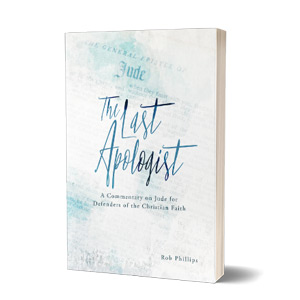
The Missouri Baptist Convention has published a new resource called The Last Apologist: A Commentary on Jude for Defenders of the Christian Faith. The 275-page book is available in print and Kindle editions on Amazon, and in print from the MBC. But we also want to make each of the 16 chapters available online. This post features the second half of Chapter 14.

Previously: Merely Natural: Scoffers Without the Spirit

____________________


But you, dear friends, remember the words foretold by the apostles of our Lord Jesus Christ; they told you, “In the end time there will be scoffers walking according to their own ungodly desires.” These people create divisions and are merely natural, not having the Spirit. (Jude 17-19 HCSB)

Jude writes that false teachers “create divisions” (v. 19). The Greek word apodiorizo refers not only to divisions, but to the motives behind them and the results they produce. The term means “to make a distinction.” It describes these interlopers as ones who present themselves as superior to other leaders in the church. Marvin Vincent, the Presbyterian minister best known for his Word Studies in the New Testament, writes that these false teachers “draw a line through the Church and set off one part from another.”

In this regard, they are like the Pharisees, lovers of money who, while listening to Jesus, are “scoffing at Him” (Luke 16:14). Jesus tells them, “You are the ones who justify yourselves in the sight of others, but God knows your hearts. For what is highly admired by people is revolting in God’s sight” (v. 15).

The religious leaders demonstrate hypocrisy, saying one thing and doing another. Jesus tells the crowds not to do what the scribes and Pharisees do because “they don’t practice what they teach. They tie up heavy loads that are hard to carry and put them on people’s shoulders, but they themselves aren’t willing to lift a finger to move them. They do everything to be observed by others: They enlarge their phylacteries and lengthen their tassels. They love the place of honor at banquets, the front seats in the synagogues, greetings in the marketplaces, and to be called ‘Rabbi’ by people” (Matt. 23:3b-7).

Finally, the religious leaders of Jesus’ day concoct their own twisted view of the Hebrew Scriptures. Jesus warns His disciples to “beware of the yeast of the Pharisees and Sadducees,” meaning their false teaching (Matt. 16:6, 11-12).
Continue reading

Six key passages on the Incarnation

This is the fourth in a series of articles on the Incarnation. Previously: Ten truths about the Incarnation

By the term “Incarnation,” we mean the eternal Son of God took on human flesh in the person of Jesus of Nazareth. As such, Jesus is one person in two distinct but undivided natures: human and divine.

In previous articles, we explored how these two natures work together as the eternal Son of God adds sinless humanity to His deity via the miracle of the virgin birth. And we summarized 10 essential truths about the Incarnation.

Now, let’s look at six key passages of Scripture that help us understand what it means when the apostle John writes, “the Word became flesh.”

John 1:14 – “The Word became flesh and dwelt among us. We observed his glory, the glory as the one and only Son from the Father, full of grace and truth.”

The eternal Son of God always had a divine nature. He was with God in the beginning, and John makes it clear He was God (John 1:1).  In the Incarnation, He added a real human nature and thus became both God and man.

The word “dwelt” may be translated “tabernacled.” Just as the divine presence was with ancient Israelites in the pillar of cloud and fire, the tabernacle, and the temple, Yahweh now manifested Himself in the person of Jesus Christ, the God-Man.
Continue reading

What Islam and Mormonism have in common

Satan is clever but not original.

He cannot create, procreate, raise the dead, or inspire Scripture. But he can take things God created for good and twist them for his evil purposes.

He is especially proficient in false religions, from Algard Wicca to Zoroastrianism. While the world’s wayward faiths are diverse, the evil one’s fingerprints are on all of them.

To illustrate, let’s look at similar patterns in two very different belief systems: Islam and Mormonism.

It would seem these religious organizations have little in common. Their doctrines and rituals are distinctly different. Yet their claims to truth bear remarkable similarities. Consider six such parallels.

(1) A false god. Both Muslims and Mormons profess belief in the God of Scripture. However, their gods stand in stark contrast to Yahweh, the one true and living God.

 Islam’s god, Allah, is monolithic, impersonal, unknowable, and unapproachable. He is the author of both good and evil and fatalistically determines all things.

Mormons worship Elohim, or “Heavenly Father,” as the god of this world. Once a man, he attained deity, as did his first-born spirit child Jesus (Jehovah). Mormons believe there are many gods and many worlds and that men may themselves become gods one day.
Continue reading

Merely Natural: Scoffers Without the Spirit

The Missouri Baptist Convention has published a new resource called The Last Apologist: A Commentary on Jude for Defenders of the Christian Faith. The 275-page book is available in print and Kindle editions on Amazon, and in print from the MBC. But we also want to make each of the 16 chapters available online. This post features Chapter 12: Wild Waves and Wandering Stars: The Doom of False Teachers.

Previously: Look! The Lord Comes: The Prophecy of Enoch

____________________


But you, dear friends, remember the words foretold by the apostles of our Lord Jesus Christ; they told you, “In the end time there will be scoffers walking according to their own ungodly desires.” These people create divisions and are merely natural, not having the Spirit. (Jude 17-19 HCSB)

William MacLeod Raine (1871 – 1954) was a newspaper man and author of a number of western adventure novels. In a feature about Dodge City, Kansas, Raine wrote that practical jokes fueled the city’s “good spirits” in the late 19thcentury – and the wilder the joke, the better.

Enter “Mysterious Dave,” also known as Dave Mathers, one of the nastiest characters to walk the sawdust trail. Raine called him “the worst of bad men and a notorious scoffer.”

It so happened that an evangelist known as Brother Johnson came to town and led a series of meetings so successful that the crowds outgrew the church and adjourned to a local dance hall, thus attracting Mysterious Dave. He listened to Brother Johnson preach several times, admiring the evangelist’s fiery sermons against sin. Perhaps, the preacher thought, there was hope for this Dodge City scoundrel.

So, Brother Johnson preached directly at Dave, leveraging the full weight of his message against the sinner’s stubborn resistance. And then it happened. Dave buried his head in his hands and sobbed. The preacher boldly exclaimed that he was willing to die if he could convert this one vile sinner. The deacons in the congregation agreed that they, too, would not resist going straight to heaven if Mysterious Dave were converted.

At last Dave rose to his feet and said, “I’ve got yore company, friends. Now, while we’re all saved I reckon we better start straight for heaven. First off, the preacher; then the deacons; me last.” Dave pulled out his “whoppin’ big gun” and started shooting.

The preacher dove through a window to avoid the gunfire. His deacons scattered in search of cover. Raine concluded, “Seemed like they was willin’ to postpone taking that ticket to heaven. After that they never did worry any more about Dave’s soul.”

Notorious scoffers like Dave Mathers eventually reveal their true character. They are incorrigible and unrepentant. At some point, people may fairly conclude that they have passed the point of no return. Nothing successfully prompts a change in their behavior because their character is fully corrupted.

But scoffers in the Old West are nothing new. First-century false teachers honed the art of ridicule long before the first brigands rode into Dodge City. Jude reminds his readers that the apostles warned us of such people. We should be on guard but not surprised.
Continue reading