 The Roman Catholic Church traces its beginning to the apostle Peter, claiming he is the rock upon whom Jesus built His church (Matt. 16:18). As the first pope, Peter is followed by an unbroken line of successors stretching to Pope Francis today. Non-Catholics establish the beginning of the Roman Catholic Church at A.D. 590 with Gregory I, who consolidated the power of the bishopric in Rome.
In any case, the Catholic Church is the world’s largest Christian church, with 1.2 billion members. The Catholic hierarchy includes cardinals and bishops and is led by the bishop of Rome, also known as the pope.
The Catholic Church teaches that it is the one true church divinely founded by Jesus Christ. In addition, it teaches that its bishops are the successors of Jesus’ apostles, and that the pope, as the successor to the head of the apostles (Peter), has supreme authority over the church.
Categories of Catholics
While the Catholic Church claims to be the one true church, Catholics worldwide hold to a diversity of beliefs. Researcher Ken Samples has concluded that there are six primary categories of Roman Catholics:
Ultratraditional Catholics defend historical Catholicism and are critical of recent changes such as those coming out of Vatican II in the 1960s.
Traditional Catholics resist liberalism and modernism within the church, yet they generally accept the reforms of Vatican II.
Liberal Catholics celebrate human reason over the authority of the church; they also question the infallibility of the pope, church councils, and the Bible
Charismatic/evangelical Catholics emphasize the gifts of the Holy Spirit, the importance of being baptized in the Holy Spirit, and the Spirit-filled life.
Cultural Catholics are “womb-to-tomb” Catholics – born, baptized, married, and buried in the church. However, they essentially go through the motions of their faith without much regard for its meaning.
Popular folk Catholics predominate Central and South America. They combine elements of animistic or nature-culture religion with traditional medieval Catholicism (Christian Research Journal, Winter 1993).
Continue reading →


 The Qur’an is Islam’s most holy book. While Muslims believe Allah has revealed many written works, including the Old and New Testaments, these revelations ended with the Qur’an, which supersedes all others.
 This passage echoes Joel 3:9-13 in which grape harvesting and wine pressing are used as metaphors for judgment, and Isa. 63:1-6 in which God treads the grapes in His fury, pressing out the lifeblood of people. The same metaphor is found in Jer. 25:15, 28-31. Judgment also is symbolized by the harvest in Jer. 51:33 and Hosea 6:11. Moreover, it is the Messiah who treads the winepress in Rev. 19:15.
 Some Christian scholars today cast doubt over the canon of Scripture – those 66 books that the Church has long held to be the complete written revelation of God. They justify their views by claiming: (1) that surviving texts of the Old and New Testaments are corrupt and therefore unreliable, or (2) that early Church leaders deliberately excluded certain books for personal or political reasons.


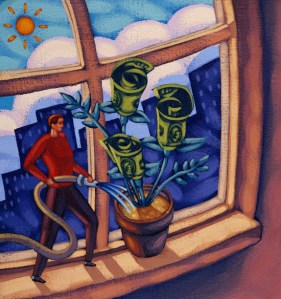 Leaders of the word-faith movement, also known as the prosperity gospel, say they place a high value on scripture. Unfortunately, their unique interpretation of God’s word leads to unbiblical conclusions about God’s design for the Christian life.
 OnceDelivered.net