
Tagged: false prophets
Is Mormonism necessary?
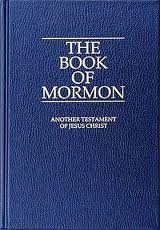 As the official version of the story goes, in 1820, 14-year-old Joseph Smith went into the woods near his home in rural New York to pray. There, God the Father and Jesus Christ appeared to him.
Caught up in the Protestant revivalism of his day, Smith inquired as to which of the Christian denominations he should join. None of them, he was told, because they were all wrong. “The Personage who addressed me said that all their creeds were an abomination in his sight,” Smith later recalled.
Smith was urged to take heart. God would use him to reinstate the true church, which had fallen into complete apostasy after the death of the apostles.
The Church of Jesus Christ of Latter-day Saints professes to be the restored true church. Its leaders claim that Joseph Smith faithfully rediscovered proper church organization – that is, the Aaronic and Melchizedek priesthoods – and the true gospel, which was lost due to “designing priests” that removed its “plain and precious” truths.
In short, the LDS Church declares itself the one true church, while all other forms of Christianity remain apostate.
The Apologist’s Tool Kit
 Thank you, Missouri Baptists, for enthusiastically supporting the MBC’s new apologetics ministry. Over the last year, I have been privileged to speak or lead workshops in many churches across the state to help Christians “earnestly contend for the faith” (Jude 3).
Topics have ranged from “How do I know the Bible is true?” to “What do false prophets have in common?”
As many of you know, apologetics simply is “a reasonable defense of the Christian faith.” For followers of Jesus there has never been a more important time to know what we believe, why we believe, and how to share our faith with an increasingly skeptical world.
The apostle Peter urges us to “set apart the Messiah as Lord in your hearts, and always be ready to give a defense to anyone who asks you for a reason for the hope that is in you” (1 Peter 3:15).
The beast from the earth – Revelation 13:11-18
Previously: If anyone has an ear – Revelation 13:9-10
The scripture
 Rev. 13:11 – Then I saw another beast coming up out of the earth; he had two horns like a lamb, but he sounded like a dragon. 12 He exercises all the authority of the first beast on his behalf and compels the earth and those who live on it to worship the first beast, whose fatal wound was healed. 13 He also performs great signs, even causing fire to come down from heaven to earth in front of people. 14 He deceives those who live on the earth because of the signs that he is permitted to perform on behalf of the beast, telling those who live on the earth to make an image of the beast who had the sword wound and yet lived. 15 He was permitted to give a spirit to the image of the beast, so that the image of the beast could both speak and cause whoever would not worship the image of the beast to be killed. 16 And he requires everyone – small and great, rich and poor, free and slave – to be given a mark on his right hand or on his forehead, 17 so that no one can buy or sell unless he has the mark: the beast’s name or the number of his name. 18 Here is wisdom: The one who has understanding must calculate the number of the beast, because it is the number of a man. His number is 666. (HCSB)
A second beast
We are introduced to the second of two beasts in this passage: the beast from the earth. We have met the beast from the sea in verses 1-10. The dragon empowers both beasts; this is explicitly stated of the first beast and implied with respect to the second, which has two horns like a lamb but speaks like a dragon. He is endowed with great authority and power, compelling people to worship the first beast and deceiving them with miraculous signs. He even gives life to an image of the first beast and causes those who refuse to worship the image to be killed. Finally, he restricts commerce so that only those who take a mark on their right hands or foreheads, indicating their allegiance to the Antichrist, may buy and sell.
Who is this beast from the land? Is he a person, or perhaps an institution? Why does he compel people to worship the first beast rather than himself? Does he really make a statue come alive? Is the mark of the beast a visible sign, or should we interpret this figuratively? And is there any way of knowing what 666 – the number of the Antichrist – really means?
The rise and fall of a false prophet
This column first appeared in The Pathway, the official news journal of the Missouri Baptist Convention.
 The recent passing of the Rev. Sun Myung Moon ends a colorful chapter in the history of counterfeit Christianity. The founder of the Unification Church and self-proclaimed “Lord of the Second Advent” established a religious empire that enriched Moon and deceived millions.
He married followers in the name of the “True Family,” a sinless line of humanity that would complete the failed mission of Jesus, who died on the cross before He could marry and have children.
While Moon was a quirky leader to say the least, he also was typical of cult founders whose organizations fizzle when they die or are disgraced. The Unification Church today is a shadow if its former self.
Is Mormonism a cult?
This column appeared Sept. 12, 2012, in The Pathway, the official news service of the Missouri Baptist Convention.
With the national conventions behind us and the November elections on the horizon, Mitt Romney’s Mormonism increasingly finds its way into conversations. And that’s a good thing because it prompts all of us to learn more about a belief system that remains shrouded in mystery despite its American roots nearly 200 years ago.
At the end of the day, your friends may ask you point-blank: Is Mormonism a cult?
It’s a dicey question. If you answer yes, you may be accused of political incorrectness – or worse, religious bigotry. If you answer no, you may be tacitly approving of Mormonism as just another Christian denomination, which it’s not.
 OnceDelivered.net