
Tagged: Christian apologetics speaker
Is Mormonism a cult?
This column appeared Sept. 12, 2012, in The Pathway, the official news service of the Missouri Baptist Convention.
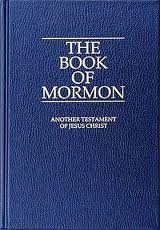 With the national conventions behind us and the November elections on the horizon, Mitt Romney’s Mormonism increasingly finds its way into conversations. And that’s a good thing because it prompts all of us to learn more about a belief system that remains shrouded in mystery despite its American roots nearly 200 years ago.
At the end of the day, your friends may ask you point-blank: Is Mormonism a cult?
It’s a dicey question. If you answer yes, you may be accused of political incorrectness – or worse, religious bigotry. If you answer no, you may be tacitly approving of Mormonism as just another Christian denomination, which it’s not.
The Doctrine of Divine Election – Download Free Study
 The debate over the doctrine of divine election goes back at least as far as the 5th Century but came into sharpest focus in the wake of the Reformation. Calvinism is enjoying a resurgence today among many evangelical Christians. What is Calvinism? Arminianism? What “doctrines of grace” does TULIP represent? How are the sovereignty of God and the freedom of people compatible? Is it possible to go too far in embracing Reformed theology? And where do you fall on the “five-point” scale? This study takes a balanced approach to Calvinism and Arminianism and attempts to explain the similarities and differences between them.
Download the free study: Chosen and Free – The Doctrine of Divine Election
Comparing Islam and Christianity
Islam is the youngest and fastest-growing major world religion. It was founded by Arabian visionary Muhammad (570-632 AD), who was born in the city of Mecca in Arabia. Muhammad claimed he received supernatural revelations from God through the angel Gabriel. These revelations were written down by others and compiled into a book called the Koran (or Qur’an). Islam today is comprised of two main schools: the majority Sunni school and the minority Shi’ite school. In addition, there are millions of Muslim mystics called Sufis. Islam is the second largest religion in the world (behind Christianity) with about 1.5 billion followers. Interestingly, the four nations with the largest number of Muslims today are all outside the Middle East – Indonesia, Pakistan, Bangladesh, and India.
Christian Apologetics 101: Download free workbook
Click here to download the free workbook
 Newsweek magazine recently reported that “the Christian God … is less of a force in American politics and culture than at any other time in recent memory.” Perhaps one reason is that Christianity holds to absolute truths in a society that is increasingly relativistic. When Christians hold fast to their convictions they may come under withering attacks from proponents of other faiths, secularists, or even the new breed of “angry atheists” who insist that our nation – indeed our world – would be better off with no religion at all.
Even more troubling is the realization that the church faces greater threats from within – for example, from those who relish “arguments and every high minded thing that is raised up against the knowledge of God” (2 Cor. 10:4-5); “deceitful spirits and the teachings of demons” (1 Tim. 4:1); false teachers who tickle our ears (2 Tim. 4:3); and false prophets who come to us with “cleverly contrived myths” (2 Peter 1:16).
For followers of Jesus there has never been a more important time to know what we believe, why we believe, and how to share our faith with an increasingly skeptical – and lost – world. The apostle Peter urges us to “set apart the Messiah as Lord in your hearts, and always be ready to give a defense to anyone who asks you for a reason for the hope that is in you” (1 Peter 3:15).
Apologetics 101 is designed for laypersons who want to be better equipped to share their faith over the back fence, across the lunch counter, or in the next cubicle. This workshop lays the groundwork for defending the Christian faith by addressing a number of key questions:
• What is Christian apologetics and why should it matter to me?
• How do I know the Bible is true?
• Who’s the real Jesus?
• What do Muslims, Mormons and Jehovah’s Witnesses believe?
• How can I identify false teachers?
• And what are some tactics for sharing my faith with people who don’t share my faith?
These free downloadable resources may be reproduced and used in whole or in part without charge as long as they are not altered or sold.
A voice like a trumpet
 In Revelation 4:1, the apostle John writes, “After this I looked, and there in heaven was an open door. The first voice that I had heard speaking to me like a trumpet said, ‘Come up here, and I will show you what must take place after this.'”
So, whose voice is like a trumpet?
John hears this voice and recognizes it instantly. It is “[t]he first voice that I had heard speaking to me like a trumpet” (v. 1). This is, of course, the voice of Jesus, who spoke to John many times during His earthly ministry. But now, with the sonic fullness of heaven’s atmosphere, John hears the Messiah’s magnified tones and remembers the sound from Rev. 1:10 as Jesus instructs him to write what he sees to the seven churches in Asia Minor. Some time later the Savior tells John, “Come up here, and I will show you what must take place after this” (v. 1).
Those who hold to a futurist view of Revelation argue that John’s call into heaven is a foreshadowing of the Rapture, which Paul describes as being accompanied by “a shout” from the Lord and “the trumpet of God” (1 Thess. 4:16).
There is some connection between the shouts of Jesus and the opening of the graves;
- In John 11, Jesus stands outside the tomb of Lazarus and shouts loudly, “Lazarus, come out!” His friend soon emerges from the grave after being dead nearly four days.
- In Matt. 27:50, just before dying, Jesus shouts with a loud voice and then gives up His spirit. The very next verses record, “Suddenly, the curtain of the sanctuary was split in two from top to bottom; the earth quaked and the rocks were split. The tombs also were opened and many bodies of the saints who had gone to their rest were raised. And they came out of the tombs after His resurrection, entered the holy city, and appeared to many” (vv. 51-53).
- And, of course, Paul’s teaching about the future resurrection of the saints in 1 Thess. 4:13-18 features Jesus descending from heaven with a shout, resulting in the resurrection of believers whose bodies rest in the graves.
The sound of the trumpet also is significant. Not only are trumpets used to herald kings, alert armies to prepare for battle, and forewarn God’s people of judgment, but Paul tells us a trumpet will sound when it’s time for the church to be called into heaven: “For the trumpet will sound, and the dead will be raised incorruptible, and we will be changed” (1 Cor. 15:52b). Some argue that Rosh Hashanah, the feast of the Jewish New Year, prefigures the Rapture of the church – a feast in which shofars, or rams’ horns, play a prominent role.
Whether John’s vision in Revelation 4 is indeed a preview of the Rapture, as futurists contend, or simply a unique invitation from Jesus for the apostle to see inside heaven’s throne room, it is clear that that future resurrection awaits all people, and that Jesus is the one who calls the dead from their graves and into judgment. He said in John 5:28-29: “… a time is coming when all who are in the graves will hear His (Jesus’) voice and come out — those who have done good things to the resurrection of life, but those who have done wicked things, to the resurrection of judgment.”
One final note: Lest you think Jesus’ words support the false notion of works-based salvation, Jesus is clear on the requirements for eternal life just a few verses earlier: “I assure you: Anyone who hears My word and believes Him who sent Me has eternal life and will not come under judgment but has passed from death to life” (John 5:24). The “good things” and “wicked things” of verse 29 are merely the fruits of a person’s belief, or lack thereof, in Christ.
 OnceDelivered.net