Why you can’t say “Mormon” anymore

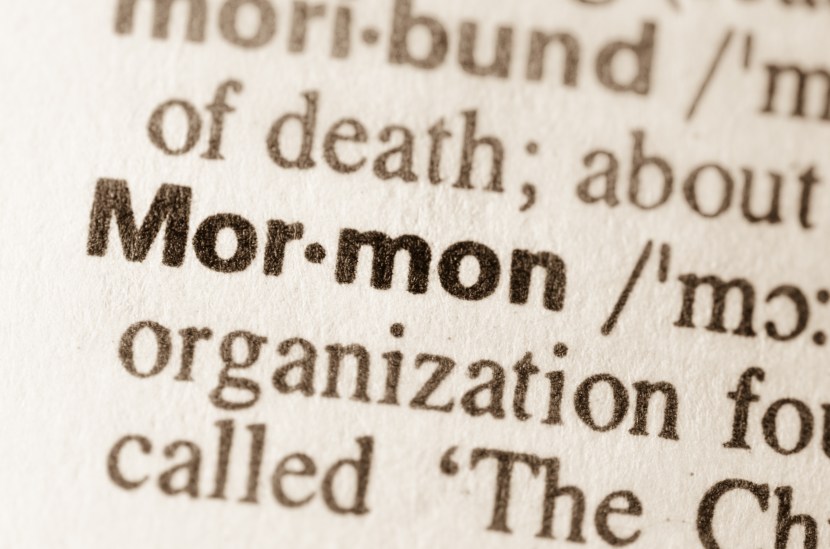
Last month, Russell Nelson, president of the Church of Jesus Christ of Latter-day Saints, announced that God had impressed upon him the urgency of casting off the nickname “Mormon.”

Non-Latter-day Saints in the 19thcentury used the “Mormon” moniker disparagingly to identify members of the organization founded by Joseph Smith, whose followers came to embrace the name as a badge of honor. Even so, Nelson argued that “Mormon” does not do justice to the name that God, in 1838, gave Smith for his fledging religion.

“The Lord has impressed upon my mind the importance of the name He has revealed for His Church, even The Church of Jesus Christ of Latter-day Saints,” Nelson said in a statement. “We have work before us to bring ourselves in harmony with His will.”

Other acceptable names, according to Nelson, include “the Church,” “Church of Jesus Christ,” and “restored Church of Jesus Christ.”
Continue reading

Jude’s doxology

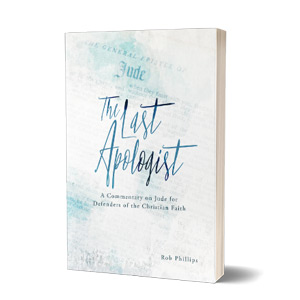
The Missouri Baptist Convention has published a new resource called The Last Apologist: A Commentary on Jude for Defenders of the Christian Faith. The 275-page book is available in print and Kindle editions on Amazon, and in print from the MBC. But we also want to make each of the 16 chapters available online. This post features the last half of Chapter 16: Doxology: To the Only God Our Savior.

Previously: To the Only God Our Savior

___________________________________


Now to Him who is able to protect you from stumbling and to make you stand in the presence of His glory, blameless and with great joy, to the only God our Savior, through Jesus Christ our Lord, be glory, majesty, power, and authority before all time, now, and forever. Amen. (Jude 24-25 HCSB)

Jude ends his epistle with a wonderful four-part doxology, or word of praise. To “the only God our Savior, through Jesus Christ our Lord,” Jude offers:

Glory– the sum total of all that God is and does. The word “glory” captures all the divine attributes in their radiance. The Greek word doxa, from which we get “glory,” means honor; renown; an especially divine quality; the unspoken manifestation of God; splendor. We see this in Yahweh in the Old Testament. In the desert, the Lord provides a place in the crevice of a rock for Moses, and covers His servant with His hand to protect him from the certain death that results when sinful humans see God’s glorious face (Ex. 33:20-23).

Such glory belongs only to God (Isa. 42:8; 48:11). However, in the New Testament, we see divine glory as an attribute of Jesus – an attribute He shared with the Father before the creation of the world (John 17:5). On the Mount of Transfiguration, Jesus shows Peter, James, and John his glory. His face shines like the sun, and even His clothes become as white as light (Matt. 17:1-8). The writer of Hebrews notes this about Jesus, “He is the radiance of His [God’s] glory, the exact expression of His nature …” (Heb. 1:3a).
Continue reading

What do you know about the Incarnation?

This is the last in a series of articles on the Incarnation.

Over the last six columns, we have examined the doctrine of the Incarnation. As we complete our study, let’s test what we’ve learned about the person and work of Jesus. Answer the following questions (feel free to refer to previous columns). The correct responses are listed at the end of each question.

  1. What is the Incarnation?

(a) The state of living in a country that’s crazy about automobiles

(b) The eternal Son of God taking on human flesh in the person of Jesus of Nazareth

(c) A floral decoration; a boutonniere

(d) The creation of Jesus as an archangel

Correct answer: (b)

  1. Which of the following are heretical views of the Incarnation (choose all that apply):

(a) Arianism

(b) Cronyism

(c) Botulism

(d) Docetism

Correct answers: (a) and (d)
Continue reading

To The Only God Our Savior

The Missouri Baptist Convention has published a new resource called The Last Apologist: A Commentary on Jude for Defenders of the Christian Faith. The 275-page book is available in print and Kindle editions on Amazon, and in print from the MBC. But we also want to make each of the 16 chapters available online. This post features the beginning of Chapter 16: Doxology: To the Only God Our Savior.

Previously: Under the Spell of False Teachers

___________________________________


Now to Him who is able to protect you from stumbling and to make you stand in the presence of His glory, blameless and with great joy, to the only God our Savior, through Jesus Christ our Lord, be glory, majesty, power, and authority before all time, now, and forever. Amen. (Jude 24-25 HCSB)

The epistle of Jude is rich with graphic imagery and stark warnings. It is an urgent message, a wake-up call to the saints, imploring them to wrestle vigorously in defense of the core doctrines that define the Christian faith.

False teachers have crept into the church. They are ungodly, promiscuous, arrogant, immoral, disrespectful, blasphemous, beastly, selfish, fearless, grumbling, flattering, scoffing, and devoid of the Spirit. Their judgment has been marked out long ago. They have passed the point of no return. Their goal is to take as many people as possible to hell with them in a stretch limousine.

Israel’s history shows that their ilk goes down for the count beneath the judgment of God, yet they persist in their wickedness. They are dangerous reefs, waterless clouds, fruitless trees, wild waves of the sea, and wandering stars.

It seems overwhelming to contend with such foes. Equally frightening is the nagging fear that no doubt runs through the minds of Jude’s readers, including us: If the apostates were immersed in Christianity and still walked away, could the same thing happen to us? And then, the unthinkable: Did they lose their salvation – and could we?

But Jude’s warning comes with an ironclad guarantee. Yes, God judges the wicked, but He also remains faithful to His own. And, in the end, He keeps them secure. No one is able to pry them from His loving arms.
Continue reading

Incarnational heresies

This is the sixth in a series of articles on the Incarnation. Previously: Six key passages on the Incarnation.

As we complete our examination of the Incarnation – the eternal Son of God taking on human flesh in the person of Jesus of Nazareth – it’s important to identify a number of heretical views that have plagued the church throughout its history. Some of these heresies effectively have been countered, while others continue to rear their ugly heads and cause people who sincerely seek the truth to embrace “another Jesus” (2 Cor. 11:4).

In God Among Sages, Kenneth Samples highlights eight historical heresies with respect to the Incarnation.

Docetism. This was an early form of Gnosticism, a heresy that threatened the fledgling church throughout its first three centuries. Docetism advanced a type of dualism, expressing the belief that spirit is good and matter is evil.

Docetists argued that Jesus only appeared to be human. In fact, their name comes from the Greek word dokeo, which means “to seem.” They asserted that Jesus had a “phantom-like body.”

Docetism denied the true humanity of Jesus, which undermined the reality of His death on the cross, burial, and physical resurrection – all necessary elements in the gospel message. The apostle John countered Docetism head-on in 1 John 4:1-3.
Continue reading