
Tagged: angels
This demands the perseverance of the saints – Revelation 14:12
Previously: And a third angel followed them – Revelation 14:9-11
The scripture
Rev. 14:12 – This demands the perseverance of the saints, who keep God’s commands and their faith in Jesus. (HCSB)
This demands the perseverance of the saints
 Verse 12 reads, “This demands the perseverance of the saints, who keep God’s commands and their faith in Jesus.” This is similar to the message of Rev. 13:10: “This demands the perseverance and faith of the saints.” In both passages, the Lord reminds the persecuted saints – and perhaps even their persecutors – that He will judge the wicked. Yes, the beast will wield great power, ascend to a worldly throne, and command people of every nationality to bend the knee to him. Yes, he will harangue, imprison, torment and slaughter those who refuse to worship him. At times it will seem that faithfulness to Jesus is unbearable and unrewarded. But those who “keep God’s commands and their faith in Jesus” one day will be vindicated. Those who take Christians captive will be imprisoned themselves. Those who harass God’s people will find there is no rest for them in this life or the life to come. Those who take the sword and extinguish the lives of the faithful will long for death themselves but find it illusive as they suffer God’s wrath.
“In the fiery ordeal of persecution which awaits all who will not worship the beast, the faith and patience of the followers of God and Jesus shall be put to the test, and proved” (R. Jamieson, A.R. Fausset, D. Brown, A Commentary, Critical an Explanatory, on the Old and New Testaments, Rev. 14:12).
The saints who persevere will be rewarded for their godly works at the judgment seat of Christ (2 Cor. 5:10). Jesus urges His followers to lay up treasure in heaven, where it is kept safe and will endure (Matt. 6:20). The apostle Paul informs us that our works of faithfulness, like gold, silver and precious stones, will be refined in the fires of judgment and emerge purified (1 Cor. 3:11-15). And in Revelation Jesus reminds us that our faithfulness will be rewarded (Rev. 2:23; 22:12).
And a third angel followed them – Revelation 14:9-11
Previously: A second angel followed – Revelation 14:8
The scripture
Rev. 14:9 – And a third angel followed them and spoke with a loud voice: “If anyone worships the beast and his image and receives a mark on his forehead or on his hand, 10 he will also drink the wine of God’s wrath, which is mixed full strength in the cup of His anger. He will be tormented with fire and sulfur in the sight of the holy angels and in the sight of the Lamb, 11 and the smoke of their torment will go up forever and ever. There is no rest day or night for those who worship the beast and his image, or anyone who receives the mark of his name.” (HCSB)
 A third angel followed them

A third angel follows the other two and pronounces woe on those who worship the beast and his image and receive a mark on their foreheads or hands. The consequences of rejecting God – who has revealed Himself in creation, conscience, Christ, and the canon of scripture – are spelled out plainly. The one who embraces the beast will experience the consequences of his or her rebellion.
First, the beast worshiper will “drink the wine of God’s wrath, which is mixed full strength in the cup of His anger” (v. 10a). The Greek word for “cup,” poterion, is used 82 times in the New Testament (HCSB) and denotes a drinking vessel of any sort. Commonly, a cup is a small bowl made of pottery, wider and shallower than today’s tea cups. However, the wealthy enjoy their drinks in goblet-shaped cups of metal or glass. The cup used at the Last Supper likely is an earthenware bowl large enough for all to share.
Figuratively, however, throughout the Bible the word “cup” may describe a measure of blessings or wrath divinely allotted to people or nations:
- In Psalm 16:5, David calls the Lord “my portion and my cup of blessing.”
- In Psalm 116:12-13, the writer declares, “How can I repay the Lord for all the good He has done for me? I will take the cup of salvation and call on the name of Yahweh.”
- But in Isaiah 51:17, the prophet warns, “Wake yourself, wake yourself up! Stand up, Jerusalem, you have drunk the cup of His fury from the hand of the Lord; you who have drunk the goblet to the dregs – the cup that causes people to stagger.”
- In the Garden of Gethsemane, as Jesus agonizes over His impending suffering and death, He prays, “My Father! If it is possible let this cup pass from Me. Yet not as I will, but as You will” (Matt. 26:39).
- And moments later, after Peter cuts of the ear of the high priest’s slave, Jesus tells him, “Sheathe your sword! Am I not to drink the cup the Father has given Me?” The cup Jesus endures, of course, is His sacrificial and substitutionary death on the cross to secure our salvation, a most bitter cup as “the One who did not know sin [became] sin for us so that we might become the righteousness of God in Him” (2 Cor. 5:21). It’s also a cup Jesus endures “for the joy that lay before Him” because it results in our salvation (Heb. 12:2).
But now in Revelation the cup, which the Babylonians entice the world to drink, is turned into the cup of God’s wrath.
A second angel followed – Revelation 14:8
Previously: I saw another angel – Revelation 14:6-7
 The scripture
Rev. 14:8 – A second angel followed, saying: “It has fallen, Babylon the Great has fallen, who made all nations drink the wine of her sexual immorality, which brings wrath.” (HCSB)
A second angel followed
A second angel now appears, saying, “It has fallen, Babylon the Great has fallen, who made all nations drink the wine of her sexual immorality, which brings wrath.” The angel takes up the prophetic announcement of the fall of the city of Babylon in the Old Testament:
- “Babylon has fallen, has fallen. All the images of her gods have been shattered on the ground.” (Isa. 21:9)
- “Suddenly Babylon fell and was shattered.” (Jer. 51:8a)
God uses Babylon as an instrument of His judgment against Judah. This wicked nation to the east basks in idolatry and exports it to others. Proud, powerful, and ambitious, the Babylonians destroy the temple, sack Jerusalem, and carry the Jewish people into captivity. This is exactly what the prophets warned would happen, but the Babylonians are foolish to think they control the world’s destiny; they are, in fact, a tool in the hand of God. Years later, the Medes and Persians tunnel beneath Babylon’s seemingly impenetrable walls and take the city in a single night. Babylon the Great falls. This dark period in Judah’s history is well-known to John’s readers, and they may readily apply its message to the words of the second angel.
What have we done to the Christmas story?
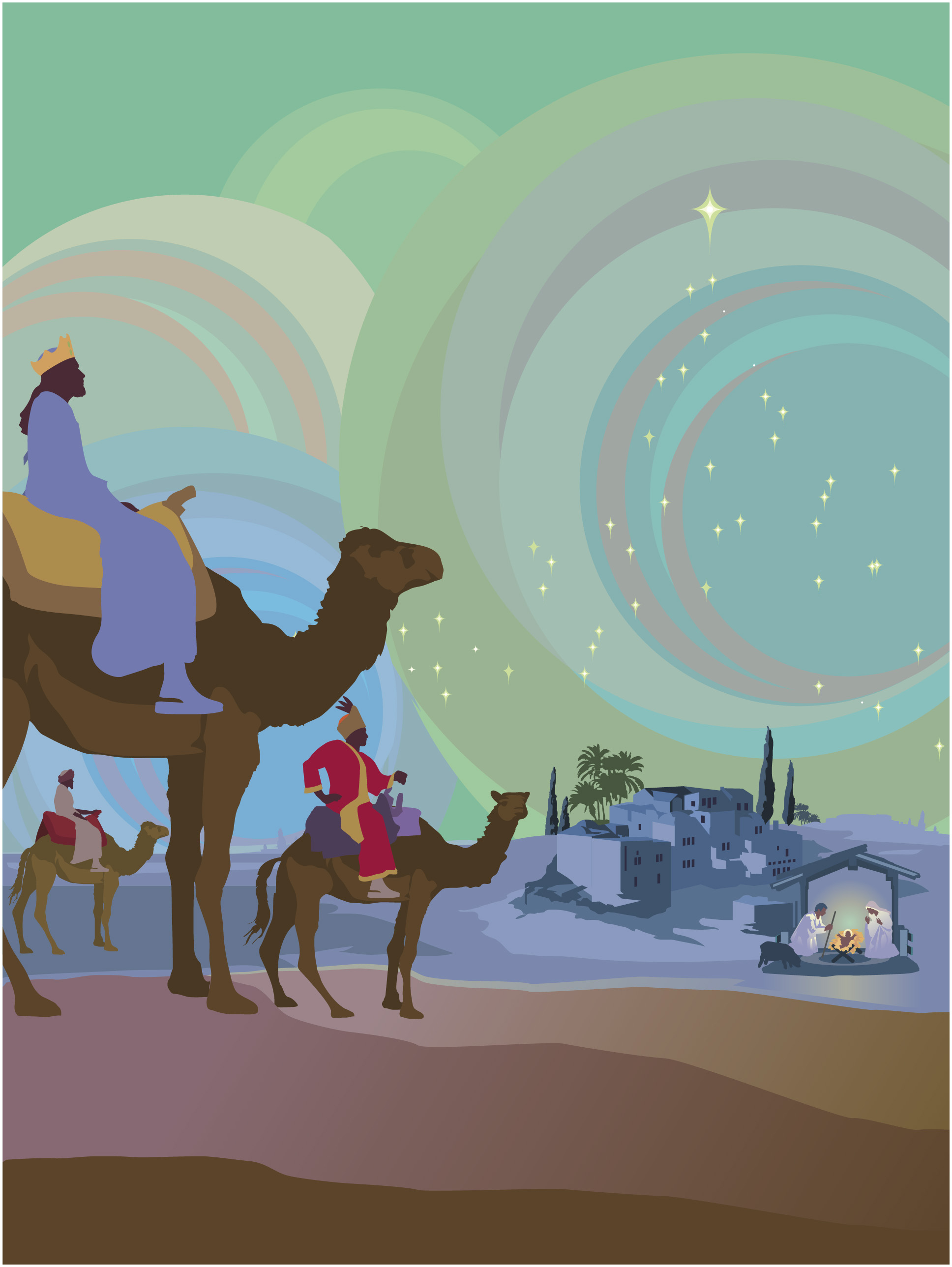 Christians love to hear and tell the traditional Christmas story. The birth of Jesus includes Mary and Joseph seeking shelter on a winter night, no room in the inn, a baby born in a stable, and angels visiting lowly shepherds nearby.
But our modern telling of the account in Luke 2:1-20 embraces critical flaws, according to Kenneth E. Bailey, who spent 40 years teaching the New Testament in the Middle East and who authored Jesus Through Middle Eastern Eyes: Cultural Studies in the Gospels.
According to Bailey, a careful reading of the text, along with an understanding of Jewish culture, illuminate five biblical truths that challenge our Westernized version of the Christmas story:
1. Joseph was returning to the village of his origin. Simply entering Bethlehem and telling people, “I am Joseph, son of Heli, son of Matthat, the son of Levi” instantly would have opened most homes to him.
A loud voice in heaven — Revelation 12:10
Previously: The great dragon was thrown out — Rev. 12:9
Rev. 12:10 – Then I heard a loud voice in heaven say: The salvation and the power and the kingdom of our God and the authority of His Messiah have now come, because the accuser of our brothers has been thrown out: the one who accuses them before God day and night. (HCSB)
A loud voice in heaven
 In verse 10 John records, “Then I heard a loud voice in heaven.” We are not told whose voice utters this celebratory hymn, just as in previous passages in Revelation we are not always given the identity of those speaking. The emphasis here is not on the messenger but on the message. We may, however, rule out an angelic source to the voice in heaven because of the words “the accuser of our brothers” (v. 10b). Satan accuses sinful and fallen people, not angels, before God. Further, scripture does not refer to the angelic host as “brothers.” So, it’s possible the voice in heaven is that of Jesus on behalf of the redeemed – or, more likely, the combined voices of the martyrs before the throne.
It is fitting that we hear a song, for the people of God often raise their voices in praise when they witness the miraculous deeds of our sovereign God. In the Old Testament, for example, there is the song of Moses at the Red Sea (Ex. 15); the song of Deborah after the Lord delivers Israel from Jabin the king of Canaan (Judges 5); and the song of David, when the Lord delivers him out of the hand of all his enemies (2 Sam. 22). In the New Testament, followers of Jesus compose hymns of praise to honor Him for His finished work on the cross, and singing becomes an integral part of worship (for example, see Acts 16:24-26; 1 Cor. 14:25-27; Eph. 5:19; Col. 3:16).
In this passage in Revelation, there is particular cause for joy. “On no occasion could such a song be more appropriate than on the complete routing and discomfiture of Satan and his rebellious hosts” (Barnes’ Notes on the Bible, Rev. 12:10).
 OnceDelivered.net