
Tagged: Christianity
The breath of life from God entered them — Revelation 11:11-12
Previously: The beast will conquer and kill them — Rev. 11:7-10
The scripture
 Rev. 11:11 — But after the three and a half days, the breath of life from God entered them, and they stood on their feet. So great fear fell on those who saw them. 12Then they heard a loud voice from heaven saying to them, “Come up here.” They went up to heaven in a cloud while their enemies watched them. (HCSB)
The breath of life from God entered them
John records that “after the three and a half days, the breath of life from God entered them, and they stood on their feet. So great fear fell on those who saw them” (v. 11). Various interpretations are offered. For some, this resurrection is the restoration of political and religious order following the anarchy of the Jewish War, or perhaps the ultimate political and spiritual revival of Israel (see Eze. 37:10-11). For others, it is the resurrection of Christ and the Spirit-infused testimony of the church constituting the two witnesses. Still others argue that after three and a half years of uncontested papal rule following the declaration of the Fifth Lateran Council in 1514, Martin Luther nails his 95 Theses to the door of the Wittenberg church, igniting the Reformation. Spiritualists contend that the events in Revelation 11 symbolize the many times in church history that the Body of Christ has been beaten down by the world, only to rise stronger and rightly vindicated.
You must prophesy again: Revelation 10
Previously: Take the scroll … and eat it
The scripture
Rev. 10:11 – And I was told, “You must prophesy again about many peoples, nations, languages, and kings.” (HCSB)
You must prophesy again (v. 11)
 Finally, John is told he “must prophesy again about many peoples, nations, languages, and kings” (v. 11). Another possible translation is that John must prophesy “against” or “concerning” many peoples. While the Lamb redeems a countless throng from every tribe, language, people and nation (Rev. 5:9; 7:9-17), there are hoards of stiff-necked unbelievers who resist the gospel John preaches, war against Christ and His people, and bring upon themselves certain destruction (Rev. 11:9; 13:7; 17:15; 19:11-21). Kings in particular will take their stand on the side of evil and will pay dearly for it (Rev. 6:15; 16:12-14; 17:2, 18; 19:18-19).
“The apostle is made to know that this book of prophecy, which he had now taken in, was not given him merely to gratify his own curiosity, or to affect him with pleasure or pain, but to be communicated by him to the world” (Matthew Henry’s Commentary on the Whole Bible: Complete and Unabridged in One Volume, Rev. 10:8-10).
Is Mormonism a cult?
This column appeared Sept. 12, 2012, in The Pathway, the official news service of the Missouri Baptist Convention.
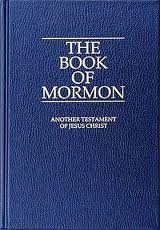 With the national conventions behind us and the November elections on the horizon, Mitt Romney’s Mormonism increasingly finds its way into conversations. And that’s a good thing because it prompts all of us to learn more about a belief system that remains shrouded in mystery despite its American roots nearly 200 years ago.
At the end of the day, your friends may ask you point-blank: Is Mormonism a cult?
It’s a dicey question. If you answer yes, you may be accused of political incorrectness – or worse, religious bigotry. If you answer no, you may be tacitly approving of Mormonism as just another Christian denomination, which it’s not.
The Great Impostor
This article appeared June 20 in The Pathway of the Missouri Baptist Convention.
 He was known as “The Great Impostor” and inspired a 1961 film by the same name.
Ferdinand Waldo Demara began his nefarious career during World War II by borrowing an Army buddy’s name, going AWOL and faking his suicide. A string of pseudo careers followed in which Demara portrayed a sheriff’s deputy, a doctor of applied psychology, and a child-care expert.
He was best known for masquerading as a surgeon aboard a Canadian Navy destroyer during the Korean War, successfully completing a string of operations. His final gig: a Baptist minister.
Demara’s life is a fascinating but sad story of one man’s quest for respectability. His success as an impostor also exposes the soft underbelly of a society whose people are easily duped by one who talks smoothly and claims to serve the greater good.
For Christians, Demara’s story is a warning to be on guard against those who disguise themselves as “servants of righteousness” (2 Cor. 11:15). But how can we know a religious impostor when we see one? The apostle Paul gives us three clear markers in 2 Cor. 11:4. False teachers proclaim “another Jesus … a different spirit … a different gospel.”
To illustrate, let’s look briefly at three belief systems: Islam, Mormonism, and the Watchtower (Jehovah’s Witnesses) – each of which teaches unbiblical doctrines concerning Jesus, the Holy Spirit and the gospel.
Islam
Jesus. Muslims say Jesus was one of God’s greatest prophets but inferior to Muhammad. The Koran denies that Jesus is the Son of God, and any Muslim who believes in the deity of Jesus has committed shirk – a sin that will damn that person to hell. Muslims do not believe Jesus died on the cross but was called to heaven by Allah before His death and was perhaps replaced by Judas Iscariot or someone else who looked like Jesus.
Holy Spirit. Islam denies the deity of the Holy Spirit, whom the Koran describes as “the angel which brought revelation.” The Koran also calls the Holy Spirit “Gabriel” (2:97).
The gospel. Islam teaches that Jesus was neither crucified for our sins nor resurrected; therefore salvation cannot possibly be attained through faith in Christ. Salvation in Islam is a combination of works and fate. Muslims pursue the five Pillars of Religion and hope Allah is kindly disposed toward them.
Mormonism
Jesus. Mormons say Jesus preexisted in heaven as a spirit child of Heavenly Father (Ehohim) and one of his goddess wives (as did Lucifer and all pre-existent human beings). He then took on a human body through sexual relations between Heavenly Father and Mary. Mormonism recognizes the Trinity only as one in “purpose,” arguing instead for a multitude of gods.
Holy Spirit. Founder Joseph Smith taught that the Father, Son and Holy Spirit “constitute three distinct personages and three Gods.” He further said, “The Holy Ghost is yet a spiritual body and waiting to take to himself a body as the Saviour did or as the gods before them took bodies.”
The gospel. Jesus’ atonement secured “salvation” (meaning resurrection) for nearly all people, but “men will be punished for their own sins” (Article of Faith #2 by Joseph Smith). People may earn “eternal life” (godhood) by “obedience to the laws and ordinances of the gospel,” meaning works (Article of Faith #3 by Joseph Smith).
The Watchtower
Jesus. Jesus was the first and direct creation of Jehovah. Jesus then created all “other” things (Col. 1:16 New World Translation). Jehovah’s Witnesses deny the Trinity, speaking of Jesus as “a god” or “mighty god” but not divine. They deny His incarnation, death on the cross (he died on a “torture stake”) and physical resurrection. Jesus returned invisibly in 1914 and is working today to overthrow Satan’s kingdom.
Holy Spirit. The “holy spirit” (always lower case) is the invisible active force of God that moves His servants to do His will. Jehovah’s Witnesses deny the personhood and deity of the Holy Spirit, proclaiming such beliefs to be inspired by Satan.
The gospel. Salvation in the Watchtower is a combination of faith and works, but there is no eternal security and virtually no hope of today’s Witnesses ever entering heaven, which is reserved for the 144,000 in the “anointed class.” The “other sheep” may, through faithfulness to Watchtower teachings and hard work, be brought back to life after an indefinite period of soul sleep and populate Paradise Earth.
In each of his roles, Ferdinand Waldo Demara was confronted with the truth – in some cases by the persons whose identity he had stolen – and exposed as a fraud. For Christians who encounter an array of false teachings today, our best defense is the truth of God’s Word.
The writer of Hebrews put it best: “For the word of God is living and effective and sharper than any two-edged sword, penetrating as far as to divide soul, spirit, joints, and marrow; it is a judge of the ideas and thoughts of the heart. No creature is hidden from Him, but all things are naked and exposed to the eyes of Him to whom we must give an account” (4:12-13).
The seventh seal: Revelation 8:1-6
Previously: One of the elders asked me (Rev. 7:9-17)
The scripture
Rev. 8:1 – When He opened the seventh seal, there was silence in heaven for about half an hour. 2Then I saw the seven angels who stand in the presence of God; seven trumpets were given to them. 3Another angel, with a gold incense burner, came and stood at the altar. He was given a large amount of incense to offer with the prayers of all the saints on the gold altar in front of the throne. 4The smoke of the incense, with the prayers of the saints, went up in the presence of God from the angel’s hand. 5The angel took the incense burner, filled it with fire from the altar, and hurled it to the earth; there were thunders, rumblings, lightnings, and an earthquake. 6And the seven angels who had the seven trumpets prepared to blow them (HCSB).
 Between the sixth and seventh seals we see a pause as 144,000 are sealed on earth and a vast number in heaven – from every nation, tribe, people and language – stand before the throne. Finally, as Christ opens the seventh seal, we learn there is silence for half an hour, followed by seven angels receiving trumpets that will herald judgments upon the wicked. Another angel approaches the altar, fills an incense burner with fire and hurls it to the earth, resulting in thunders, rumblings lightnings, and an earthquake.
Why is there half an hour of silence in heaven? What’s the significance of incense with regard to the prayers of the saints? Who are the seven angels who stand in the presence of God? How would John’s first-century readers understand all of this? And what are we to make of it today? Let’s look more closely at these six verses.
Silence in heaven
When Jesus opens the seventh seal, there is silence in heaven for “about half an hour” (v. 1). We have just heard the vast multitude, standing before the throne, shout praises to the Father and the Lamb (Rev. 7:10). And we’ve listened to the angels worship God with their uplifted voices as they fall on their faces before Him. When the Lamb opens the first seal, a thundering voice says, “Come.” When He opens the second, third and fourth seals, we hear the same voice. When Jesus opens the fifth seal, John hears the cry of the martyrs from under the altar. When He opens the sixth seal, there is a violent earthquake and tumultuous events in the heavens and on earth. Then, in Chapter 7, there is a high-decibel break in the action between the sixth and seventh seals as an angel cries in a loud voice to his fellow angels not to harm the earth until the 144,000 are sealed, and as angels around the throne worship God. But now, with the opening of the seventh seal, there is a deafening silence. Why? “Silence is appropriate in anticipation of the Lord’s coming judgment (Zeph. 1:7-10; Zech. 2:13)” (The ESV Study Bible, Rev. 8:1).
We should not assume that a delay means God is any less serious about vindicating His holiness. In Luke 18:1-8, Jesus tells the parable of the persistent widow to illustrate the importance of ceaseless prayer. “Will not God grant justice to His elect who cry out to Him day and night? Will He delay [to help] them? I tell you that He will swiftly grant them justice” (Luke 18:7-8a). And in 2 Peter 3:4-13, we are told that God’s timing is not ours: “[W]ith the Lord one day is like 1,000 years, and 1,000 years like one day. The Lord does not delay His promise, as some understand delay, but is patient with you, not wanting any to perish, but all to come to repentance” (2 Peter 3:8-9). The Lord’s judgment never falls before He has extended ample grace and mercy, which people may mistake as indecision or apathy on God’s part.
But why silence for half an hour? W.A. Criswell explains, “It is, first, the silence of awe and of intense expectancy. This is the last drama of the ultimate mystery of Almighty God… It is [secondly] a silence of ominous foreboding. Even the Lord God Almighty pauses before the onward rush of this great, final judicial administration…. Is that a brief while? No, indeed. It is seemingly interminable, unbearable…. The silence, the stillness in heaven is a pause one could never forget. Remember that time is altogether circumstantial and relative” (Expository Sermons on Revelation, pp. 161-62).
Matthew Henry argues that the prolonged silence may be seen from two perspectives: first, the perspective of peace, since there are no longer any cries being lifted up from the saints to God; and second, the perspective of expectation as the redeemed join the heavenly creatures in watching open-mouthed at what the Lord is about to do. Perhaps it is as Zechariah wrote, “Let all people be silent before the Lord, for He is coming from His holy dwelling” (Zech. 2:13).
We can’t say with certainty whether the silence lasts 30 minutes, or simply a notable period of time. Heaven is a noisy place filled with songs, praise, and adoration – all joyfully rehearsed by human and angelic creatures in the presence of God. Silence of even a few minutes would seem deafening by comparison. No doubt the saints, angels, elders and heavenly creatures are holding their collective breaths as the Creator is about to bring human history to a close.
Seven angels are given trumpets
During this silence, seven angels are given trumpets. John tells us these are “the seven angels who stand in the presence of God” (v. 2). But who are these angels? We see four angels standing at the four corners of the earth in Rev. 7:1. And there are “seven angels” – presumably not the seven angels – with the last plagues in Rev. 15:1, but there is no specific mention elsewhere in Revelation of “the seven angels.” Some commentators say these are “the seven spirits before His throne” whom we encounter in Rev. 1:4, but a number of translations render it “the seven-fold Spirit,” or Holy Spirit, in the book’s opening vision.
These angels are distinguished from the multitude of other angelic creatures around the throne in that they “stand in the presence of God.” In scripture, the angel Gabriel identifies himself as one “who stands in the presence of God” (Luke 1:19). And in the apocryphal Tobit 12:15 we read, “I am Raphael, one of the seven holy angels which present the prayers of the saints, and which go in and out before the glory of the Holy One.” Perhaps there are others, unnamed in scripture, who serve in similar capacities. But it does not appear this is the seven-fold Holy Spirit, who is never depicted as blowing a trumpet. In any case, these seven angels take their trumpets in turn and prepare to blow them — a loud and clear warning of impending judgment.
Just as seals prevent written messages from being revealed until the proper authority breaks them and thus unravels the scroll, trumpets play unique roles as well. John is a Jew and is well versed in the place of trumpets in Israel’s national life. According to Numbers 10, trumpets have three important uses. They call people together (Num. 10:1–8), announce war (Num. 10:9), and herald special times (Num. 10:10). “The trumpet sounded at Mount Sinai when the Law was given (Ex. 19:16–19), and trumpets were blown when the king was anointed and enthroned (1 Kings 1:34, 39). Of course, everyone familiar with the Old Testament would remember the trumpets at the conquest of Jericho (Josh. 6:13–16)… Sounding seven trumpets certainly would announce a declaration of war, as well as the fact that God’s anointed King was enthroned in glory and about to judge His enemies (Ps. 2:1–5). As trumpets declared defeat to Jericho, they will ultimately bring defeat to Babylon” (Warren Wiersbe, The Bible Exposition Commentary, Rev. 8:1).
The fact that these are angels’ trumpets distinguishes them from the trumpet of God (1 Cor. 15:52; 1 Thess. 4:16), which proclaims the resurrection of believers, and from other New Testament trumpets (Heb. 12:19; Rev. 1:10, 4:1). The angels’ trumpets, sounded in turn, announce the Lord’s judgment upon the wicked of the earth.
At the golden altar
But before the seven angels sound the trumpets, a special angel performs a significant act at the golden altar in heaven. In the tabernacle and temple, the golden altar stands in front of the veil and is used to burn incense, a picture of prayer ascending to God (see Ps. 141:2). This is the work Zacharias is performing in the temple when the angel informs him that he and Elizabeth will have a son (Luke 1:5ff). The “prayers of the saints” (v. 4) are not the petitions of some special believers who have achieved superior status. All Christians are saints (2 Cor. 1:1; 9:1, 12; 13:13) and the Holy Spirit ensures their prayers ascend to their heavenly Father (Rom. 8:26). What’s more, scripture nowhere teaches that we are to direct our prayers to saints in heaven. Our prayers are to be directed to the Father through the Son with the aid of the Holy Spirit. It is possible that these are the prayers of the saints both in heaven (Rev. 6:9-11) and on earth for God to vindicate His holiness. These so-called “imprecatory prayers” are seen in the Psalms (see Pss. 7; 26; 35; 52; 55; and 58) and it appears God is about to answer them.
There is nothing wrong with prayers for vengeance, as long as we are beseeching God for His vengeance, not ours, and for His holiness to be vindicated, not our self-righteousness. There may be a fine line between imprecatory prayers and spiteful ones, but there is line in any case and we should not seek to cross it.
On the Day of Atonement, the high priest takes coals from the golden altar and, with the blood of sacrifices, enters the Holy of Holies to offer a sacrifice first for himself and then for the people. But in Revelation 8, the angel takes coals from the golden altar and hurls them to the earth. While the smoke of the incense ascends to God with the prayers of the saints, the burning coals flung to earth represent God’s answer to these prayers. The calm before the storm is ending.
“The purpose of prayer, it has often been said, is not to get man’s will done in heaven, but to get God’s will done on earth – even if that will involves judgment. True prayer is serious business, so we had better not move the altar too far from the throne!” (Wiersbe, Rev. 8:1).
Four major views of the seventh seal
How do proponents of the four major interpretations of Revelation view the seventh seal?
- Preterists – who see the events of Revelation as fulfilled in the first centuries of the church age – say this judgment is directed at apostate Israel, which is the “earth” or “land” in verse 5. In Old Testament times, when God’s people are commanded to destroy an apostate city, Moses orders them to burn all its booty with fire as a whole burnt offering to the Lord (Deut. 13:16; Judges 20:40). The priest takes coals from God’s altar and uses it to kindle the fire, thus putting the city “under the ban” so that nothing survives. Now, in Revelation 8, the angel takes coals from the heavenly altar and hurls it to the earth, placing apostate Israel and its capital city of Jerusalem under the ban.
- Historicists – who view the events of Revelation as unfolding throughout the course of history – see the angel who offers the incense as Christ, acting in His priestly role in the heavenly sanctuary. The saints are those slain by Rome during the era of the martyrs. Their prayers have ascended before God and are about to be answered by His vengeance against the Roman Empire.
- Futurists – who argue that the events of Revelation are largely unfulfilled, especially chapters 4-22 – say the prayers are those of “all the saints” (v. 3), or at least the saints of the tribulation who are living on the earth and crying out to God for vengeance. Some futurists see the incense-offering angel as Jesus, our High Priest, while others see no reason to equate this angel with deity. The fact that fire is cast to the earth from the same censer as was used in offering up the saints’ prayers implies that the judgments are in response to those prayers.
- Idealists, or spiritualists – who see Revelation setting forth timeless truths concerning the battle between good and evil – see the seven trumpet judgments running concurrently with the seven seal judgments, not chronologically after them. The calamities described here are typical judgments that recur throughout the church age and should not be regarded as symbolizing particular events. Some argue that the incense represents the intercession of Christ for His church, being mingled with the prayers of the saints.
Next: The first trumpet (Revelation 8:7)
 OnceDelivered.net