
Tagged: Book of Revelation

A sea of glass mixed with fire – Revelation 15:2
Previously:
The scripture
Rev. 15:2 – “I also saw something like a sea of glass mixed with fire, and those who had won the victory over the beast, his image, and the number of his name, were standing on the sea of glass with harps from God.” (HCSB)
A sea of glass mixed with fire
We have encountered a sea of glass before. In Rev. 4:6, John records, “Something like a sea of glass, similar to crystal, was also before the throne.”
 As noted in the commentary on chapter 4, the sea may correspond to the brass vessel before the sanctuary, where the priests wash in preparation for service. The sea of glass also appears in prophetic visions of God’s throne room. For example, in Exodus 24, Moses, Aaron, Nadab, Abihu and 70 of Israel’s elders see “something like a pavement made of sapphire stone, as clear as the sky itself” beneath God’s feet. And Ezekiel sees “[T]he shape of an expanse, with a gleam like awe-inspiring crystal” spread out over the heads of the living creatures (Ezek. 1:22).
The ESV Study Bible notes that the sea of glass “is the ‘floor’ of heaven and the ‘ceiling’ of the created universe, and its transparent tranquility shows heaven’s peace in contrast to earthly turmoil” (Rev. 4:6-8). Jurgen Roloff writes, “This glassy sea is the dome of the firmament, the heavenly ocean, which in ancient thought was considered to be transparent” (p. 182).
Matthew Henry adds this thought: “As in the temple there was a great vessel of brass filled with water, in which the priests were to wash when they went to minister before the Lord (and this was called a sea), so in the gospel church the sea or laver for purification is the blood of the Lord Jesus Christ, who cleanses from all sin, even from sanctuary-sins. In this all those must be washed that are admitted into the gracious presence of God on earth or his glorious presence in heaven” (Rev. 4:1-8).
But there is a significant difference between the sea in Rev. 4:6 and Rev. 15:2: The latter sea is “mixed with fire.” Why?
Continue reading

God’s wrath will be completed – Revelation 15:1
Previously: Blood flowed for 180 miles – Revelation 14:20
The scripture
Rev. 15:1 – Then I saw another great and awe-inspiring sign in heaven: seven angels with the seven last plagues, for with them, God’s wrath will be completed. (HCSB)
 This chapter describes the preparation in heaven for the final set of judgments. Seven angels emerge from the “tabernacle of testimony.” They are dressed in clean, bright linen with gold sashes around their chests. One of the four living creatures gives each of the seven angels a bowl “filled with the wrath of God.” John informs us that with these final judgments “God’s wrath will be completed.”
John also views something like a sea of glass mixed with fire. Standing on the sea are those who have won victory over the beast. They have harps and sing the song of Moses and the song of the Lamb. The sanctuary is filled with smoke from God’s glory, and no one may enter until the last seven judgments are complete.
Why are these judgments depicted as bowls filled with God’s wrath? Why does one of the four living creatures give the bowls to the angels? What is the sea of glass mixed with fire? Why are the people standing on the sea and holding harps? What are the songs of Moses and the Lamb? Why is there a sanctuary in heaven, and why is it filled with smoke?
Let’s search for answers.
Revelation 14: Download the free study
 We are continuing to work through the Book of Revelation with a focus on four major views of the so-called Apocalypse of John. You may read the commentary to date by clicking here.
Whether you’re a preterist, who sees the events of Revelation as fulfilled in the first centuries of the Christian era, a historicist, who views the events of Revelation as unfolding throughout the course of history, a futurist, who sees most of Revelation as yet unfulfilled, or an idealist, who sees Revelation setting forth timeless truths concerning the battle between good and evil, there are important truths the Lord reveals to all of us in this book.
We would do well to approach Revelation with caution — and with great anticipation, knowing God will fulfill all His promises to us. We also should be comforted by the fact that Revelation is the only book in Scripture specifically promising a blessing to those who hear its prophecies and keep them.
With that in mind, and to make it easier to keep our notes together, we have captured the commentary into single Adobe files (pdfs) that you may download, print and share. Click on the links below to capture notes on chapter 14. If you missed the link to notes on chapters 1-3, 4-5, 6-7, 8-9, 10, 11, 12, or 13, links are provided as well.
Download the pdf: Revelation 14
Download the pdf: Revelation 13
Download the pdf: Revelation 12
Download the pdf: Revelation 11
Download the pdf: Revelation 10
Download the pdf: Revelation 8-9
Download the pdf: Revelation 6-7

Blood flowed … for 180 miles – Revelation 14:20
Previously: The great winepress of God’s wrath – Revelation 14:19
The scripture
Rev. 14:20 – Then the press was trampled outside the city, and blood flowed out of the press up to the horses’ bridles for about 180 miles. (HCSB)
Finally in this chapter, John records, “Then the press was trampled outside the city, and blood flowed out of the press up to the horses’ bridles for about 180 miles” (v. 20).
 Commentators generally agree that the city in question is Jerusalem. It is called “the great city” in Rev. 11:8, as well as “Sodom and Egypt, where also their Lord was crucified.” The reason the wicked are destroyed outside the city is that this is where accursed and unclean things are taken for disposal. For example, the Valley of Hinnom outside Jerusalem is where human sacrifices take place in Old Testament times. It is a burning trash dump in Jesus’ day. Even the carcasses of sacrificial animals, whose blood the high priest carries into the Holy of Holies on the Day of Atonement, are carried outside the city walls and burned.
But the writer of Hebrews reminds us that Jesus is crucified outside the city in order to identify with sinful people. The One who knew no sin becomes sin for us, and the blessed Son of God becomes a curse: “For the bodies of those animals whose blood is brought into the most holy place by the high priest as a sin offering are burned outside the camp. Therefore Jesus also suffered outside the gate, so that He might sanctify the people by His own blood. Let us then go to Him outside the camp, bearing His disgrace” (Heb. 13:11-13).
Other interpreters see this simply as an allusion to Old Testament purification laws where the unclean are taken outside the camp (Lev. 8:17; 9:11). Still others understand this as a reference to the end-time gathering of the wicked around the city of Jerusalem (Ps. 2:2, 6; Dan. 11:45; Joel 3:12-14; Zech. 14:1-4; and the apocalyptic book of 1 Enoch 53:1). If this is a reference to the Day of the Lord, it likely speaks of the Valley of Jehoshaphat, which according to Jewish tradition is the part of the Kidron Valley between the Temple Mount and the Mount of Olives. This is where Joel prophesies that the judgment of nations will take place (Joel 3:12-14). Zechariah places the final battle on the outskirts of Jerusalem (Zech. 14:1-4).
The great winepress of God’s wrath – Revelation 14:19
Previously: The angel had a sharp sickle – Revelation 14:17-18
The scripture
Rev. 14:19 – So the angel swung his sickle toward earth and gathered the grapes from earth’s vineyard, and he threw them into the great winepress of God’s wrath. (HCSB)
The great winepress of God’s wrath
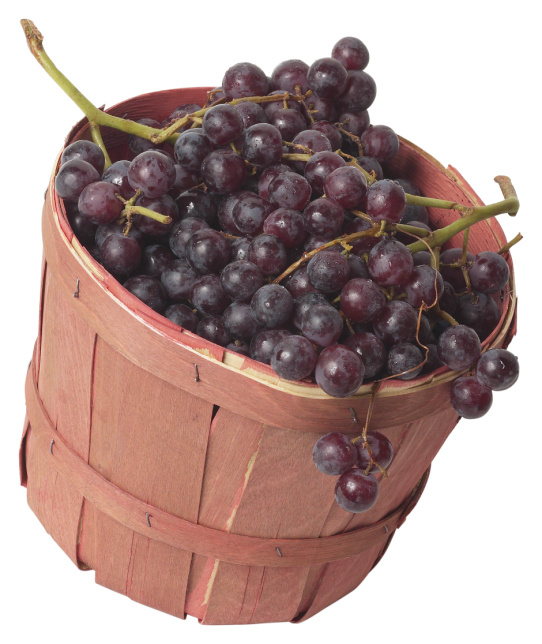
 Verse 19 reads, “So the angel swung his sickle toward earth and gathered the grapes from earth’s vineyard, and he threw them into the great winepress of God’s wrath.” A winepress, also known as a wine vat, is a rectangular cavity carved out of rock or built artificially. Ripe grapes are placed in the winepress and trampled underfoot, with the juice flowing down into a lower receptacle. Usually, a full winepress signifies prosperity, while an empty winepress signifies famine. In this metaphorical reference, however, the fullness of the winepress suggests rampant evil that is now being judged.
The word “winepress” appears 20 times in 20 verses in scripture (HCSB). When it is used metaphorically, it depicts either Israel or God’s judgment:
- Isa. 5:2 (Israel) – “He broke up the soil, cleared it of stones, and planted it with the finest vines. He built a tower in the middle of it and even dug out a winepress there. He expected it to yield good grapes, but it yielded worthless grapes.”
- Isa. 63:2-3 (judgment) – The Lord is asked, “Why are your clothes red, and your garments like the one who tread a winepress?” The Lord replies, “I trample the winepress alone, and no one from the nations was with Me. I trampled them in my anger and ground them underfoot in My fury; their blood spattered my garments, and all my clothes were stained.” This passage describes God as a warrior going to battle to defeat the forces of evil.
- Lam. 1:15 (judgment) – “The Lord has rejected all the mighty men within me. He has summoned an army against me to crush my young warriors. The Lord has trampled Virgin Daughter Judah [like grapes] in a winepress.”
- Joel 3:13 (judgment) – “Swing the sickle because the harvest is ripe. Come and trample the grapes because the winepress is full; the wine vats overflow because the wickedness of the nations is great.” This verse describes the Day of the Lord, in which Yahweh will utterly defeat His enemies.
- Matt. 21:33 / Mark 12:1 (Israel) – Jesus says, “Listen to another parable: There was a man, a landowner, who planted a vineyard, put a fence around it, dug a winepress in it, and built a watchtower. He leased it to tenant farmers and went away.”
- Rev. 14:19 (judgment) – “So the angel swung his sickle toward earth and gathered the grapes from earth’s vineyard, and he threw them into the great winepress of God’s wrath.”
- Rev. 19:15 (judgment) – “A sharp sword came from His mouth, so that He might strike the nations with it. He will shepherd them with an iron scepter. He will also trample the winepress of the fierce anger of God, the Almighty.”
Here, in Rev. 14:19, in the trampling of the winepress “lies the true climax of the image of the wine harvest: the liquid that flows from the (red) grapes symbolizes the blood of the enemies whom God has destroyed in his anger” (Roloff, p. 178).
Warren Wiersbe shares the following insight: “Scripture portrays three different ‘vines.’ Israel was God’s vine, planted in the land to bear fruit for God’s glory; but the nation failed God and had to be cut down (Ps. 80:8–16; Isa. 5:1–7; see also Matt. 21:33–46). Today, Christ is the Vine and believers are branches in Him (John 15). But the world system is also a vine, ‘the vine of the earth’ in contrast to Christ, the heavenly Vine; and it is ripening for judgment. The wicked system – Babylon – that intoxicates people and controls them, will one day be cut down and destroyed in ‘the winepress of the wrath of God’ (The Bible Exposition Commentary, Rev. 14:6).
Next: Blood flowed … for about 180 miles – Revelation 14:20
 OnceDelivered.net