

Ten reasons we suffer
 Horatio G. Spafford was a prominent attorney in Chicago in the 1800s and a friend of evangelist Dwight L. Moody. While Spafford was both respected and comfortable, he was not free from severe hardship. First, he lost his four-year-old son to scarlet fever. Then his real estate investments along Lake Michigan literally went up in flames in the Great Chicago Fire of 1871. Not long after that, his four daughters drowned in a shipwreck, and his wife Anna survived the ordeal only because the ship’s debris buoyed her as she floated, unconscious, in the Atlantic Ocean.
Crossing the sea to join his bereaved wife, Spafford was called to the captain’s deck as the ship sailed past the foamy deep where his daughters were lost. The captain informed him that the waters there were three miles deep. Returning to his cabin, Spafford penned these words to the now-famous hymn:
When peace like a river attendeth my way,
When sorrows like sea billows roll;
Whatever my lot, Thou hast taught me to say,
It is well, it is well with my soul
Why did such tragedy befall Spafford? He certainly wondered — and wrestled with the question the rest of his life — but in writing this poem, he rested in the sovereignty of God.
Continue reading

 This is the fourth in a series of articles on the Trinity, excerpted from “What Every Christian Should Know About the Trinity,” available in print and Kindle versions from
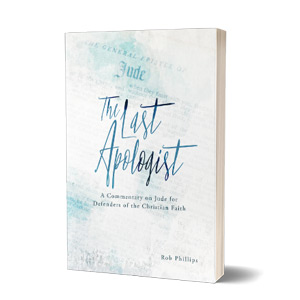 The Epistle of Jude may be one of the most neglected New Testament books. Bible readers are tempted – in part by its brevity and in part by its similarity to 2 Peter 2 – to skip over Jude on the way to Revelation, or to give this short epistle little more than a glance.
 Followers of Jesus always have faced attacks from outside the church – from worshipers in the cult of Caesar to radical Islamists. But potentially more damaging are threats from within – from false teachers who tickle our ears (2 Tim. 4:3) to false prophets who come to us with “cleverly devised myths” (2 Peter 1:16).
 OnceDelivered.net