
Isaiah 35: The Return of the Ransomed

Isaiah 35: Listen to the audio

Isaiah 35: Download notes and a worksheet for further study

Prologue

Where we are:

Part 1: Judgment

Part 2: Historical Interlude

Part 3: Salvation

Chapters 1-35

Chapters 36-39

Chapters 40-66

When this takes place:

There is not sufficient information to know precisely when Isaiah delivers the prophetic messages of chapters 34-35. It is clear, however, that these prophecies anticipate the Day of the Lord, when He will judge the nations and deliver His people. Some commentators believe chapters 34-35 serve as an “eschatological conclusion” (and end-times wrap up) to the woe oracles of Isa. 28-33, which could place Isaiah’s prophecy in the reign of Hezekiah.

Key verse:

Isa. 35:10 – [T]he ransomed of the Lord will return and come to Zion with singing, crowned with unending joy. Joy and gladness will overtake [them], and sorrow and sighing will flee.

Quick summary:

“The glorious fact of the coming Millennium should serve as strength and comfort to all believers living in difficult times,” writes H.L. Willmington. “The deserts will bloom. The lame will walk, and the mute will shout and sing. The blind will see and the deaf will hear. A highway of holiness will be built” (The Outline Bible, S. Is 35:3-4).

Take note:

It’s important to keep in mind that while the millennium is a time of great prosperity and peace for the redeemed, it is not yet the new heavens and new earth promised in Scripture (for example, see 2 Peter 3:10-13 and Rev. 21-22). There is still the presence of “unclean” people, although they will not be permitted on the Holy Way (v. 8). There also are the foolish, even though they will be kept from going astray. And the animal kingdom is not yet totally tamed, despite the fact that God’s people are protected from the “vicious beast” (v. 9). We learn from other Bible passages that there will be sin and death during Christ’s earthly reign, although the human lifespan is significantly lengthened and Jesus will tolerate no rebellion (Isa. 65:7-25). The primary reasons for joy during this 1,000-year period are Christ’s righteous reign from the throne of David (Isa. 9:7) and Satan’s imprisonment (Rev. 20:1-3). In short, the millennium is the most glorious time in human history, and yet it is just a foretaste of what’s to come when God makes all things new (Rev. 21:5).

Life in the Perfect Age (Isa. 35:1-2, 5-10)

“The glory of this chapter is enhanced, if this is possible, by its setting as an oasis between the visionary wasteland of ch. 34 and the history of war, sickness and folly in chs. 36–39,” writes D.A. Carson (New Bible Commentary: 21st Century Edition, S. Is 35:1). In a familiar pattern, Isaiah follows a graphic depiction of judgment with a glorious foretaste of the millennium. Both nature and humanity are restored. The redeemed return to Zion on the “Holy Way” and are overcome with joy.

Note the specifics of Isaiah’s vision of the perfect age:

  • “The wilderness and the dry land will be glad …” (v. 1). All of nature waits eagerly for the redemption in Christ’s return (Ps. 96:11-13; 98:7-9; Isa. 55:12-13; Rom. 8:19-22). The beauty that today bursts through the thorns and thistles of fallen nature bears testimony of God’s promise to free creation of the curse of sin (Gen. 3:17-19; Rev. 22:3). Verses 6b-7 provide further details of a redeemed plant and animal world.
  • “The glory of Lebanon will be given to it, the splendor of Carmel and Sharon” (v. 2). Isaiah names three of the most beautiful and fruitful locations in the land, and yet when Christ returns even the desert will produce an abundance that exceeds theirs. There will be no more “parched ground” (v. 7) because the land will become a plush garden that bears testimony of Messiah’s glory.
  • “Then the eyes of the blind will be opened, and the ears of the deaf unstopped. Then the lame will leap like a deer, and the tongue of the mute will sing for joy …” (vv. 5-6). Jesus evidently refers to these verses to encourage the imprisoned John the Baptist that He is the promised Messiah (Luke 7:18-23). As Jesus’ miracles confirm His deity and Messianic authority, they also provide a foretaste of the coming kingdom, in which complete health is the norm.
  • “A road will be there and a way; it will be called the Holy Way” (v. 8). Isaiah often uses the theme of a highway (Isa. 11:16; 19:23; 40:3; 62:10). The highways are not safe to travel during the Assyrian invasion (Isa. 33:8), but in the coming kingdom age the Lord will make them safe and provide a special road called “the Holy Way.” Warren Wiersbe writes, “In ancient cities, there were often special roads that only kings and priests could use; but when Messiah reigns, all of His people will be invited to use this highway. Isaiah pictures God’s redeemed, ransomed, and rejoicing Jewish families going up to the yearly feasts in Jerusalem, to praise their Lord” (Be Comforted, S. Is 35:1).
  • “There will be no lion there, and no vicious beast will go up on it” (v. 9). No ferocious animals will hinder the redeemed from traveling the Holy Way to worship the Lord. Even the wild beasts will enjoy a unique period of God-ordained restraint during the millennium (Isa. 11:6-9; Ezek. 34:25; Hosea 2:18).
  • “Joy and gladness will overtake [them], and sorrow and sighing will flee” (v. 10). Matthew Henry writes, “When God’s people returned out of Babylon to Zion they came weeping (Jer. 50:4); but they shall come to heaven singing a new song, which no man can learn, Rev. 14:3. When they shall enter into the joy of their Lord it shall be what the joys of this world never could be: everlasting joy, without mixture, interruption, or period. It shall not only fill their hearts, to their own perfect and perpetual satisfaction, but it shall be upon their heads, as an ornament of grace and a crown of glory, as a garland worn in token of victory” (Matthew Henry’s Commentary on the Whole Bible: Complete and Unabridged in One Volume, S. Is 35:5).

Life in the Present Age (Isa. 35:3-4)

Israel’s glorious future is the backdrop against which God’s people are called to live in the present. Although the Assyrians are besieging Jerusalem and the Babylonians will destroy it, the Lord promises vengeance, retribution and salvation. In light of these promises, God’s people are instructed to encourage the faint hearted and comfort those who are traumatized by Sennacherib’s invading hoards.

In much the same way, Christians today should live in the light of God’s glorious redemption. While we suffer pain, sickness, aging and death, the Lord has promised to redeem our mortal bodies and give us glorified ones (Rom. 8:23; 1 Cor. 15:51-58). Though we struggle with sin, He has predestined us to be conformed to the image of His Son (Rom. 8:29). And even though many Christians around the world are persecuted for their faith, they will be vindicated at the return of Christ (Luke 21:28; Rev. 6:9-11; 19:11-21). And when it comes to the Lord’s chastening, Christians today, like the citizens of Judah in Isaiah’s time, are urged to “strengthen your tired hands and weakened knees, and make straight paths for your feet, so that what is lame may not be dislocated, but healed instead” (Heb. 12:12).

Closing Thought

Gary V. Smith comments: “There is no doubt about the theological principle that God will have vengeance on the wicked and violently destroy them and the earth where they live. His judgment is real, it is devastating, and it is final. If one can conceive of a world without divine support and care, that is the world that awaits the nations that will receive God’s wrath…. [I]n chapter 35 God offers an alternative world of fertility, joy, and gladness where he will reveal something of his marvelous glory. The theological principle here is that everyone should be encouraged to experience the salvation of God, no matter how weak or blind they are. God is not only able to remove blindness and strengthen the weak; he will also miraculously open the eyes of many. His kingdom will have abundant water, great fertility, and a holy highway for his redeemed people to come to Zion to worship him. Only those who return to God, only the holy, and only the ransomed will experience the joy of that day” (The New American Commentary: Isaiah 1-39, pp. 581-82).

Copyright 2009 by Rob Phillips
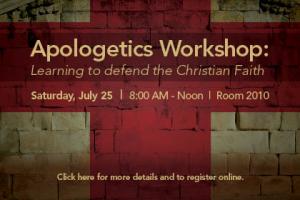
Apologetics 101: Download audio files and notebook

Here are the audio files and notebook from the July 25 “Apologetics 101” workshop at Brentwood Baptist Church. You may duplicate and share any of these resources as long as you do not alter the content or charge for their use.

Audio files:

Session 1: What is apologetics?

Session 2: How do I know the Bible is true?

Session 3: Who’s the real Jesus?

Session 4: How can I counter false teachings?

Notebook:

Here’s the notebook in pdf format.

Isaiah 34: There will be Blood

Isaiah 34: Listen to the audio

Isaiah 34: Download notes and a worksheet for further study

Prologue

Where we are:

Part 1: Judgment

Part 2: Historical Interlude

Part 3: Salvation

Chapters 1-35

Chapters 36-39

Chapters 40-66

When this takes place:

There is not sufficient information to know precisely when Isaiah delivers the prophetic messages of chapters 34-35. It is clear, however, that these prophecies anticipate the Day of the Lord, when He will judge the nations and deliver His people. Some commentators believe chapters 34-35 serve as an “eschatological conclusion” (an end-times wrap up) to the woe oracles of Isa. 28-33, which could place this message in the reign of Hezekiah.

Key verses:

Isa. 34:2 – The Lord is angry with all the nations – furious with all their armies. He will set them apart for destruction, giving them over to slaughter.

Quick summary:

Isaiah describes the judgments of the Day of the Lord in detail, including miraculous wonders in the heavens. In all likelihood, Edom is symbolic of the world powers that have opposed Israel and now must face the Jewish people’s “Judge … lawgiver … and King” (Isa. 33:22). “In the Day of the Lord, the Gentiles will be repaid for the way they have treated the Jews and exploited their land (Joel 3:1–17). ‘Zion’s cause’ may not get much support among the nations today, but God will come to their defense and make their cause succeed” (Warren Wiersbe, Be Comforted, S. Is 34:1).

Take note:

Anyone who contends that Jesus is the consummate peace-love-and-joy hippie who taught “live and let live” and never spoke a harsh word or raised a hand in anger would do well to note how Isaiah, Jesus Himself and the New Testament writers depict the Messiah in both His first and second comings. Isaiah, for example, describes the Lord as “angry,” “furious,” setting the armies of the nations apart for “destruction” and “giving them over to slaughter.” The “stench of their corpses will rise,” the prophet reveals, and the mountains will “flow with their blood” (Isa. 34:2-3). Jesus often expresses anger, especially toward the religious leaders of His day, and twice he violently drives the money changers from the Temple. A reading of His “woes” against the “scribes and Pharisees, hypocrites” in Matthew 23 reveals stinging rebukes against the religious elite of His day, and His parables of the kingdom of heaven lay out a tragic end for those who oppose Him (see, for example, Matt. 13:24-30, 36-43, 47-50; 22:1-14) What’s more, His return will be violent and bloody as He punishes those who shake their fists toward heaven and fight against the rightful Heir to the world’s throne (see Rev. 19:11-21).

The Judgment of the Nations (Isa. 34:1-4)

The chapter opens with a call to the entire earth to “come here and listen.” No one is left out of this frightening message of God’s future judgment. He clearly beckons the “nations … peoples … earth … and all that fills it … the world and all that comes from it” (v. 1). What is so important that no one is exempted? “The Lord is angry with all the nations – furious with all their armies” (v. 2).  In His wrath, Yahweh will slaughter countless evil soldiers, leaving their blood to flow in the valleys and their corpses to rot on the hillsides.

There will be wonders in the sky as well. “All the heavenly bodies will dissolve,” Isaiah writes. “The skies will roll up like a scroll, and their stars will all wither as leaves wither on the vine, and foliage on the fig tree” (v. 4). Catastrophic events in the heavens will accompany the Messiah’s return to earth to establish His kingdom (see Joel 2:10, 30-31; 3:15; Zech. 14:6-7; Matt. 24:29). However, it is difficult to know with certainty exactly when and how these prophecies will be fulfilled. John Walvoord and Roy Zuck comment: “Isaiah 34:4 may refer to the judgment of the sixth seal in the Tribulation (Rev. 6:12-13), or to the eternal state, after the Millennium, when the sun will not be needed (Rev. 21:1). Or perhaps Isaiah was speaking figuratively of a change in the whole power structure in the Millennium when human kings will be done away with and God alone will be in control” (The Bible Knowledge Commentary: An Exposition of the Scriptures, S. 1:1084).

The Judgment of Edom (Isa. 34:5-17)

Isaiah uses Edom as an example of the world, which will come under God’s judgment. The Edomites are descendents of Esau, Jacob’s older brother, and are perpetual enemies of Israel (cf. Ezek. 35; 36:5). As such, they are an appropriate representation of what the Lord will do to all nations that oppose His people. The Lord’s slaughter of Edom is depicted as “a sacrifice in Bozrah,” the capital city of Edom (v. 6). Modern-day Buseirah is located about 25 miles southeast of the Dead Sea and is a place animals in Isaiah’s day are slaughtered for sacrifice. The Jews’ practice is to offer sacrifices to God, but in this passage it is God offering the wicked as sacrifices. The Lord depicts His enemies as animals, who are sacrificed along with the fat (Lev. 3:9-11). These nations often slaughtered and sacrificed God’s people, so now the Lord sacrifices them.

Many Bible commentators believe this bloody scene depicts the battle of Armageddon in the last days. Warren Wiersbe writes: “Isaiah compares the Day of the Lord to the judgment of Sodom and Gomorrah (Isa. 34:9–10; Gen. 18–19). This is a significant comparison because, just before the coming of the Lord, society will be ‘as it was in the days of Lot’ (Luke 17:28). Tar running like streams and sulfur like dust will keep the fires of judgment burning (Gen. 14:10; 19:24). The description in Isaiah 34:10 reminds us of the fall of Babylon (Rev. 14:8-11; 19:3). We should also remember that the fires of eternal hell, the lake of fire, will never be quenched (Mark 9:43–48)” (Be Comforted, S. Is 34:1).

“Edom symbolizes in Scripture the ungodly (cf. Heb. 12:16) and the persecutor (cf. Ob. 10–14), the opposite and adversary of the church,” writes D.A. Carson. “The metaphor in vs 5–7 is a grim variant of the banquet scene (cf. 25:6), dwelling on the butchery behind the sacrificial feast and using [a] current idiom to show that the whole people, from ‘young bloods’ and leading citizens (7a) to the least and lowest (6), is doomed (cf. 63:1–6)” (New Bible Commentary: 21st Century Edition, S. Is 34:1).

As a result of God’s judgment, the land will seem to be ablaze – her streams turned to pitch (a flammable tar-like substance) and her soil to sulfur. The land will become desolate, inhabited only by creatures that seek out more solitary confines. Owls, ravens, jackals, ostriches, hyenas, wild goats and other animals will abound as the land becomes overgrown and uninhabitable for generations. Isaiah uses an interesting name in verse 14: The “night monster” (NASB) or “screech owl” (HCSB), literally Lilith, is noted in ancient mythology as a female night demon that inhabits desolate places. The imagery here is used to illustrate the total devastation of the heathen lands.

The theme of divine vengeance dominates chapters 34-35, prompting some people to withdraw from the “angry” and “vindictive” God of the Old Testament in favor of a kinder, gentler New Testament God. Some even argue the Bible cannot be true since it depicts two entirely different Gods in the Old and New Testaments. Yet God is immutable, or unchanging, as Scripture makes clear, and He alone is the rightful Author of vengeance. Both the Old and New Testaments affirm the truth that the Lord is the “God of vengeance” (Ps. 94:1). In Deut. 32:35 the Lord declares, “Vengeance belongs to me; I will repay.” Sometimes God’s vengeance is carried out through human agencies (cf. Num. 31:2-3; Josh. 10:13). “Yet no individual has God’s permission to take personal revenge,” writes Lawrence O. Richards. “The reason is that vengeance is a judicial concept. It is reserved for God, as moral and spiritual Judge of His universe, to punish those who persistently reject Him, abandon His ways, and oppress the righteous. Typically vengeance is reserved for history’s end (cf. Isa. 63:1–6), and any present time is marked by a divine forebearance that provides individuals and nations with every opportunity to repent and to believe” (The Bible Readers Companion, electronic ed., S. 428).

In the New Testament, the doctrine of God’s vengeance is expressed in the Greek words dike and dikesis. The primary meaning is “justice” and communicates the fact that justice is a judicial function reserved for God alone (Rom. 12:19). As in the Old Testament, vengeance in the New Testament often looks toward the end of human history (Rom. 2:1-11) and is sometimes graphically described (2 Thess. 1:5-10; Rev. 19:11-21). “The real wonder is not that God will certainly punish the unrepentant, but that He chose to vent His anger against sin on Christ rather than on us. Christ’s sufferings for us forever disprove the notion that a God of vengeance could not also be a God of love” (Richards, S. 428).

Closing Thought

Matthew Henry comments: “As there is a day of the Lord’s patience, so there will be a day of his vengeance; for, though he bear long, he will not bear always…. There is a time prefixed in the divine counsels for the deliverance of the church and the destruction of her enemies, a year of the redeemed, which will come, a year of recompences [sic] for the controversy of Zion; and we must patiently wait till then, and judge nothing before the time” (Matthew Henry’s Commentary on the Whole Bible: Complete and Unabridged in One Volume, S. Is 34:1).

Copyright 2009 by Rob Phillips


cf. compare

Apologetics 101: Download Notes

apologetics_wbannerThanks to everyone attending Apologetics 101: Learning to Defend the Christian Faith at Brentwood (Tenn.) Baptist Church this weekend. As promised, I am making the notes available as a free download in pdf format. You are welcome to copy and share these notes in electronic or print format but,  as with all resources on this Web site, please do not alter the contents or charge for their use.

Download: Apologetics 101: Learning to Defend the Christian Faith

Isaiah 33: Judge, Lawgiver and King

Isaiah 33: Download or listen to the audio

Isaiah 33: Download notes and worksheet for further study

Prologue

Where we are:

Part 1: Judgment

Part 2: Historical Interlude

Part 3: Salvation

Chapters 1-35

Chapters 36-39

Chapters 40-66

When this takes place:

Since chapter 33 is among the “woe oracles” extending from Isaiah 28-33, it seems best to place these events around 704-701 B.C., during the time the Assyrians invade Judah and besiege Jerusalem.

Key verse:

Isa. 33:22 – For the Lord is our Judge, the Lord is our lawgiver, the Lord is our King. He will save us.

Quick summary:

The Assyrian army, the “destroyer never destroyed,” is warned of imminent divine judgment. Even though Assyria is terrifying Judah and surrounding nations, the Lord will soon rise up and show His might. As for the citizens of Judah, only those who pursue righteousness and justice will be spared. Finally, the glories of the Messianic Kingdom are previewed, with the King making Jerusalem secure.

Take note:

Some commentators have pointed to verse 22 as a model for America’s founding fathers in establishing the three branches of government: executive (king), legislative (lawgiver), and judicial (judge). While only the Messiah assumes these three roles with perfection, the “balance of power” suggested by this model serves as an excellent guide to sinful people striving to govern well.

Woe to Assyria and Judah (Isa. 33:1-16)

Isaiah begins by addressing the “destroyer” and the “traitor.” The “destroyer” is Sennacherib who, along with his Assyrian army, is breathing down the necks of God’s people. Powerful, boisterous, swift and cruel, the Assyrians are sweeping across Judah, conquering the fortified cities and closing in on Jerusalem. They are building siege ramps and sealing off the city so that no one may enter or leave. It is becoming increasingly clear that unless God intervenes, all is lost. The “traitor” refers to those within Judah who want to buy off the Assyrians, as King Hezekiah once tried unsuccessfully to do (2 Kings 18:13-15), or form alliances with Egypt or other nations to protect them against the advancing Assyrian hoards. God’s word through Isaiah is clear: The destroyer will be destroyed and the traitor betrayed. Sennacherib has broken his agreement with Judah and invaded the country, and the Egyptians will prove unable to rescue the Jews. Yet in a single night God will strike 185,000 Assyrians dead on the hills surrounding Jerusalem.

While the clamor of Assyrian soldiers rings the city, a righteous remnant in Jerusalem prays for deliverance. Warren Wiersbe describes the scene as it unfolds in verse 2: “Isaiah had promised that God would be gracious to them if they would only trust Him (30:18–19), so a few devout people turned His promise into prayer. God spared Jerusalem for David’s sake (37:35) and because a believing remnant trusted God and prayed. Never underestimate the power of a praying minority” (Be Comforted, S. Is 33:1). Verses 3-6 speak of the righteous remnant’s confidence in God and their praise for His salvation. Although Hezekiah had acted foolishly by using the temple treasury to pay off Sennacherib, the Lord forgave him and now Isaiah reminds him that “[t]he fear of the Lord is Zion’s treasure” (v. 6).

Verses 7-9 describe the dire circumstances in Judah during the Assyrian invasion. Judah’s bravest soldiers stand in the streets and weep bitterly as one fortified city after another falls. The nation’s envoys shed tears of helplessness as their diplomatic missions come to naught. The roads are treacherous, the fields and orchards are barren, and there’s no avenue of escape – except with the Lord. “Now I will rise up,” He declares. “Now I will lift Myself up. Now I will be exalted” (v. 10). Although the Assyrians are “pregnant” with plans to conquer Jerusalem, the Lord says they will “conceive chaff” and “give birth to stubble” (v. 11). Chomping at the bit, panting for yet another devastating military victory, the Assyrians will find their hot breaths to be like fire that consumes them in a back draft (vv. 11-12). As a result, people far and near will know that the shocking death of 185,000 Assyrians in a single night is the Lord’s doing and a demonstration of His supernatural strength (v. 13). “God is long-suffering with His enemies, but when He decides to judge, He does a thorough job” (Wiersbe, S. Is 33:1).

The miraculous deliverance of Jerusalem does more than bring glory to God among the Gentiles. It also causes fear and conviction in the hearts of the ungodly in Judah. The Lord does not free us of danger so we may continue in sin. Rather, “with You there is forgiveness, so that You may be revered” (Ps. 130:4). When the Jews awaken one morning to the sight of 185,000 Assyrian corpses on the hills outside Jerusalem, they realized the God of Israel is “a consuming fire” (v. 14; see Isa. 10:17; Heb. 12:29).

Isaiah then describes the kind of person God will bless: the one who “lives righteously and speaks rightly, who refuses gain from extortion, whose hand never takes a bribe, who stops his ears from listening to murderous plots” (v. 15). That person will “dwell on the heights; his refuge will be the rocky fortresses, his food provided, his water assured” (v. 16). This is not a universal promise of prosperity, for surely many godly people suffer extreme hardship and persecution (see Heb. 11:35b-38). It is, however, a reminder of God’s promise to bless Israel, contingent upon the people’s faithfulness to Him.

The Reign of God in Zion (Isa. 33:17-24)

The prophet now describes the prosperous land in which the redeemed one day will live, safely and securely in the majestic presence of the Messiah. They will remember the dark days of oppression at the hands of foreign invaders, including the Assyrians, and rest in the knowledge that their nation and its capital city are free from attacks by land or sea. Assyria’s defeat will be like a shipwreck, leaving abundant spoils for the Jews to plunder. In fact, the booty will be so great after the Lord strikes the Assyrian army (Isa. 37:36) that even the lame will have ample time to take their fill (v. 23). Peace and prosperity will come by the Lord’s doing, not by human strength or political alliances.

Verse 17 offers a marvelous contrast. While the residents of Judah now see King Hezekiah in sackcloth, harassed and humbled by the Assyrians, one day they will see Messiah in His beauty – a righteous King to whom the world is drawn, preventing the unrighteous from entering His city. Three times in verse 22 He is called “the Lord,” and three titles are given to Him: Judge, Lawgiver and King. This is the “perfect ideal of the theocracy, to be realized under Messiah alone; the judicial, legislative, and administrative functions as king to be exercised by Him in person (Is 11:4; 32:1; Jam 4:12)” (Robert Jamieson, A.R. Fausset, David Brown, A Commentary, Critical and Explanatory, on the Old and New Testaments, S. Is 33:22).

Jerusalem during the messianic kingdom is described as “a peaceful pasture.” How different from Isaiah’s day in which Sennacherib surrounds the city with barbarous troops, seals it off and builds siege ramps against it. The day is coming, the prophet assures God’s people, when Jerusalem will be like a tent pitched by a broad river inaccessible to warships. “Jerusalem is one of the few great cities of antiquity that was not built near a river, but that will change during the millennial kingdom (Ezek. 47). Of course, the river symbolizes the peace that the Lord gives to His people (Isa. 48:18; 66:12; Ps. 46:4)” (Be Comforted, S. Is 33:1).

Closing Thought

Matthew Henry comments: “When things are brought thus to the last extremity, God will magnify himself. He had seemed to sit by as an unconcerned spectator: ‘But now will I arise, saith the Lord; now will I appear and act, and therein I will be not only evidenced, but exalted.’ He will not only demonstrate that there is a God that judges in the earth, but that he is God over all, and higher than the highest. ‘Now will I lift up myself, will prepare for action, will act vigorously, and will be glorified in it.’ God’s time to appear for his people is when their affairs are reduced to the lowest ebb, when their strength is gone and there is none shut up nor left, Deu. 32:36. When all other helpers fail, then is God’s time to help” (Matthew Henry’s Commentary on the Whole Bible: Complete and Unabridged in One Volume, S. Is 33:1).

Copyright 2009 by Rob Phillips