
Tagged: Scripture
Isaiah 56: Israel’s Blind Watchmen
LISTEN to PODCAST: Isaiah 56 – Israel’s Blind Watchmen
READ: Isaiah 56 – Notes
STUDY: Isaiah 56 – Worksheet
Prologue
Where we are:
| Part 1: Judgment | Part 2: Historical Interlude | Part 3: Salvation |
| Chapters 1-35 | Chapters 36-39 | Chapters 40-66 |
When this takes place:
Chapter 56 is part of the second major section of Isaiah and deals less with Judah’s immediate plight than with its future deliverance from Babylonian exile and ultimate glory.
Key verses:
Isa. 56:10-11 – Israel’s watchmen are blind, all of them, they know nothing; all of them are mute dogs, they cannot bark; they dream, lie down, and love to sleep. These dogs have fierce appetites; they never have enough. And they are shepherds who have no discernment; all of them turn to their own way, every last one for his own gain.
Quick summary:
Chapter 56 begins the final section of the book of Isaiah. While chapters 40-55 survey the Babylonian exile and speak of redemption largely in terms of a Jewish homecoming, chapters 56-66 focus on the homeland, which is seen partly as a place of corruption (Isa. 56:9 – 59:15a) and devastation (Isa. 63:7 – 64:12), but also as a place of restoration and beauty when touched by the Lord’s hand (Isa. 60-62). “The final chapters (65–66), like the prelude (56:1–8), show God’s welcome of the outsider and the heathen to his holy mountain and eternal kingdom, but press home the peril of an everlasting exclusion from these glories” (D.A. Carson, New Bible Commentary: 21st Century Edition, 4th ed., S. Is 55:6). Specifically, chapter 56 contrasts God’s grace and man’s wickedness, as evidenced in the lives of Judah’s leaders.
Take note:
The Gentiles who believe will be included in God’s blessings for Israel. The Gentiles’ inclusion in God’s plan for worldwide blessing is addressed in many passages of Scripture, for example:
- Gen. 12:3: I will bless those who bless you, I will curse those who treat you with contempt, and all the peoples on earth will be blessed through you.
- Acts 15:16-18: After these things I will return and will rebuild David’s tent, which has fallen down. I will rebuild its ruins and will set it up again, so that those who are left of mankind may seek the Lord – even all the Gentiles who are called by My name, says the Lord who does these things, which have been known from long ago (quoting Amos 9:11-12; Isa. 45:21).
- Gal. 3:6-9: Just as Abraham believed God, and it was credited to him for righteousness, so understand that those who have faith are Abraham’s sons. Now the Scripture foresaw that God would justify the Gentiles by faith and foretold the good news to Abraham, saying, All the nations will be blessed in you. So those who have faith are blessed with Abraham, who had faith.
- Eph.3:4-6: By reading this you are able to understand my insight about the mystery of the Messiah. This was not made known to people in other generations as it is now revealed to His holy apostles and prophets by the Spirit: the Gentiles are co-heirs, members of the same body, and partners of the promise in Christ Jesus through the gospel.
A House of Prayer (Isa. 56:1-8)
Isaiah begins the chapter with a command from the Lord to live righteously “for My salvation is coming soon, and My righteousness will be revealed” (v. 1). The word “salvation” may be seen here as both spiritual deliverance (from idolatry and other sins) and physical protection (from the Assyrians now and from extinction during Babylonian exile later). While salvation always has been a work of God’s grace, the Jews are exhorted to live righteously as an acknowledgement of their special relationship with Yahweh. Since the Sabbath is a sign of Israel’s covenant with the Lord, keeping the Sabbath signifies belief in the covenant and trust in the covenant-keeping God (v. 2). In a similar manner, our good works as Christians are the natural response to God’s work of grace in our lives and are intended to bring glory to God (Matt. 5:16; Eph. 2:10).
In verses 3-5 the Lord reminds believing Gentiles that they have a part in His salvation and a place in His kingdom. God’s intention always has been to redeem people “from every tribe and language and people and nation” (Rev. 5:9). Equally gracious is God’s promise to eunuchs who, under the Law, are excluded from the full rights and privileges of citizenship (Deut. 23:1). The reason for their segregation is that their parents have deliberately mutilated them for the purpose of serving in the palaces of kings and noblemen. Such a focus on status and cultural extremes would serve to take their eyes off Yahweh and prevent them from having children who would honor the one true and living God. Though the eunuchs are not at fault for their parents’ actions, the consequences are a reminder to all Jews not to allow foreign beliefs and practices to influence them. Eunuchs, however, are never excluded from God’s salvation, and the Lord adds to spiritual deliverance the promise of full citizenship in the Messianic kingdom, including “a memorial and a name better than sons and daughters” (v. 5).
Foreigners who “love the Lord’s name” will be regathered along with believing Israelites. They demonstrate their belief in Yahweh by serving Him and honoring His covenant with Israel. It should not be overlooked in this passage that Gentiles are invited to observe the Sabbath along with the Jews. Warren W. Wiersbe explains: “God never before asked the Gentiles to join the Jews in keeping the Sabbath, but here He does so. He calls the very people He prohibited from entering His covenant nation: foreigners and eunuchs (Deut. 23:1–8). This is another picture of the grace of God (see Acts 8:26ff). The invitation is still, ‘Ho, everyone! Come!’ It applies to sinners today, but it will apply in a special way when Israel enters her kingdom, the temple services are restored, and the Sabbath is once again a part of Jewish worship” (Be Comforted, An Old Testament Study, S. Is 55:1).
In the future, the Lord will bring Jews and Gentiles alike to His holy mountain, where they will rejoice in His house of prayer. There, they will offer burnt offerings and sacrifices on His altar. But a question arises: If this promise points to the Millennium, which comes well after Messiah’s sacrifice on the cross, why are animal sacrifices necessary, or even appropriate? One possible explanation is that these are not blood sacrifices, but spiritual ones. The apostle Paul, for example, exhorts us as Christians to present our bodies as living sacrifices that are holy and pleasing to God; this is our “spiritual worship” (Rom. 12:1). The writer of Hebrews tells us to “offer up a sacrifice of praise” (Heb. 13:15). And Peter reminds us that we are “living stones … built into a house for a holy priesthood to offer spiritual sacrifices acceptable to God through Jesus Christ” (1 Peter 2:5). In this case, the Lord’s “altar” could be a reference to the cross, where the Old Testament sacrifices are fulfilled and done away with and which sanctifies our sacrifices of prayer and praise.
Another possible explanation is that God will reinstitute the sacrificial system as a memorial to His Son, the Lamb of God who takes away the sin of the world (John 1:29). The shed blood of innocent animals will serve as a reminder of the penalty for sin and the great price Jesus paid to redeem us from our sins. In either case, the focus of this promise is that redeemed people from across the world will gather in Jerusalem and worship the Lord.
Sleeping Watchmen (Isa. 56:9-12)
While much of chapters 49-57 offer a glimpse of Israel’s future glory, the closing verses of this chapter and all of chapter 57 describe the spiritual situation in Isaiah’s day and serve as a condemnation of the nation’s wicked. In verse 9, the “animals of the field and forest” are invited to “come and eat!” This is a call to the Gentile nations – Babylon in particular – to devour Israel as punishment for her spiritual stupor. Israel’s “watchmen” – the priests and other religious leaders – are described as “blind” and “ignorant.” They are ravenous dogs who love to eat and sleep, yet as mute beasts are unable to sound a warning of approaching danger. The leaders also are depicted as shepherds with no discernment, acting like the very sheep they are supposed to lead. Concerned only with their own comfort, they drink wine, guzzle beer and tell themselves the future is bright.
Warren Wiersbe comments: “Spiritual leaders are ‘watchmen’ (Ezek. 3:17–21; 33:1–11) who must be awake to the dangers that threaten God’s people. They are ‘shepherds’ who must put the care of the flock ahead of their own desires. When the foreign invaders (‘beasts of the field’) come, the shepherds must protect the flock, no matter what the danger might be. See Acts 20:18–38 for the description of a faithful spiritual ministry” (Be Comforted, S. Is 56:9).
Closing Thought
Matthew Henry writes: “[W]hy are the dogs set to guard the sheep if they cannot bark to waken the shepherd and frighten the wolf? Such were these; those that had the charge of souls never reproved men for their faults, nor told them what would be in the end thereof, never gave them notice of the judgments of God that were breaking in upon them. They barked at God’s prophets, and bit them too, and worried the sheep, but made no opposition to the wolf or thief…. They loved their ease, and hated business, were always sleeping, lying down and loving to slumber. They were not overcome and overpowered by sleep, as the disciples, through grief and fatigue, but they lay down on purpose to invite sleep … It is bad with a people when their shepherds slumber (Nah. 3:18), and it is well for God’s people that their shepherd, the keeper of Israel, neither slumbers nor sleeps” (Matthew Henry’s Commentary on the Whole Bible: Complete and Unabridged in One Volume, S. Is 56:9).
The Parable of the Wheat and Tares
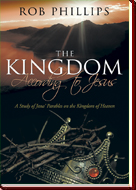
Following is chapter 4 of The Kingdom According to Jesus. You may order the entire study from a number of the nation’s leading booksellers.
 Matt. 13:24-30, 36-43 (HCSB)
24 He presented another parable to them: “The kingdom of heaven may be compared to a man who sowed good seed in his field.
25 But while people were sleeping, his enemy came, sowed weeds among the wheat, and left.
26 When the plants sprouted and produced grain, then the weeds also appeared.
27 The landowner’s slaves came to him and said, ‘Master, didn’t you sow good seed in your field? Then where did the weeds come from?’
28 “‘An enemy did this!’ he told them. “ ‘So, do you want us to go and gather them up?’ the slaves asked him.
29 “‘No,’ he said. ‘When you gather up the weeds, you might also uproot the wheat with them.
30 Let both grow together until the harvest. At harvest time I’ll tell the reapers: Gather the weeds first and tie them in bundles to burn them, but store the wheat in my barn. ’”
Jesus Interprets the Wheat and the Weeds
36 Then He dismissed the crowds and went into the house. His disciples approached Him and said, “Explain the parable of the weeds in the field to us.”
37 He replied: “The One who sows the good seed is the Son of Man;
38 the field is the world; and the good seed—these are the sons of the kingdom. The weeds are the sons of the evil one, and
39 the enemy who sowed them is the Devil. The harvest is the end of the age, and the harvesters are angels.
40 Therefore just as the weeds are gathered and burned in the fire, so it will be at the end of the age.
41 The Son of Man will send out His angels, and they will gather from His kingdom everything that causes sin and those guilty of lawlessness.
42 They will throw them into the blazing furnace where there will be weeping and gnashing of teeth.
43 Then the righteous will shine like the sun in their Father’s kingdom. Anyone who has ears should listen!”
The context
Jesus continues teaching the crowds from His boat at the shoreline of the Sea of Galilee. He has just explained the parable of the sower to His disciples, as well as why He is teaching the mysteries of the kingdom in parables (see chapters 2 and 3). Now, without further delay, Matthew records that Jesus “presented another parable to them” (v. 24). As with the parable of the sower, Jesus later explains the parable of the wheat and tares to His disciples.
Keep in mind what Jesus has said in Matt. 12:28. It is crucial in setting the stage for Jesus’ parables in chapter 13: “If I drive out demons by the Spirit of God, then the kingdom of God has come to you.” Jesus declares that the long-awaited kingdom of heaven has come – but not in the way the Jewish leaders were expecting. Rather than as a political and military machine, the kingdom has come quietly and with great spiritual power, invading Satan’s kingdom and binding him (the “strong man” of Matt. 12:29) so that He may plunder the evil one’s kingdom.
The scribes and Pharisees will have none of this teaching and reject the King and His Kingdom. So in chapter 13, as Jesus leaves Peter’s house and sits beside the sea, multitudes gather around Him, having witnessed His miracles and having heard His declaration that the kingdom of heaven has come. Jesus gets into a boat – perhaps Peter’s boat or a boat made available for Jesus’ use whenever He needed it – and begins a series of eight parables on the kingdom of heaven. The parable of the wheat and tares is the second of these parables.
Central theme
The central theme of this parable is that God’s kingdom and Satan’s kingdom will exist side-by-side during this “present evil age” (Gal. 1:4). Contrary to the Jewish expectation that the Messiah would be a conquering political king, Jesus comes the first time as the Suffering Servant to invade Satan’s kingdom and rescue His own out of it (Col. 1:13). This is the “mystery” of the kingdom. The day will come when Jesus “abolishes all rule and all authority and power” (1 Cor. 15:24), but that day is future. For now, believers and unbelievers will live together – in many cases indistinguishable from one another – until the resurrection and judgment.
Central characters
The “good seed” are believers and the “weeds” or “tares” are unbelievers – more specifically, unbelievers who are “holding to the form of religion but denying its power” (2 Tim. 3:5). Manners and Customs of Bible Lands gives us a clearer image of these false professors of the faith by describing the nature of tares:
In the Holy Land, tares are something called ‘wild wheat,’ because they resemble wheat, only the grains are black. Thomson has this to say about the tares:
“The Arabic name for tares is zawan, and they abound all over the East, and are a great nuisance to the farmer. The grain is small, and is arranged along the upper part of the stalk, which stands perfectly erect. Its taste is bitter, and when eaten separately, or when diffused in ordinary bread, it causes dizziness, and often acts as an emetic. In short, it is a strong soporific poison, and must be carefully winnowed, and picked out of the wheat, grain by grain, before grinding, or the flour is not healthy. Of course the farmers are very anxious to exterminate it, but that is nearly impossible.”
Interestingly, Satan’s deception is so great that even the tares suppose themselves to be children of the kingdom (Matt. 7:21-23).
Details
Jesus describes Himself (the Son of Man) as the sower. Apart from Him, there is no everlasting life. And like the sower in His preceding parable (Matt. 13:1-9), Jesus determined that the gospel of the kingdom would be spread broadly, taking root across all racial and ethnic lines (Rev. 5:9-10). That’s why the “good seed,” or believers, would not just be restricted to the nation of Israel.
“The field” is the world, the mass of humanity stretched across the globe. God has placed believers everywhere.
“The enemy” is Satan, who craftily plants his counterfeit Christians wherever believers spring up. He does so “while people are sleeping,” a warning to the church to be ever vigilant against false teachers who, Paul says, are “savage wolves” bent on destroying the flock (Acts 20:29-31).
“The harvest” is the end of the age – this present evil age (Gal. 1:4) – at which time God will separate true believers from false ones.
“The harvesters” are God’s angels, who assist Him in resurrection and judgment (Matt. 24:30-31).
Spiritual application
The day is coming, says Jesus, when there will be a harvest and a gathering – resurrection and judgment in which He will separate believers from nonbelievers (John 5:28-29). Just as the tares are gathered and burned, those who have rejected Christ will receive the same judgment pronounced on Satan: everlasting separation from God in hell (Matt. 25:41; Rev. 20:10-15).
Believers, however, will receive glorified bodies similar to Christ’s resurrected body, be rewarded for their faithfulness and spend eternity with Him (John 14:1-3; Rom. 14:10; 1 Cor. 3:11-15; 1 Cor. 15:51-57; 1 Thess. 4:13-17; Rev. 21:1-8).
While eagerly anticipating that day, believers should be diligent to “confirm your calling and election” (2 Peter 1:10) and to be on guard against false professors of the faith who are wolves in sheep’s clothing (Matt. 7:15).
Isaiah 55: God’s Higher Thoughts and Ways
PODCAST: Isaiah 55 – God’s Higher Thoughts and Ways
Prologue
Where we are:
| Part 1: Judgment | Part 2: Historical Interlude | Part 3: Salvation |
| Chapters 1-35 | Chapters 36-39 | Chapters 40-66 |
When this takes place:
Chapter 55 is part of the second major section of Isaiah and deals less with Judah’s immediate plight than with its future deliverance from Babylonian exile and ultimate glory.
Key verses:
Isa. 55:8-9 – “For My thoughts are not your thoughts, and your ways are not My ways.” This is the Lord’s declaration. “For as heaven is higher than earth, so My ways are higher than your ways, and My thoughts than your thoughts.”
Quick summary:
Because the Servant has accomplished His mission, all who are thirsty are invited to drink from the waters of salvation. But there is urgency in this invitation. “Seek the Lord while He may be found; call to Him while He is near,” the reader is admonished in verse 6. All are welcome – Jew and Gentile alike – but they must forsake their wicked ways and abandon their pride. In so doing, they will find great joy. Even the ones unsure of their ability to proclaim God’s truths are assured that His word “will not return to Me empty” (v. 11).
Take note:
The word “thirsty” in verse 1 is used throughout Scripture as a metaphor for spiritual longing. Here are a few examples:
- Ps. 42:1-2: As a deer longs for streams of water, so I long for You, God. I thirst for God, the living God. When can I come and appear before God?
- Ps. 63:1: God, You are my God; I eagerly seek You. I thirst for You; my body faints for You in a land that is dry, desolate, and without water.
- John 4:13-14: Jesus said, “Everyone who drinks from this water will get thirsty again. But whoever drinks from the water that I will give him will never get thirsty again—ever! In fact, the water I will give him will become a well of water springing up within him for eternal life.”
- John 7:37-39: On the last and most important day of the festival, Jesus stood up and cried out, “If anyone is thirsty, he should come to Me and drink! The one who believes in Me, as the Scripture has said, will have streams of living water flow from deep within him.” He said this about the Spirit, whom those who believed in Him were going to receive, for the Spirit had not yet been received, because Jesus had not yet been glorified.
- Rev. 21:6: And He said to me, “It is done! I am the Alpha and the Omega, the Beginning and the End. I will give to the thirsty from the spring of living water as a gift.”
An Invitation (Isa. 55:1-2)
The Lord issues an invitation to “everyone who is thirsty” to come to Him and be satisfied. Water is a precious commodity in many parts of the East, and an abundance of water is a special blessing (Isa. 41:17, 44:3). In addition, wine, milk and bread are dietary staples. People labor to provide these for themselves and their families, digging wells, tending crops and watching over their livestock. Yet many continue to go hungry and thirsty – an apt analogy for the busyness of religious works that fail to satisfy the deepest longings of the human heart. While many gladly would pay for the food that sustains spiritual life, Yahweh beckons us to come and buy “without money and without cost” (v. 1). Salvation is God’s gift to mankind. It may not be earned, bought, traded for or stolen; it is available freely to all who receive it in faith (John 5:24; Rom. 4:4-5; Eph. 2:8-9; Titus 3:5).
Warren W. Wiersbe notes, “In Scripture, both water and wine are pictures of the Holy Spirit (John 7:37–39; Eph. 5:18). Jesus is the ‘bread of life’ (John 6:32–35), and His living Word is like milk (1 Peter 2:2). Our Lord probably had Isaiah 55:2 in mind when He said, ‘Do not labor for the food which perishes, but for the food which endures to everlasting life’ (John 6:27, NKJV)” (Be Comforted, An Old Testament Study, S. Is 55:1).
An Everlasting Covenant (Isa. 55:3)
By coming to the Lord, people will have life and enjoy the benefits of the Davidic Covenant, in which God promises that David’s line will continue forever (2 Sam. 7:11b-16). Some interpreters say this is a reference to the New Covenant (Jer. 32:40; Heb. 13:20). While this may apply in some respects, the immediate context specifically mentions David. Of course, the Davidic Covenant is fulfilled in the Messiah (Luke 1:30-33; Acts 13:34-39), who reigns forever and who, through His blood, provides eternal life for all who enter into the New Covenant by faith. That’s why Jesus makes it abundantly clear that eternal life is found only in Him: “I am the way, the truth, and the life. No one comes to the Father except through Me” (John 14:6).
The Nations and Messiah (Isa. 55:4-5)
The reference to “him” in verse 4 speaks not of David, but the Messiah, who will be the world’s “leader and commander.” The word “you” in verse 5 likely means the people of Israel, who will summon the nations to worship the one true and living God. “Isaiah 55:5 indicates that God will use Israel to call the Gentiles to salvation, which was certainly true in the early days of the church (Acts 10:1ff; 11:19ff; 13:1ff) and will be true during the kingdom (Isa. 2:2–4; 45:14; Zech. 8:22). Jerusalem will be the center for worship in the world, and God will be glorified as the nations meet together with Israel to honor the Lord” (Wiersbe, S. Is 55:1).
Robert Jamieson, A.R. Fausset and David Brown make an interesting observation about the order of Isaiah’s words in verse 5, which states, “so you will summon a nation you do not know, and nations you do not know will run to you.” They remark, “God must call, before man can, or will, run (So 1:4; Jn 6:44). Not merely come, but run eagerly” (A Commentary, Critical and Explanatory, on the Old and New Testaments, S. Is 55:5). Salvation is from the Lord (Jonah 2:9). Unless He takes the initiative to send His Son; unless the Son pays our sin debt through His death, burial and resurrection; unless the Holy Spirit draws unbelievers to Christ; and unless God grants saving faith to those who are dead in trespasses and sins, there is no hope of redemption for any human being.
Salvation Offered to All (Isa. 55:6-13)
Isaiah calls on his fellow countrymen to seek the Lord while He may be found, for when judgment falls it will be too late. While this plea has an immediate application for Judah, it also speaks to individuals in all generations concerning salvation. Although the Jews are God’s covenant people, they are granted forgiveness of sins and eternal life only by trusting in Him. The message is the same today to all people, as the apostle Paul writes: “there is no distinction between Jew and Greek, since the same Lord of all is rich to all who call on Him. For everyone who calls on the name of the Lord will be saved” (Rom. 10:12b-13). But God’s gracious invitation is limited in time. “[I]t is appointed for people to die once—and after this, judgment,” writes the author of Hebrews (9:27), so it is crucial for sinners to receive the Lord by faith today, for tomorrow is promised to no one. “Look, now is the acceptable time; look, now is the day of salvation” (2 Cor. 6:2).
The wicked who turn from their evil ways and abandon their sinful thoughts will find the Lord compassionate and forgiving. Because all people are natural-born sinners, their thoughts and deeds are independent of God and lead to earthly distress and eternal judgment. But Isaiah has a message from the Lord: “For My thoughts are not your thoughts, and your ways are not My ways.” [This is] the LORD’S declaration. “For as heaven is higher than earth, so My ways are higher than your ways, and My thoughts than your thoughts” (Isa. 55:8-9).
Believers today are assured of higher thoughts and ways because we have “the mind of Christ” (1 Cor. 2:16). No longer enslaved to sin, we have the freedom to be the eyes, ears, mouth and hands of our Savior, encouraging one another in the faith and testifying of God’s power to a lost world. The apostle Paul goes ever further in describing the power and promise of the Christian life: “So if you have been raised with the Messiah, seek what is above, where the Messiah is, seated at the right hand of God. Set your minds on what is above, not on what is on the earth. For you have died, and your life is hidden with the Messiah in God. When the Messiah, who is your life, is revealed, then you also will be revealed with Him in glory” (Col. 3:1-4).
The Lord also reminds us that just as the rain and snow water the earth, resulting in an abundance of food, His word brings life and peace to those who receive it: “My word that comes from My mouth will not return to Me empty, but it will accomplish what I please, and will prosper in what I send it to do” (v. 11). Jamieson, Fausset and Brown note, “Rain may to us seem lost when it falls on a desert, but it fulfils some purpose of God. So the gospel word falling on the hard heart; it sometimes works a change at last; and even if so, it leaves men without excuse” (S. Is 55:11). John F. Walvoord and Roy B. Zuck add: “In the Near East dry hard ground can seemingly overnight sprout with vegetation after the first rains of the rainy season. Similarly when God speaks His Word, it brings forth spiritual life, thus accomplishing His purpose” (The Bible Knowledge Commentary: An Exposition of the Scriptures, S. 1:1111).
The chapter closes with a description of the joy of the exiles when they go out of Babylonian captivity and, longer term, the joy of Israel in the Messianic age. When Christ sits on the throne of David and His people are gathered before Him, all nature will rejoice in the Lord (see also Isa. 35:1-2, 44.23). After Adam and Eve sinned in the garden, thorns and thistles grew up and the earth yielded her fruit grudgingly. With the return of Christ, however, the effects of the fall will be reversed and instead of the thornbush, a cypress will spring up, and instead of the brier, a myrtle will grow. The creation itself will rejoice in the redeeming work of our great God and Savior.
Closing Thought
Matthew Henry comments: “What is the qualification required in those that shall be welcome – they must thirst. All shall be welcome to gospel grace upon those terms only that gospel grace be welcome to them. Those that are satisfied with the world and its enjoyments for a portion, and seek not for a happiness in the favour of God – those that depend upon the merit of their own works for a righteousness, and see no need they have of Christ and his righteousness – these do not thirst; they have no sense of their need, are in no pain or uneasiness about their souls, and therefore will not condescend so far as to be beholden to Christ. But those that thirst are invited to the waters, as those that labour, and are heavy-laden, are invited to Christ for rest. Note, Where God gives grace he first gives a thirsting after it; and, where he has given a thirsting after it, he will give it, Ps. 81:10” (Matthew Henry’s Commentary on the Whole Bible: Complete and Unabridged in One Volume, S. Is 55:1).
Answering Objections to the Bible
Apologetics 101: Part 3 — How do I know the Bible is true?
This is the third in a 10-part series designed to help Christians defend their faith.
Answering objections to the Bible (audio)
Answering objections to the Bible (pdf)
 Objection 1: No one really knows what the Bible says because the original manuscripts are lost.
The second part of this statement is true: The “autographs,” or original manuscripts, written on a variety of degradable surfaces from parchment to papyrus, no longer exist. But the remarkable number of copies, dating back in some cases to within a generation of their authorship, makes the first half of this objection false. In fact, we have tremendous confidence in the reliability of the Bible because of its manuscript trail. No other book from the ancient world has more, earlier, or better copied manuscripts than the Bible. (The word “manuscript” is used to denote anything written by hand, rather that copies produced from printing presses.)
Do copies count?
New Testament scholar Craig L. Blomberg writes, “In the original Greek alone, over 5,000 manuscripts and manuscript fragments or portions of the NT have been preserved from the early centuries of Christianity. The oldest of these is a scrap of papyrus containing John 18:31-33, 37-38, dating from A.D. 125-130, no more than forty years after John’s Gospel was most probably written” (“The Historical Reliability of the New Testament,” Reasonable Faith: Christian Truth and Apologetics, pp. 193-94). Andreas J. Kostenberger adds, “The total tally of more than 6,000 Greek mss., more than 10,000 Latin Vulgate mss., and more than 9,300 early versions results in over 25,000 witnesses to the text of the NT” (“Is the Bible Today What Was Originally Written?” found in www.4truth.net).
So how does the Bible stack up against other ancient manuscripts? According to scholar F.F. Bruce, we have nine or 10 good copies of Caesar’s Gallic Wars; 20 copies of Livy’s Roman History; two copies of Tacitus’ Annals; and eight manuscripts of Thucydides’ History. The most documented secular work from antiquity is Homer’s Iliad with 643 copies. But the New Testament, with its thousands of Greek manuscripts alone, is the most highly documented book from the ancient world (The New Testament Documents, Are They Reliable?, p. 16).
Is older better?
Generally speaking, the older the manuscripts, the better. The oldest manuscript for Gallic Wars is roughly 900 years after Caesar’s day. The two manuscripts of Tacitus are 800 and 1,000 years later, respectively, than the original. The earliest copies of Homer’s Iliad date from about 1,000 years after the original was authored around 800 B.C. But with the New Testament, we have complete manuscripts from only 300 hundred years later. Most of the New Testament is preserved in manuscripts fewer than 200 years after the original, with some books dating from a little more than 100 years after their composition and one fragment surviving within a generation of its authorship. No other book from the ancient world has as small a time gap between composition and earliest manuscript copies as the New Testament.
How careful were the copy makers?
Scholars of almost every theological stripe attest to the profound care with which the Old and New Testament documents were copied. For the New Testament, the books were copied in Greek and later translated and preserved in Syriac, Coptic, Latin and a variety of other ancient European and Middle Eastern languages.
The New Testament is the most accurately copied book from the ancient world. Textual scholars Westcott and Hort estimate that only one-sixtieth of its variants rise above “trivialities,” which leaves the text 98.33 percent pure. Noted historian Philip Schaff calculates that of the 150,000 variants known in his day, only 400 affected the meaning of a passage; only 50 were of any significance; and not even one affected an article of faith (Companion to the Greek Testament and English Version, p. 177).
Sir Frederick Kenyon, a New Testament authority, writes, “The number of manuscripts of the New Testament, or early translations from it, and of quotations from it in the oldest writers of the Church, is so large that it is practically certain that the true reading of every doubtful passage is preserved in some one or other of these ancient authorities…. This can be said of no other ancient book in the world” (Our Bible and the Ancient Manuscripts, p. 55).
More will be addressed on the topic of textual variations in “Objection 2: The Bible has been copied so many times, with so many variations, there’s no way to know what was originally scripted.”
How about hostile witnesses?
Eyewitnesses and contemporaries of Jesus wrote the New Testament. For example, Luke probably wrote his gospel around 60 A.D., before he penned Acts. Since Jesus died around 30 A.D., this would place Luke only three decades after the events, while most eyewitnesses – and potentially hostile witnesses – were still alive and could have refuted Luke’s record. The apostle Paul speaks of more than 500 eyewitnesses of the resurrected Christ when he wrote 1 Corinthians, which critics date around 55-56 A.D. John and Peter add similar testimonies (1 John 1:1-4; 2 Peter 1:16).
In short, while it’s true we are lacking the “autographs” of Scripture, we have sound reasons to be confident that what we read today has been faithfully preserved through thousands of copies, many of them written in close chronological proximity to the time they were originally penned.
“If we compare the present state of the New Testament text with that of any other ancient writing, we must … declare it to be marvelously correct. Such has been the care with which the New Testament has been copied – a care which has doubtless grown out of true reverence for its holy words…. The New Testament [is] unrivaled among ancient writings in the purity of its text as actually transmitted and kept in use” (Benjamin B. Warfield, Introduction to Textual Criticism of the New Testament, pp. 12-13, quoted in The Case for Christ by Lee Strobel, p. 70).
Objection 2: The Bible has been copied so many times, with so many variations, there’s no way to know what was originally scripted.
Mormons and Muslims allege that the Bible’s documents were substantially corrupted in their transmission, but there is overwhelming evidence that proves these claims false.
Scholars of almost every theological persuasion attest to the profound care with which the Old and New Testament documents were copied and preserved.
To begin, it’s important to know that the texts of the Old and New Testaments were written – under the inspiration of the Holy Spirit – by some 40 authors over a period of roughly 1,500 years. With thousands of ancient copies in existence, it is a monumental task to establish the accuracy and truthfulness of these manuscripts. Textual criticism is the science of examining the books of the Bible and their origins. “It has to do with the reliability of the text, that is, how our current text compares with the originals and how accurately the ancient manuscripts were copied,” according to Paul E. Little in Know Why You Believe.
The Old Testament
Let’s begin with the Old Testament, copies of which were written on clay and wooden tablets, papyrus and parchment, even pottery pieces and beaten metal fragments. Scribes, or copyists, were devout Jews with the highest professional standards and the utmost dedication to dealing with the Word of God. Their habits included wiping a pen clean before writing the name of God, copying one letter at a time, and counting the letters of both the original and the copy. If there were discrepancies, the copy was destroyed.
The earliest and most complete copy of the entire Hebrew Old Testament dates from around 900 A.D. and is known as the Masoretic text. All of the present copies of the Hebrew text we have today are in remarkable agreement with this text. But even earlier texts have now been found. The discovery of the Dead Sea scrolls in 1947 resulted in the earliest manuscript copy yet of the complete book of Isaiah. Later discoveries at the Dead Sea unearthed fragments of every book in the Old Testament except Esther. Since these scrolls date from a group of dedicated Jews living at Qumran from about 150 B.C. to 70 A.D., the discoveries closed the gap in the age of manuscripts by about 1,000 years. A careful comparison of the Qumran manuscripts with the Masoretic texts shows remarkable similarity.
Other texts fortify our confidence in the reliability of the Old Testament manuscripts. The Septuagint is a Greek translation of the Old Testament dating from about the third century B.C. For a Hellenized Hebrew culture whose people often knew only Greek, the Septuagint became a bridge for understanding the Hebrew history and theology of the Old Testament. In addition, the Syriac version of the Old Testament, written in the Aramaic language of Syria, followed, as did a Samaritan version. With all of these texts existing in 200 B.C., what does it mean for the accuracy of the Scriptures?
R. Laird Harris writes: “We can now be sure that copyists worked with great care and accuracy on the Old Testament, even back to 225 B.C. Although some differed among themselves, it was so little, we can infer that still earlier copyists had also faithfully and carefully transmitted the Old Testament text. Indeed, it would be rash skepticism that would now deny that we have our Old Testament in a form very close to that used by Ezra when he taught the Law to those who had returned from the Babylonian captivity” (“How Reliable is the Old Testament Text?” in Can I Trust My Bible, p. 124).
The New Testament
For the New Testament, the original documents were written and copied in Greek, and later translated and preserved in Syriac, Coptic, Latin and a variety of other ancient European and Middle Eastern languages. In the Greek alone, more than 5,000 manuscripts and manuscript fragments of the New Testament have been preserved from the early centuries of Christianity.
As William Lane Craig explains, “The oldest of these is a scrap of papyrus containing John 18:31-33, 37-38, dating from A.D. 125-130, no more than forty years after John’s Gospel was most probably written. More than thirty papyri date from the late second through early third centuries, including some which contain good chunks of entire books and two which cover most of the gospels and Acts or the letters of Paul. Four very reliable and nearly complete NTs date from the fourth and fifth centuries” (“The Historical Reliability of the New Testament,” Reasonable Faith: Christian Truth and Apologetics, p. 194).
While it’s true there are variations among the manuscripts, the vast majority have to do with changes in spelling, grammar, and style, or accidental omissions or duplications of words or phrases. Only about 400 variants have any significant bearing on the meaning of the passage, and most of these are noted in the footnotes or margins of modern translations and editions of Scripture. The only textual variants that affect more than a sentence or two are John 7:53-8:11 and Mark 16:9-20.
William Lane Craig further writes in Reasonable Faith, “Neither of these passages is very likely to be what John or Mark originally wrote, though the story in John (the woman caught in adultery) still stands a fairly good chance of being true. But overall, 97-99% of the NT can be reconstructed beyond any reasonable doubt, and no Christian doctrine is founded solely or even primarily on textually disputed passages” (p. 194).
Consider these statements from renowned Bible scholars:
- The New Testament is the most accurately copied book from the ancient world. Textual scholars Westcott and Hort estimate that only one-sixtieth of its variants rise above “trivialities,” which leaves the text 98.33 percent pure. Noted historian Philip Schaff calculates that of the 150,000 variants known in his day, only 400 affected the meaning of a passage; only 50 were of any significance; and not even one affected an article of faith (Companion to the Greek Testament and English Version, p. 177).
- Sir Frederick Kenyon, a New Testament authority, writes, “The number of manuscripts of the New Testament, or early translations from it, and of quotations from it in the oldest writers of the Church, is so large that it is practically certain that the true reading of every doubtful passage is preserved in some one or other of these ancient authorities…. This can be said of no other ancient book in the world” (Our Bible and the Ancient Manuscripts, p. 55).
- Many of the apparent discrepancies in the gospels, Acts and the writings of Paul – minor as they are – disappear once we judge ancient historians by the standards of their day rather than ours. As Craig L. Blomberg writes, “In a world which did not even have a symbol for a quotation mark, no one expected a historian to reproduce a speaker’s words verbatim” (“The Historical Reliability of the New Testament,” Reasonable Faith: Christian Truth and Apologetics, p. 207).
- “The point is simply that the textual evidence for what the NT authors wrote far outstrips the documentation we have for any other ancient writing, including dozens which we believe have been preserved relatively intact. There is absolutely no support for claims that the standard modern editions of the Greek NT do not very closely approximate what the NT writers actually wrote” (Blomberg, p. 194).
- “If we compare the present state of the New Testament text with that of any other ancient writing, we must … declare it to be marvelously correct. Such has been the care with which the New Testament has been copied – a care which has doubtless grown out of true reverence for its holy words…. The New Testament [is] unrivaled among ancient writings in the purity of its text as actually transmitted and kept in use” (Benjamin B. Warfield, Introduction to Textual Criticism of the New Testament, pp. 12-13, quoted in The Case for Christ by Lee Strobel, p. 70).
To summarize, even though there are some discrepancies in copies of ancient Bible manuscripts, the overwhelming number of variations is trivial, such as transposed letters. No discrepancy threatens any Biblical doctrine. Modern equivalents of these minor variants would be the difference between the English words “honor” and “honour,” or receiving a notice in the mail saying “You may have already w-n a million dollars.” The meaning of these sentences is profoundly clear.
For these and other reasons we have not discussed here – archaeological and other scientific evidence, for example – we can be confident that the English translations we hold in our hands come from reliably consistent Hebrew, Greek and Aramaic documents that have been copied meticulously since the originals were penned. We also may take comfort in the knowledge that the same Holy Spirit who inspired the “autographs” of Scripture has taken care to preserve these texts.
Copyright 2009 by Rob Phillips
 OnceDelivered.net