
Tagged: parables of Jesus
Cast Out of the Kingdom: The Parable of the Dragnet
Following is chapter 7 of The Kingdom According to Jesus. You may order the entire study from a number of the nation’s leading booksellers.
 Matt. 13:47-50 (HCSB)
47 “Again, the kingdom of heaven is like a large net thrown into the sea. It collected every kind [of fish],
48 and when it was full, they dragged it ashore, sat down, and gathered the good [fish] into containers, but threw out the worthless ones.
49 So it will be at the end of the age. The angels will go out, separate the evil people from the righteous,
50 and throw them into the blazing furnace. In that place there will be weeping and gnashing of teeth.
The context
Jesus has dismissed the crowds and gone back into Peter’s house. There, he explains to His disciples the parable of the wheat and tares, offers two parables that illustrate the priceless value of the kingdom of heaven, and launches into the parable of the dragnet, also known as the parable of the good and bad fish. Keep in mind how Jesus ties these parables together to deepen His disciples’ understanding of the kingdom of heaven:
- The parable of the sower illustrates that the kingdom can be resisted. The Messiah the Jewish leaders are looking for – political and military – will indeed come one day in power and great glory, but first He must come humbly as the Lamb of God. Many will resist, reject or oppose Him.
- The parable of the wheat and tares teaches that throughout this present, evil age, believers and unbelievers will live side-by-side, to be separated and judged one day.
- The parables of the mustard seed and leaven show that the kingdom already has come – but quietly, almost imperceptibly.
- The parables of the hidden treasure and priceless pearl demonstrate that the kingdom is of immeasurable value.
- And now, the parable of the dragnet teaches the blunt truth that those outside the kingdom will be separated eternally from God in hell.
Central theme
The central theme of this parable is that in the age to come, God will separate the citizens of the kingdom of heaven from those in Satan’s kingdom. All who reject the King and His kingdom will depart from God and spend eternity in hell. It is a stark teaching, blunt yet simple. And it underscores the fact, taught in the parable of the wheat and tares, that believers and unbelievers will live side by side throughout the present, evil age, until a day of reckoning comes.
Central character
Jesus says the kingdom is like a dragnet. This is a large net that fishermen used in Jesus’ day, weighted on one side with lead and buoyed on the opposite edge by wooden floats or corks. The net often is spread between two fishing boats, enabling cooperating fishermen to capture fish across a wide area from the seabed to the surface of the water. Once the net is cast, either the fishermen in both boats work together to haul in the net, or fishermen on the shore, with ropes connected to the net, draw it into the shallow waters. After the catch, the fishermen separate the good fish from the bad.
The dragnet pictures the scope of God’s kingdom during this present evil age (Gal. 1:4) and implies the cooperative effort believers engage in to serve Christ in “bringing many sons to glory” (Heb. 2:10). The use of a dragnet, since it catches good and bad fish, requires a time of evaluation and separation. This pictures the resurrection and judgment that will come upon all people at the end of this present age. Jesus speaks of this resurrection and final judgment in John 5:28-29. The New Testament writers indicate an undesignated interval of time between the resurrection of the just (“first resurrection” or “rapture” – 1 Cor. 15:51-57; 1 Thess. 4:13-17) and the resurrection of the unjust (“second resurrection” that leads to the “second death” or “the lake of fire” – Rev. 20:11-15). This does not contradict Jesus’ parable. Keep in mind that parables are designed to teach a single truth – in this case, the truth of a future resurrection and judgment for all people.
George Eldon Ladd comments:
When God brings His Kingdom, the society of wicked men will be displaced by the society of those who have submitted themselves to God’s rule who will then enjoy the fullness of the divine blessings freed from all evil. Jesus taught that the redemptive purposes of God had brought His Kingdom to work among men in advance of the Day of Judgment. It is now like a drag-net which gathers within its influence men of various sorts, both good and bad. The separation between the good and the evil is not yet; the Day of Judgment belongs to the end of the age (Matt. 13:49). Meanwhile, there will be within the circle of those who are caught up by the activity of God’s Kingdom in the world not only those who are truly sons of the Kingdom; evil men will also be found in this movement” (The Gospel of the Kingdom, pp. 62-63).
Details
The sea is the world, or the mass of fallen humanity (see Isa. 57:20). The fishermen may be seen in two ways: 1) as believers, who work cooperatively to spread the gospel; and 2) as angels, whom Christ sends out to separate believers from unbelievers (Matt. 13:41, 49; 24:31). The fish are lost people who respond in some way to the gospel of the kingdom. Jesus said some of every kind is taken in, just a John records in Rev. 5:9 that people “from every tribe and language and people and nation” are in heaven. And, of course, the separation of the good and bad fish symbolizes the separation of the just from the unjust in final judgment. Just as some fish caught in the net are cast away, some professors of the faith will be exposed as unbelievers and cast out of the kingdom (see Matt. 7:21-23).
Spiritual application
Peter urges believers to “make every effort to confirm your calling and election” (2 Peter 1:10). At the same time, all professors of Christianity should examine their hearts to see whether they have truly trusted in Christ for their salvation. Are their hearts like good soil (Matt. 13:8)? Is the evidence of their profession like wheat or tares (Matt. 13:24-30)? Finally, all believers, like good fishermen, should cooperate with others to spread the net of the gospel message around the world (Matt. 28:19-20).
Priceless Value: The Parables of the Hidden Treasure and the Pearl of Great Price
Following is chapter 6 of The Kingdom According to Jesus. You may order the entire study from a number of the nation’s leading booksellers.
 Matt. 13:44-46 (HCSB)
44 “The kingdom of heaven is like treasure, buried in a field, that a man found and reburied. Then in his joy he goes and sells everything he has and buys that field.
45 Again, the kingdom of heaven is like a merchant in search of fine pearls.
46 When he found one priceless pearl, he went and sold everything he had, and bought it.”
The context
Jesus has dismissed the crowds by the Sea of Galilee and gone back into Peter’s house. There, he explains to His disciples the parable of the wheat and tares, then offers two parables that illustrate the immense value of the kingdom of heaven. Note the flow of the biblical text:
- In Matthew 12, Jesus declares Himself the Messiah, predicts His future resurrection and states emphatically that the kingdom of heaven has come – but not in the way the Jewish leaders were expecting. Rather than as a political and military machine, the kingdom has come quietly and with great spiritual power. The King has invaded Satan’s kingdom and bound him (the “strong man” of Matt. 12:29) so that He may plunder the evil one’s kingdom.
- The Jewish religious leaders clearly reject Jesus as Messiah since He does not fit their preconceived mold.
- In Matthew 13, Jesus tells eight parables about the kingdom of heaven to help those who trust in Him as Messiah better understand this “mystery” of the kingdom. In the parable of the sower, He shows that the kingdom can be resisted. In the parable of the wheat and tares, He explains that during this phase of the kingdom, believers and unbelievers will exist side-by-side, to be separated after His return one day. In the parables of the mustard seed and leaven, He points out that the kingdom begins quietly, almost imperceptibly.
- Now, Jesus teaches two parables that illustrate the immeasurable value of the kingdom.
The Hidden Treasure
Central theme
The central theme of this parable is that the kingdom of heaven is of immense value. Even though the kingdom has come in humble form – largely escaping the notice of secular historians – it is like a treasure whose value transcends every other possession.
Notice how Jesus builds His case for the kingdom: The kingdom has come, but not in the way the Jewish leaders expected. It is here, but can be resisted (parable of the sower). Its citizens will coexist with unbelievers until Messiah returns (parable of the wheat and tares). It begins humbly, almost imperceptibly, yet it is the kingdom of God (parables of the mustard seed and leaven). It should not be underestimated; the kingdom is of immense value (parables of the hidden treasure and pearl of great price).
Central character
The treasure is the focus of this parable. In Jesus’ day, it was not uncommon to bury valuables in the ground to keep them from unscrupulous neighbors, thieves or marauders. This often was done by men before departing for battle or embarking on long journeys. If they returned safely, they could reclaim their buried treasure. But if they died in battle or failed to return home for any reason, the location of the valuables would remain a secret. Because of this, some people in the Holy Land lived as treasure hunters. The Bible features numerous references to the pursuit of hidden treasure (see, for example, Job 3:20-21; Prov. 2:3-5). Even so, the hidden treasure belonged to the person who owned the property, so the one who discovered the treasure would have to purchase the land to become its rightful owner, or be considered a thief.
It is possible, however, that the treasure to which Jesus refers is an underground mine of gold or silver, whose entrance is discovered by accident. Unlike a pot of money, which easily (although illegally) could be carried away, the mine would require excavation and, no doubt, draw considerable attention. So the discoverer “reburies,” or hides again, the entrance to the mine, sells all he has and buys the field. His actions are questionable, if not unethical; Jesus does not condone this unscrupulous man’s tactics any more than He approves of the actions of the unjust steward in Luke 16:1-8. The point is that the man who discovers the treasure finds it to be more valuable than all he owns, and he strikes out with great urgency to make the treasure his.
Details
We should be careful not to read too much into this parable. Some, for example, say the treasure is the church, the field is the world and the man is Christ. By this interpretation, Christ in His foreknowledge saw such value in the church that He sold all He had – He gave up His heavenly glory and came to earth – for our salvation, and in the process bought the world. But this is not consistent with Jesus’ teaching about the kingdom or with the purpose of His parables. Others argue that the gold or silver mine is the kingdom and Christ is the entrance; indeed, Jesus declared Himself to be “the door” (John 10:9) and “the way” (John 14:6), and He urges us to enter the kingdom through “the narrow gate” (Matt. 7:13). The field is the world and the man is anyone God has drawn to Himself. While this explanation seems more in line with Christ’s teaching about the kingdom, it still may force more meaning than Jesus intended.
Jesus’ parables are realistic stories that communicate a single truth; the details are just “window dressing.” The simple meaning of this parable is that the kingdom of heaven is of more value than anything we possess, and it is worth all we have.
Spiritual application
Entrance into the kingdom is worth everything we have; nothing is more precious.
The Pearl of Great Price
Central theme
The central theme of this parable is the same as the theme of the hidden treasure: The kingdom of heaven is a treasure whose value transcends every other possession.
Central character
The priceless pearl is this parable’s main character. Even though Jesus says the kingdom may be likened unto a merchant in search of fine pearls, it is the great value of the kingdom that He has chosen to emphasize. Pearls are precious stones, found in the shells of oysters. Their beauty, size and rarity make them valuable. In John’s vision of heaven, one extraordinarily large pearl makes up each of the 12 gates of New Jerusalem (Rev. 21:21), and only the citizens of the kingdom are welcome inside. Such pearls are unfathomable on earth but serve to illustrate the immeasurable value of the kingdom of heaven.
Details
The merchant is experienced and recognizes the rarest of pearls when he comes upon it. Matthew Henry comments: “All the children of men are busy, seeking goodly pearls: one would be rich, another would be honourable, another would be learned; but the most are imposed upon, and take up with counterfeits for pearls…. Jesus Christ is a Pearl of great price, a Jewel of inestimable value, which will make those who have it rich, truly rich, rich toward God; in having him, we have enough to make us happy here and for ever.”
George Eldon Ladd adds context to both the parable of the hidden treasure and the pearl of great price: “The Kingdom of heaven is like a treasure whose value transcends every other possession; it is like a pearl whose acquisition merits the loss of all other goods. Now again, the idea that the man buys the field or that the merchant buys the pearl has nothing to do with the basic truth of the parable. This parable does not tell us that we can buy salvation. Salvation is by faith, the free gift of God; and Matt. 20:1-16 teaches that the Kingdom is a gift and not a reward which can be earned. Yet even though the Kingdom is a gracious gift, it is also costly. It may cost one his earthly possessions (Mark 10:21), or his friends or the affections of his family or even his very life (Luke 14:26). But cost what it may, the Kingdom of God is like a treasure or a costly pearl whose possession merits any cost” (The Gospel of the Kingdom, p. 62).
Spiritual application
People should see the immense value in the kingdom of heaven and willingly give up anything that keeps them from becoming its citizens.
The Victorious Underdog: The Parables of the Mustard Seed and Leaven
Following is chapter 5 of The Kingdom According to Jesus. You may order the entire study from a number of the nation’s leading booksellers.
 Matt. 13:31-33 (HCSB)
31 He presented another parable to them: “The kingdom of heaven is like a mustard seed that a man took and sowed in his field.
32 It’s the smallest of all the seeds, but when grown, it’s taller than the vegetables and becomes a tree, so that the birds of the sky come and nest in its branches.”
33 He told them another parable: “The kingdom of heaven is like yeast that a woman took and mixed into 50 pounds of flour until it spread through all of it.”
The parable of the mustard seed also is found in Mark 4:30-32 and in Luke 13:18-19.
The parable of the leaven also is found in Luke 13:20-21.
The context
Jesus continues teaching the crowds from a boat at the shoreline of the Sea of Galilee. Already, he has given them the parable of the sower, and the parable of the wheat and tares. He has explained to His disciples the meaning of the parable of the sower, as well as why He is teaching the mysteries of the kingdom in parables. Later, He will explain the meaning of the parable of the wheat and tares. But for now, He presents two short parables that describe how the kingdom of heaven begins humbly, almost imperceptibly, on earth.
Remember what Jesus has said in Matt. 12:28; it is crucial in understanding His parables in chapter 13: “If I drive out demons by the Spirit of God, then the kingdom of God has come to you.” Jesus declares that the long-awaited kingdom of heaven has come – but not in the way the Jewish leaders were expecting. Rather than as a political and military machine, the kingdom has come quietly and with great spiritual power, invading Satan’s kingdom and binding him (the “strong man” of Matt. 12:29) so that He may plunder the evil one’s kingdom.
The scribes and Pharisees will have none of this teaching and reject the King and His kingdom. So in chapter 13, Jesus leaves Peter’s house and sits beside the sea. Multitudes gather around Him, having witnessed His miracles and having heard His declaration that the kingdom of heaven has come. Jesus gets into a boat – perhaps Peter’s boat or a boat made available for Jesus’ use whenever He needed it – and begins a series of eight parables on the kingdom of heaven. The parables of the mustard seed and leaven are the third and fourth of these parables.
The Parable of the Mustard Seed
Central theme
The central theme of this parable is that the kingdom of heaven has begun on earth humbly, almost imperceptibly. It is like a tiny, insignificant mustard seed; in fact, to ancient Jews the mustard seed was the proverbial symbol of something of little importance. Nevertheless, it is God’s kingdom and must not be despised or ignored.
It should be noted that some see this parable as an illustration of the monumental growth of the kingdom, from humble beginnings to towering majesty. True, the kingdom starts small, then grows quickly and powerfully. From 120 believers gathered to pray following Jesus’ ascension, the early church grows to more than 3,000 in a single day following Peter’s sermon on the Day of Pentecost (see Acts. 1:15 and 2:41). Yet this is not the key point of the parable, for Jesus could have used better illustrations, like an oak, to illustrate a sturdy and towering kingdom. His point is to emphasize the “mystery” that the kingdom, as a present reality, is not in the form Jewish leaders are expecting.
George Ladd comments: “The Kingdom of God … is here as something tiny, as something insignificant, as something as small as a mustard seed. The important thing is that even though it is like a tiny seed, it is still the Kingdom of God. Jesus says, ‘Do not let its apparent insignificance deceive you. Do not be discouraged. The time will come when this same Kingdom of God, which is here like the tiny seed, will be a great shrub, so great that the birds of the heaven will come and lodge in its branches’” (The Gospel of the Kingdom, pp. 58-59).
Central character
The mustard seed, or khardah, symbolizes humble beginnings and denotes the smallest of weights and measures.
Details
The great shrub growing from the mustard seed often reaches heights of 10-20 feet within a matter of months. Some say the “birds” symbolize Satan and his evil ones, who find their place in the church. Others say the birds foretell the denominations of Christendom. But more likely, if there is any significance at all, Jesus uses the birds to illustrate the strength and security believers find in the kingdom.
Spiritual application
Nearly 2,000 years after Jesus told this parable, the kingdom of heaven continues to be more like a mustard seed than a towering tree. But believers should look up. Christ reigns today in the hearts of men, and His kingdom is growing. One day it will be impossible to ignore.
The Parable of the Leaven
Central theme
The central theme of this parable is the same as the theme of the parable of the mustard seed: The kingdom of heaven has begun on earth humbly, almost imperceptibly. For background, note that the Hebrew housewife could not buy a yeast cake at the corner market. She had to take a piece of dough that already was leavened and put it in a batch of unleavened dough, where it would do it work without fanfare.
There are two general interpretations of this parable, both of which miss the main point. First, some say the parable illustrates the gradual but complete spread of the kingdom. Certainly, it’s true that yeast works its way through the dough until the entire lump is leavened. And it’s true that the kingdom of heaven reaches around the world one heart at a time until people from “every tribe and language and people and nation” become its citizens (Rev. 5:9). But the main point of Jesus’ parable has to do with the imperceptible nature of the kingdom; it is not now here in power and glory, as the Jewish leaders expected; rather it hides itself in people’s hearts and comes quietly through its King, a Galilean carpenter.
The second interpretation of this parable is that it illustrates the spread of false teachings throughout the kingdom, since leaven in scripture normally typifies impurity or evil. It is true that Jesus warned His followers about the leaven of the Pharisees (hypocrisy), Sadducees (rationalism) and Herodians (worldliness) [see Matt. 16:6-12; 22:16-21, 23, 29; 23:27-28; Mark 8:15]. However, as with the parable of the mustard seed, Jesus’ point is to show His followers that the kingdom has already come, but not in the way they expected – not as a glorious political and military machine led by a conquering king, but as transformation of the human heart made possible by a Suffering Servant.
Central character
The kingdom, Jesus said, is like leaven. So leaven, not the dough or the woman who kneads it, is the central character. The kingdom of heaven, as God’s reign, is good; therefore, leaven cannot symbolize evil in this context, even though it normally does in other scripture passages. The leaven in Jesus’ day consisted of a piece of fermented dough kept over from the former baking. This preserved lump of dough either was dissolved in water in the kneading trough before the flour was added, or was “hidden” in the flour and kneaded along with it, as in the case of this parable.
The International Standard Bible Encyclopedia helps draw the distinction: “The figurative uses of leaven in the New Testament, no less than with the rabbis, reflect the ancient view of it as ‘corrupt and corrupting,’ in parts at least, e.g. Mt 16:6 parallel, and especially the proverbial saying twice quoted by Paul, ‘A little leaven leaveneth the whole lump’ (1Cor 5:6f; Gal 5:9). But as Jesus used it in Mt 13:33, ‘The kingdom of heaven is like unto leaven,’ it is clearly the hidden, silent, mysterious but all-pervading and transforming action of the leaven in the measures of flour that is the point of the comparison.”
Details
This is such a simple parable that we risk clouding the message by treating it as an allegory. It is true that the woman is used figuratively in scripture three ways: as a kingdom (Babylon, for example), a city (Jerusalem), and the church (both the true church and the apostate church). Some would argue that the woman in this parable symbolizes the apostate church, which hides her false teachings among true teachings and thus permeates the entire body of Christ with “doctrines of demons” (1 Tim. 4:1). Others would argue that the dough signifies the church, or the fellowship believers have with God; both are corrupted by false teachings. But assigning these meanings to the woman and the dough misses the point and fails to recognize that a parable has one simple lesson, not many hidden meanings. So it’s best for us to consider the details as “window dressing” and focus on the simple message of this parable: that the kingdom of heaven is among us, but not in the way it was anticipated.
Spiritual application
Though the kingdom of heaven is within the hearts of believers today and its King is not reigning outwardly, Christians should take heart. The King of kings and Lord of lords will return one day in power and great glory, just as surely as the yeast will permeate the dough and rise in the oven.
Catch the Kingdom at Walmart
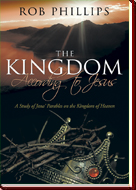
 I was grateful this morning to receive word from my good friend Phill Burgess at CrossBooks that Walmart.com is now carrying a select number of CrossBooks titles including The Kingdom According to Jesus: A Study of Jesus’ Parables on the Kingdom of Heaven. The book explores 17 parables of Jesus having to do with the kingdom of heaven and, I believe, is helpful in personal or group Bible study. Earlier this month, The Kingdom won a first-place award from the Baptist Communicators Association.
Check it out at Walmart.com. The book also is available at CrossBooks, LifeWay Christian Stores, Amazon.com and Barnes & Noble. If you read the book, be sure to post a review. I’d very much like to hear your critique.
 OnceDelivered.net