
Tagged: Jesus Christ
10 truths about the return of Jesus
 Few passages of scripture cause more controversy among evangelical Christians than Rev. 20:1-10, in which John mentions a 1,000-year period six times. The main point of debate is whether the “millennium” should be understood literally or figuratively.
Generally, those who believe the 1,000 years are literal and in the future are called premillennialists. They look for Christ to return and establish a “millennial kingdom,” or a reign of 1,000 years, after which He puts down Satan’s final revolt, resurrects and judges unbelievers (Christians are judged before the millennium), and creates new heavens and a new earth.
Those who believe Christ is returning after the millennium are called postmillennialists. The 1,000 years are not necessarily a literal time frame, but they represent a period during which much of the world turns to faith in Jesus.
Those who see all references to the 1,000 years as figurative and without merit as a reference point concerning the timing of the Lord’s return are called amilllennialists.
There is diversity within each of these camps as to the order of events surrounding the second coming.
Regardless of where you stand on the issue, it’s important to follow a biblical principle for exploring tough passages: Start with the simple and straightforward teachings of scripture, and seek to understand the difficult passages in the light of the simpler ones.
With that in mind, let’s rally around 10 simple truths regarding the return of Jesus.
The Lamb and the 144,000 – Revelation 14:1-5
The scripture
Rev. 14:1 – Then I looked, and there on Mount Zion stood the Lamb, and with Him were 144,000 who had His name and His Father’s name written on their foreheads. 2I heard a sound from heaven like the sound of cascading waters and like the rumbling of loud thunder. The sound I heard was also like harpists playing on their harps. 3They sang a new song before the throne and before the four living creatures and the elders, but no one could learn the song except the 144,000 who had been redeemed from the earth. 4These are the ones not defiled with women, for they have kept their virginity. These are the ones who follow the Lamb wherever He goes. They were redeemed from the human race as the firstfruits for God and the Lamb. 5No lie was found in their mouths; they are blameless. (HCSB)
 In Revelation 7 we are introduced to 144,000 “slaves of our God … sealed from every tribe of the Israelites.” Now, we encounter 144,000 standing with the Lamb on the Mount Zion. They sing a new song that only they can learn in the presence of the four living creatures and the elders. They are described as ones “not defiled with women,” who “follow the Lamb wherever He goes.” They are redeemed from the earth as the “firstfruits for God and the Lamb,” and “they are blameless.”
Many questions arise as we read this passage:
- Who are these 144,000?
- Are they the same 144,000 we encounter in chapter 7?
- Is this number to be taken literally or figuratively?
- What is the new song that only they can learn?
- Is their virginity a reference to sexual purity, or does it mean something else?
- In what way are they “firstfruits” for God and the Lamb?
- And does their blamelessness mean they do not sin?
The identity of the 144,000 – here in Revelation 14 and in Revelation 7 – is a matter of much debate. Whether we can know with certainty who these redeemed people are depends in part on our willingness to challenge our preconceived notions and let the Scripture speak for itself. We must consider the genre of Revelation, the historical context, the meaning of key words and phrases, and the importance of numbers in Revelation. We also need to be willing to go as far as scripture takes us, but no further. With these cautions in mind, let’s take a deeper dive into these verses.
Next: There on Mount Zion stood the Lamb – Revelation 14:1
What have we done to the Christmas story?
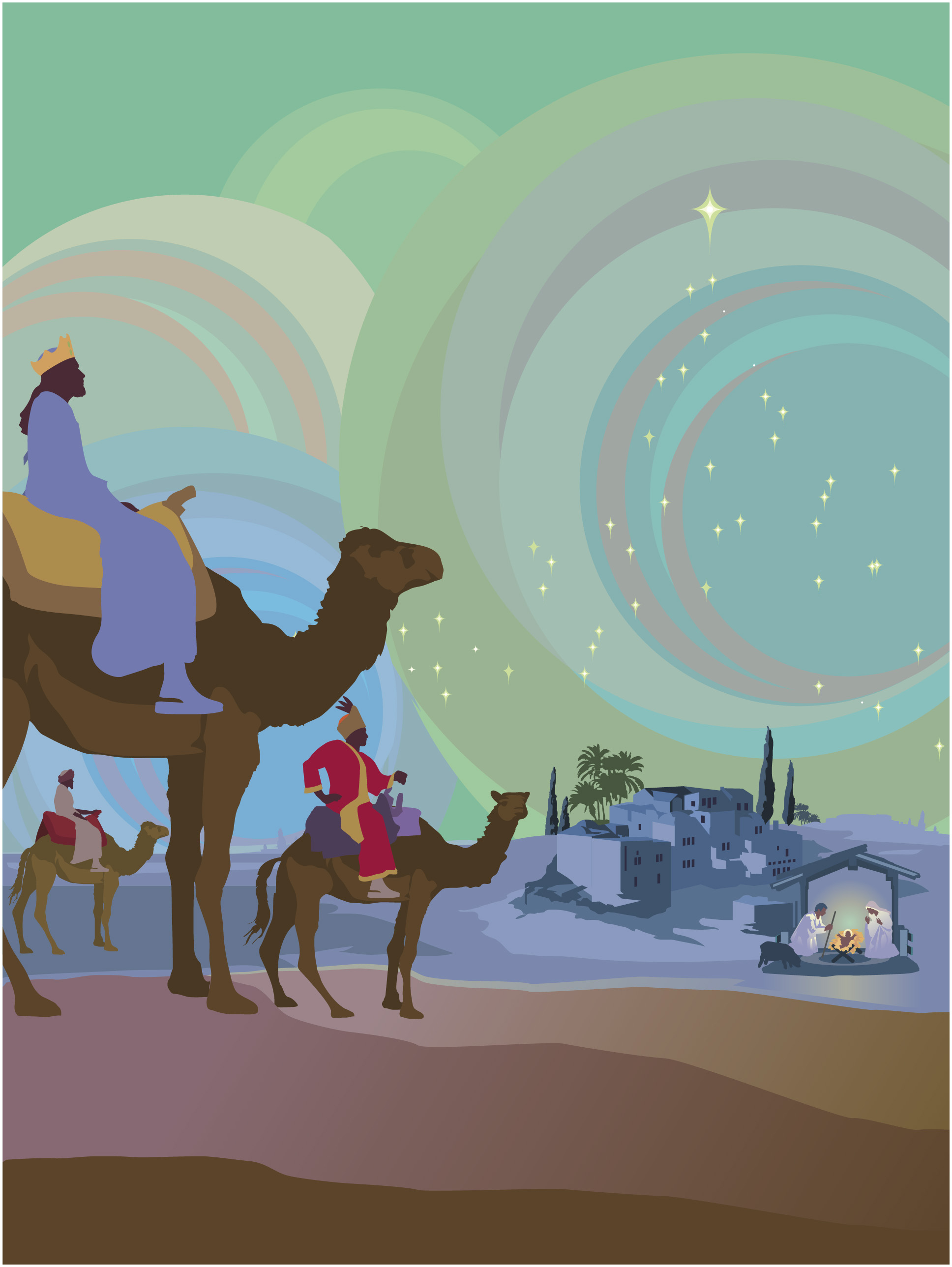 Christians love to hear and tell the traditional Christmas story. The birth of Jesus includes Mary and Joseph seeking shelter on a winter night, no room in the inn, a baby born in a stable, and angels visiting lowly shepherds nearby.
But our modern telling of the account in Luke 2:1-20 embraces critical flaws, according to Kenneth E. Bailey, who spent 40 years teaching the New Testament in the Middle East and who authored Jesus Through Middle Eastern Eyes: Cultural Studies in the Gospels.
According to Bailey, a careful reading of the text, along with an understanding of Jewish culture, illuminate five biblical truths that challenge our Westernized version of the Christmas story:
1. Joseph was returning to the village of his origin. Simply entering Bethlehem and telling people, “I am Joseph, son of Heli, son of Matthat, the son of Levi” instantly would have opened most homes to him.
Did Jesus ever claim to be God?
 Muslims, Jehovah’s Witnesses, and atheists often argue, “Jesus never claimed to be God.” They assert that Christians have corrupted or misinterpreted the New Testament, or they reject the Bible outright.
But for those willing to consider the eyewitness testimony of the New Testament writers, and the convincing evidence that their words are accurately preserved, we may point our unbelieving friends to seven ways that Jesus does, in fact, claim deity.
First, Jesus calls Himself God. In John 8:58 He tells the religious leaders, “I assure you: Before Abraham was, I am.” These words hark back to Exodus 3 where God reveals Himself to Moses in the burning bush as I AM, or YHWH. The Jewish leaders clearly understand Jesus’ declaration of deity.
Second, Jesus claims equality with God. In John 10:30 He states, “The Father and I are one.” His frequent reference to God as Father – especially by the intimate Aramaic term Abba, or Father dearest – rankles the religious leaders. John writes, “This is why the Jews began trying all the more to kill Him … He was even calling God His own Father, making Himself equal with God” (John 5:18).
In His high priestly prayer, Jesus anticipates once again sharing the glory He had with the Father before the world existed (John 17:5). This is a telling claim, for the Old Testament makes it clear that God does not share His glory with anyone (Isa. 42:8, 48:11).
Also note that more than four dozen times Jesus calls Himself the Son of Man – a term that illuminates the Messiah’s deity (Daniel 7:13-14).
He requires everyone to be given a mark — Revelation 13:16-17
Previously: An image comes to life — Revelation 13:5
The scripture
Rev. 13:16 – And he requires everyone – small and great, rich and poor, free and slave – to be given a mark on his right hand or on his forehead, 17 so that no one can buy or sell unless he has the mark: the beast’s name or the number of his name. (HCSB)
He requires everyone … to be given a mark
 Next, the false prophet requires everyone – small and great, rich and poor, free and slave – to be given a mark on their right hands or foreheads. No one is able to buy or sell unless they have the mark, which is the beast’s name or the number of his name (Rev. 13:16-17).
The identity of this mark is a matter of much debate. Some interpreters believe it is an actual mark – a brand burned into the skin, or a tattoo. Others point to imperial coins that bear the image of the emperor. Futurists say it could be a microchip planted just beneath the skin. Others argue that John’s language is figurative, referring to people’s thoughts (foreheads) and deeds (right hands) as they place their trust in the first beast and pledge their allegiance to him.
 OnceDelivered.net