
Tagged: Word of God

His Name is Called the Word of God
This is the 17th in a series of excerpts from What Every Christian Should Know About the Return of Jesus, released by High Street Press and available at Amazon.com.

In the previous column, we examined key features of the returning Christ that John reveals in Revelation 19:11-16. Now, we complete our review.
7. His name is called the Word of God.
In his Gospel account, John tells us of the person and work of Jesus as the Incarnate Word (John 1:1-18). He is eternal, divine, distinct from the Father and yet equal with him. He is the creator of everything. He added sinless humanity to his deity in the Incarnation and thus pitched his tent with sinful and fallen people. Though rejected by his own, he is the true source of light and life. And to those who trust in him, he grants the right to be God’s adopted children. He is God revealed in human flesh.
And now, in Revelation 19, the Word of God again appears – not to create, suffer, or die, but to gloriously claim the prize he won through his sinless life and sacrificial death on the cross. He comes for us – the redeemed he has purchased with his own blood. He reverses the curse that Adam’s sin wrought on mankind and his environment. He judges the wicked, casts them out, purges the physical realm of sin and its stain, and creates new heavens and a new earth. Put simply, the Word restores Eden.
Continue readingThe inerrancy of Scripture
 Previously: The inspiration of Scripture
This is the second in a series of columns on the inspiration, inerrancy, infallibility, and sufficiency of Scripture.
When Christians say the Bible is true, we often use terms to describe the manner in which God has spoken to us through His written Word.
One such term is “inerrant.” But what does that mean?
Freedom from error
The inerrancy of Scripture means the Bible is fully truthful in all of its teachings. P.D. Feinberg writes in the Evangelical Dictionary of Theology, inerrancy is “the view that when all the facts become known, they will demonstrate that the Bible in its original manuscripts and correctly interpreted is entirely true and never false in all it affirms, whether that relates to doctrine or ethics or to the social, physical, or life sciences.”
The Chicago Statement on Biblical Inerrancy puts it this way: Scripture in its entirety is “free from all falsehood, fraud, or deceit.”
Continue reading

Blood flowed … for 180 miles – Revelation 14:20
Previously: The great winepress of God’s wrath – Revelation 14:19
The scripture
Rev. 14:20 – Then the press was trampled outside the city, and blood flowed out of the press up to the horses’ bridles for about 180 miles. (HCSB)
Finally in this chapter, John records, “Then the press was trampled outside the city, and blood flowed out of the press up to the horses’ bridles for about 180 miles” (v. 20).
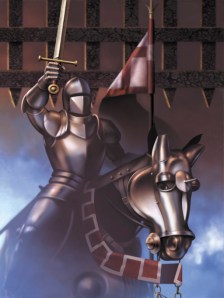 Commentators generally agree that the city in question is Jerusalem. It is called “the great city” in Rev. 11:8, as well as “Sodom and Egypt, where also their Lord was crucified.” The reason the wicked are destroyed outside the city is that this is where accursed and unclean things are taken for disposal. For example, the Valley of Hinnom outside Jerusalem is where human sacrifices take place in Old Testament times. It is a burning trash dump in Jesus’ day. Even the carcasses of sacrificial animals, whose blood the high priest carries into the Holy of Holies on the Day of Atonement, are carried outside the city walls and burned.
But the writer of Hebrews reminds us that Jesus is crucified outside the city in order to identify with sinful people. The One who knew no sin becomes sin for us, and the blessed Son of God becomes a curse: “For the bodies of those animals whose blood is brought into the most holy place by the high priest as a sin offering are burned outside the camp. Therefore Jesus also suffered outside the gate, so that He might sanctify the people by His own blood. Let us then go to Him outside the camp, bearing His disgrace” (Heb. 13:11-13).
Other interpreters see this simply as an allusion to Old Testament purification laws where the unclean are taken outside the camp (Lev. 8:17; 9:11). Still others understand this as a reference to the end-time gathering of the wicked around the city of Jerusalem (Ps. 2:2, 6; Dan. 11:45; Joel 3:12-14; Zech. 14:1-4; and the apocalyptic book of 1 Enoch 53:1). If this is a reference to the Day of the Lord, it likely speaks of the Valley of Jehoshaphat, which according to Jewish tradition is the part of the Kidron Valley between the Temple Mount and the Mount of Olives. This is where Joel prophesies that the judgment of nations will take place (Joel 3:12-14). Zechariah places the final battle on the outskirts of Jerusalem (Zech. 14:1-4).

Why are there two Qur’ans?
 The Qur’an is Islam’s most holy book. While Muslims believe Allah has revealed many written works, including the Old and New Testaments, these revelations ended with the Qur’an, which supersedes all others.
For all practical purposes, Muslims accept only the Qur’an as the Word of God. They believe Jews and Christians have corrupted Allah’s earlier revelations in the Bible, although they honor the writings of Moses, who was given the Tawrat (Torah); David, the Zabur (his Psalms); and Jesus, the Injil (Gospel).
Where the Qur’an and the Bible disagree with one another, Muslims embrace the Qur’an as true and reject the Bible as tainted.
But what happens when the Qur’an contradicts the Qur’an, as it sometimes does?
A brief look at history and the doctrine of “abrogation” sheds light on the Muslim view of divine revelation.
Is the canon of Scripture closed?
 Some Christian scholars today cast doubt over the canon of Scripture – those 66 books that the Church has long held to be the complete written revelation of God. They justify their views by claiming: (1) that surviving texts of the Old and New Testaments are corrupt and therefore unreliable, or (2) that early Church leaders deliberately excluded certain books for personal or political reasons.
As Craig L. Blomberg responds in his recent book – Can We Still Believe the Bible? – “there is not a shred of historical evidence to support either of these claims; anyone choosing to believe them must do so by pure credulity, flying in the face of all the evidence that actually exists.”
But what if we discovered an apostolic writing that has remained hidden for the last 2,000 years?
For example, in 1 Cor. 5:9, Paul alludes to an earlier letter to fellow believers in Corinth. We don’t have that letter, nor are we aware of its specific contents. Let’s say, however, that archaeologists unearth a clay pot containing a manuscript dating from the mid-first century and fitting the description of Paul’s letter.
Should the Church welcome 3 Corinthians as the 28th book of the New Testament? Not so fast.
 OnceDelivered.net