Tawhid and the Trinity

This is the first in a series of articles contrasting Allah and Yahweh.

Muslims and Christians agree there is one God but disagree as to His name, nature, and attributes.

The god of Islam is Allah, meaning “the god” in Arabic. In the days of Islam’s founder, Muhammad, this meant that of all the tribal gods worshiped on the Arabian Peninsula, Allah was the only true deity.

Key to the Islamic concept of God is the doctrine of tawhid, or absolute oneness. It’s more than strict monotheism. Tawhid celebrates Allah as singular, indivisible, and monolithic.

Muslims insist that Allah has no “partners.” To ascribe partners to Allah — for example, to say that Jesus is the Son of God, or that God exists as a Trinity — is to commit the unpardonable sin of shirk, which damns a soul to hell.

The Qur’an makes it clear that Allah stands apart from his creation and does not engage in personal relationships. For example, Surah 17:111 reads: “Praise be to Allah, who begets no son, and has no partner in (His) dominion …”

In addition, the Qur’an instructs its readers to reject any notion that God exists as more than one person. It wrongly implies that Christians worship a Trinity consisting of God, Jesus, and Mary (Surah 4:171; 5:73, 116).

Further, Islam understands these to be three separate gods, and the Qur’an strongly warns Muslims against worshiping anyone but Allah. Here, Muslims and Christians may find some common ground, for Christians both reject the notion of Mary as a god, as well as the idea that three separate gods make up the Trinity.

In No God But One, Nabeel Qureshi points out that the Qur’an clearly denounces polytheism but does not exclude the possibility of Allah existing in tri-unity. Put another way, Qureshi says the Qur’an does not explicitly say Allah cannot exist as one God in three persons, even though Muslims strongly reject the biblical doctrine of the Trinity.
Continue reading

What are “Eternal Chains in Darkness”?

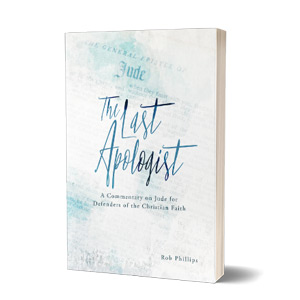
The Missouri Baptist Convention has published a new resource called The Last Apologist: A Commentary on Jude for Defenders of the Christian Faith. The 275-page book is available in print and Kindle editions on Amazon, and in print from the MBC. But we also want to make each of the 16 chapters available online. This post features the last portion of Chapter 8: Kept with Eternal Chains: When Angels Desert.

Previously: Principles of Biblical Interpretation

_______________

and He has kept, with eternal chains in darkness for the judgment of the great day, angels who did not keep their own position but deserted their proper dwelling. (Jude 6)

Whoever these particularly nasty angels are, God is keeping them under wraps until the day they are cast into the lake of fire. The word “kept” in Jude 6 is from the same root word Jude uses in verse 1 to describe believers, who are “kept” by Jesus Christ. Some translations render it “reserved” rather than “kept.” In a parallel passage, Peter writes that these fallen angels are “delivered … to be kept in chains” (2 Peter 2:4 – emphasis added).

The questions, then, are where these demons are imprisoned, and how. Certainly, if they are spiritual beings, physical chains cannot hold them. The Greek actually describes them as being confined, without hope of escape. While Jude does not name this place (or state) of confinement, Peter, in the parallel passage just referenced, calls it Tartarus.

Many translations render this word, found only in 2 Peter 2:4, as “hell,” including the King James Version and the New American Standard Bible, while others, like the English Standard Version and the New International Version, provide footnotes linking the English word “hell” to the Greek name Tartarus.

The Holman Christian Standard Bible simply transliterates the Greek word in this passage, which reads: “For if God did not spare the angels who sinned, but threw them down into Tartarus and delivered them to be kept in chains of darkness until judgment …” A footnote in the HCSB reads, “Tartarus is a Greek name for a subterranean place of divine punishment lower than Hades.”

In the apocryphal Book of Enoch (20:2), Tartarus is used as a place where fallen angels are punished, an interpretation Peter affirms.

So, Tartarus seems to be a place separate from Sheol, the Hebrew term for the abode of the dead; Hades, roughly the Greek equivalent of Sheol; and Gehenna, the lake of fire created for the Devil and his angels (Matt.25:41), where wicked people also spend eternity (Rev. 20:15). Ancient Greeks regarded Tartarus as a place where rebellious gods and other wicked ones are punished.
Continue reading

The stairway to hell

Romans 1 is a graphic depiction of human depravity, which is not a steep vertical fall, but a descending spiral of ungodliness that begins with rejection of God’s revelation and ends with a fateful last step into outer darkness.

It’s a story we should tell more often because it cuts to the chase. Paul doesn’t promise happiness, wealth, or comfort to the sinner who receives Jesus as Savior. Rather, he warns those who persist in rebellion against God of the peril they face when the divine hand of grace finally lets them go.

First, Paul makes it clear that no person stands before God with a valid defense for unbelief. God has revealed Himself to all people in at least two ways: creation and conscience.

In creation, He has shown the wicked His eternal power and divine nature, “being understood through what he has made” (v. 20). A simple gaze into the heavens on a starry night reveals the vastness, beauty, and intricacy of the universe, so that any reasonable person must conclude a divine Designer is behind it all.

Further, God has placed in every heart a knowledge of His holy standards. Regardless of geography, religion, culture, or historic era, everyone knows intuitively that certain deeds are always wrong for all people at all times, and certain deeds are always right (Rom. 2:14-16).

This universal moral compass points inextricably to a divine Law Giver.

Continue reading

Principles of Biblical Interpretation

The Missouri Baptist Convention has published a new resource called The Last Apologist: A Commentary on Jude for Defenders of the Christian Faith. The 275-page book is available in print and Kindle editions on Amazon, and in print from the MBC. But we also want to make each of the 16 chapters available online. This post features the middle portion of Chapter 8: Principles of Biblical Interpretation.

Previously: Kept With Eternal Chains: When Angels Desert

_______________

In the same way, Sodom and Gomorrah and the cities around them committed sexual immorality and practiced perversions, just as they did, and serve as an example by undergoing the punishment of eternal fire. (Jude 7)

As we wrestle with the identity of Jude’s angels, it may help to consider some basic principles for interpreting Scripture. Biblical hermeneutics is “the science and art of understanding, translating, and explaining the meaning of the Scripture text,” according to Wayne McDill, author of 12 Essential Skills for Great Preaching. In 2 Tim. 2:15, Paul commands Timothy to engage in hermeneutics: “Be diligent to present yourself approved to God, a worker who doesn’t need to be ashamed, correctly teaching the word of truth.”

McDill offers seven principles for “rightly dividing” (KJV) the Word of God:

(1) Identify the kind of literature your text is for insight into its meaning.

Bible scholars call this the genre of the text. Is the text law, history, wisdom, poetry, narrative, epistles, prophecy, apocalyptic, or something else? All genres are not created equal when it comes to conveying divine revelation. Carefully discerning the genre of a passage, or an entire book, is key to understanding. The genre of Jude is that of an epistle – a letter written to a general or specific audience conveying greetings and instruction.

(2) Consider the context of the passage for a better understanding of its meaning. What is the historical setting of the passage? Who is the intended audience? What are the social, political, and religious situations that the Holy Spirit and the human author seek to address? Jude likely is written in the mid 60s A.D., when Israel is about to experience God’s wrath at the hands of the Romans, and when the early church is on the cusp of great dangers from false teachers.

(3) Read the text for its plain and obvious meaning. “A common and persistent myth about the Bible is that its real meaning is hidden behind the surface message,” writes McDill. “Even though the Bible uses symbolic or figurative language, most of it is clear to the reader. Even when you do not know about the people, places, and events in question, you can grasp the point of the text.” While Jude alludes to apocryphal books and employs graphic images to describe the lifestyles of false teachers, his message is plain to the reader: Now is the time to take a stand for the Christian faith.

(4) Try to discern the writer’s intentions when he wrote the text. Luke, for example, tells us he has “carefully investigated everything from the very first, to write to you in orderly sequence, most honorable Theophilus, so that you may know the certainty of the things about which you have been instructed” (Luke 1:3-4). In the case of Jude, the author makes it clear that he intends to warn his readers about false teachers who have infiltrated the church, and to spur them to earnestly contend for the faith.

(5) Look carefully at the language of the text for what it reveals about its meaning. The words of the text are all we have of the writer’s thoughts, says McDill. If he hadn’t written it down, we wouldn’t know what he was thinking. So we should carefully examine the author’s words and phrases, and how he constructs his message. Jude uses strong language to characterize false teachers. It may help if we study these terms in the original language using lexicons and word-study books. In addition, Jude often organizes his thoughts in groups of three. For example, in calling his readers to remember how God judges the wicked, he lists three lessons from history: unbelieving Israelites, fallen angels, and the citizens of Sodom and Gomorrah.

(6) Notice the various theological themes in the text. Though a text generally has one intended meaning, it can have a number of significant theological themes – and a variety of applications. When Jude writes about false teachers denying their only Master and Lord, Jesus Christ (v. 4), we might draw from this the urgency of knowing sound doctrine concerning the person and work of the Messiah.

(7) Always take a God-centered perspective for interpreting your text. The “theological interpretation” arises from the assumption that the Bible is really God’s means of making Himself known to us, notes McGill. What it says about Him always is central to every text. “The Bible was not given by God to tell us about ancient religious people and how we should all try to be like them,” he writes. “It was given to tell us about the faithful God whom they either served or denied. Their response is not the central message; God’s will and his involvement with his creation are. Even texts that give instructions as to how we should behave reveal something about God.” Jude’s epistle, while warning of false teachers and calling believers to contend for the faith, ultimately points to a sovereign God who is holy, loving, faithful, and just.

Next: Eternal chains in darkness

 

Kept With Eternal Chains: When Angels Desert

The Missouri Baptist Convention has published a new resource called The Last Apologist: A Commentary on Jude for Defenders of the Christian Faith. The 275-page book is available in print and Kindle editions on Amazon, and in print from the MBC. But we also want to make each of the 16 chapters available online. This post features the first half of Chapter 8: Kept With Eternal Chains: When Angels Desert.

Previously: What Is the Sin of Sodom?

_______________

and He has kept, with eternal chains in darkness for the judgment of the great day, angels who did not keep their own position but deserted their proper dwelling. (Jude 6)

 In a scene from the 1971 film Fiddler on the Roof, a Jewish peasant named Tevye, living in prerevolutionary Russia, mulls over the prospect of his daughter, Tzeitel, marrying an impoverished tailor, Motel. He watches the starry-eyed young couple from a distance, alternately scratches his neck and strokes his beard, and says to himself:

“He is beginning to talk like a man. On the other hand, what kind of a match would that be, with a poor tailor? On the other hand, he’s an honest, hard worker. But on the other hand, he has absolutely nothing. On the other hand, things could never get worse for him; they could only be better.”

“On the other hand” is Tevye’s way of expressing his uncertainty about the outcome of his daughter’s romance. Verbally, he weighs the evidence for and against his beloved Tzeitel’s happiness.

As we explore Jude 6, we may need a little of Tevye’s humble uncertainty about what lies before us, because the author’s reference to a particular class of angels has left biblical scholars scratching their necks (or more likely their heads) and stroking their beards for centuries. At the same time, Jude’s story of fallen angels offers an opportunity to hone our apologist’s skills in dealing with difficult passages of Scripture.
Continue reading