The gates of Hades

After Simon Peter makes his famous declaration that Jesus is “the Messiah, the Son of the living God,” Jesus tells the apostle, “you are Peter, and on this rock I will build my church, and the gates of Hades will not overcome it” (Matt. 16:16, 18 NIV).

Jesus’ reference to “this rock” has been the subject of much debate. The Catechism of the Catholic Church declares,“ The Lord made Simon alone, whom he named Peter, the ‘rock’ of his Church. He gave him the keys of his Church and instituted him the shepherd of the whole flock …” In other words, Christ named Peter the first in an unbroken line of popes.

Other interpreters say Jesus meant that He will build His church:

  • On Himself (Jesus is “this rock”)
  • On Peter’s profession of faith, or
  • On the life and teachings of Jesus as revealed in the apostolic record

The third view has much to commend it. Christ’s life and teachings are the foundation of the church. Ephesians 2:20 tells us Jesus is the cornerstone of the church. The prophets and apostles are the foundation as the bearers of God’s revealed truth preserved in the Scriptures.

As Michael F. Ross writes in Christian Research Journal, “Peter became ‘the rock’ not as an individual with an office, but as the leader of the apostolic band of men who received and recorded New Testament revelation…. The New Testament knows no Head but Jesus Christ.”

But there’s even more going on here, particularly with respect to Jesus’ reference to “the gates of Hades.”
Continue reading

The Last Apologist

Recently, we completed our verse-by-verse study of the Epistle of Jude. If you missed any part of the study, you may begin here.

For complete copies of the book, including a study of key words and a listing of questions for personal or group study, you may order print or Kindle copies from Amazon, or order online from the Missouri Baptist Convention.

If you’d like a free copy of the study in PDF format, you may download the file here.

Coming soon: Chapter-by-chapter excerpts from What Every Christian Should Know About Salvation.


Why you can’t say “Mormon” anymore

Last month, Russell Nelson, president of the Church of Jesus Christ of Latter-day Saints, announced that God had impressed upon him the urgency of casting off the nickname “Mormon.”

Non-Latter-day Saints in the 19thcentury used the “Mormon” moniker disparagingly to identify members of the organization founded by Joseph Smith, whose followers came to embrace the name as a badge of honor. Even so, Nelson argued that “Mormon” does not do justice to the name that God, in 1838, gave Smith for his fledging religion.

“The Lord has impressed upon my mind the importance of the name He has revealed for His Church, even The Church of Jesus Christ of Latter-day Saints,” Nelson said in a statement. “We have work before us to bring ourselves in harmony with His will.”

Other acceptable names, according to Nelson, include “the Church,” “Church of Jesus Christ,” and “restored Church of Jesus Christ.”
Continue reading

Jude’s doxology

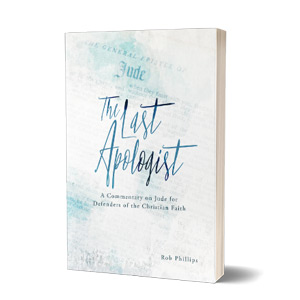
The Missouri Baptist Convention has published a new resource called The Last Apologist: A Commentary on Jude for Defenders of the Christian Faith. The 275-page book is available in print and Kindle editions on Amazon, and in print from the MBC. But we also want to make each of the 16 chapters available online. This post features the last half of Chapter 16: Doxology: To the Only God Our Savior.

Previously: To the Only God Our Savior

___________________________________


Now to Him who is able to protect you from stumbling and to make you stand in the presence of His glory, blameless and with great joy, to the only God our Savior, through Jesus Christ our Lord, be glory, majesty, power, and authority before all time, now, and forever. Amen. (Jude 24-25 HCSB)

Jude ends his epistle with a wonderful four-part doxology, or word of praise. To “the only God our Savior, through Jesus Christ our Lord,” Jude offers:

Glory– the sum total of all that God is and does. The word “glory” captures all the divine attributes in their radiance. The Greek word doxa, from which we get “glory,” means honor; renown; an especially divine quality; the unspoken manifestation of God; splendor. We see this in Yahweh in the Old Testament. In the desert, the Lord provides a place in the crevice of a rock for Moses, and covers His servant with His hand to protect him from the certain death that results when sinful humans see God’s glorious face (Ex. 33:20-23).

Such glory belongs only to God (Isa. 42:8; 48:11). However, in the New Testament, we see divine glory as an attribute of Jesus – an attribute He shared with the Father before the creation of the world (John 17:5). On the Mount of Transfiguration, Jesus shows Peter, James, and John his glory. His face shines like the sun, and even His clothes become as white as light (Matt. 17:1-8). The writer of Hebrews notes this about Jesus, “He is the radiance of His [God’s] glory, the exact expression of His nature …” (Heb. 1:3a).
Continue reading

What do you know about the Incarnation?

This is the last in a series of articles on the Incarnation.

Over the last six columns, we have examined the doctrine of the Incarnation. As we complete our study, let’s test what we’ve learned about the person and work of Jesus. Answer the following questions (feel free to refer to previous columns). The correct responses are listed at the end of each question.

  1. What is the Incarnation?

(a) The state of living in a country that’s crazy about automobiles

(b) The eternal Son of God taking on human flesh in the person of Jesus of Nazareth

(c) A floral decoration; a boutonniere

(d) The creation of Jesus as an archangel

Correct answer: (b)

  1. Which of the following are heretical views of the Incarnation (choose all that apply):

(a) Arianism

(b) Cronyism

(c) Botulism

(d) Docetism

Correct answers: (a) and (d)
Continue reading