
Common objections to the Bible – Part 1


Many who disbelieve the Bible’s claims to be the word of God raise objections. Often, these objections are raised sincerely by people seeking the truth. Whether sincere or not, the objections merit a response. Following are the first of eight common objections. The rest are featured in a future post.

Objection 1: No one really knows what the Bible says because the original manuscripts are lost.

Response: True, the “autographs” no longer exist, but a remarkable number of copies do. No other book from the ancient world has more, earlier, or better-copied manuscripts than the Bible. Nearly 5,800 Greek, 10,000 Latin, and 10,000-15,000 other early versions of the New Testament are in existence, some dating to within a generation of the originals. Compare this with fewer than 1,800 copies of Homer’s Iliad, with the earliest copies dating 400 years after the original.
Continue reading


The curious case of King Saul and the medium

King Saul’s visit to the medium at Endor (1 Sam. 28) is the most detailed account of necromancy in Scripture. It exposes the fraudulence of those who claim to traffic in communication with the deceased, and it warns about the consequences of those who seek to cross a line God has drawn in the sand.
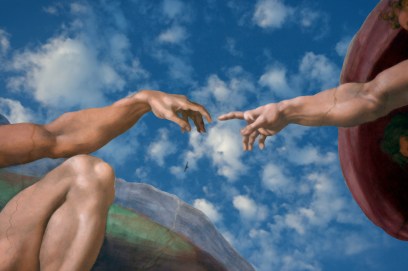
Simply stated, a medium is one who claims to connect the living with the dead. As we read of King Saul’s encounter with the woman of Endor, we learn that Saul is in desperate straits. Samuel the prophet has died, and the king hears nothing but silence from the LORD. Even though Saul has banned necromancers from the land, he instructs his servants to seek out “a woman who is a medium,” literally, “a woman controlling, or mistress of, a divining demon” (1 Sam. 28:7).

Saul understands how necromancy is believed to work. A demon must mediate between the necromancer and the spirit of a deceased person. Saul is willing to go this route in order to contact Samuel because the late prophet and judge was unmatched in knowing God’s mind and future events.

When Saul makes contact with the woman at Endor, he assures her that no harm will come to her, even though she operates an unlawful business. His need to seek Samuel’s counsel overrides the shady nature of their exchange.
Continue reading

The Fatherhood of God

This is the 14th in a series of articles on the Trinity, excerpted from “What Every Christian Should Know About the Trinity,” available by contacting the MBC or through Amazon and other booksellers.
In the previous column, we explored the Father’s deity. Now, let’s look at some ways the Bible describes the Fatherhood of God.

First, the Greek word theos is used of the Father. We see this in numerous passages, such as Galatians 1:1 and 1 Peter 1:2. While theos also is used of Satan (2 Cor. 4:4) and pagan idols (1 Cor. 8:5), the New Testament writers are clear that these entities are not God by nature (Gal. 4:8). In fact, Paul argues that the gods of the pagans actually are demons (1 Cor. 10:20).

In addition, the Greek kyrios (Lord) is found more than 700 times in the New Testament and is clearly applied to the Father in numerous passages (e.g., Matt. 4:7; Heb. 12:5-6).

Second, the Father’s divine attributes reveal His deity. The Father is eternal (Rom. 1:20; 1 Tim. 6:16); almighty (Rev. 19:6); immortal (1 Tim. 1:17); all-knowing (Matt. 6:32); perfect (Matt. 5:48); and true deity (John 17:3).

We should not overlook the significance of 1 John 1:3, where the apostle writes, “[W]hat we have seen and heard we also declare to you, so that you may also have fellowship with us; and indeed our fellowship is with the Father and with his Son Jesus Christ.” The invitation to fellowship with the Father, as with the Son, demonstrates both His personhood and His deity.
Continue reading

New book casts doubt on Joseph Smith’s alleged visions

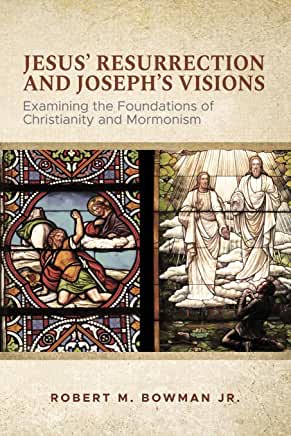
If Christians believe the risen Jesus appeared to the apostle Paul on the road to Damascus, why shouldn’t they accept Joseph Smith’s claim that this same Jesus appeared to him in New England in 1820?

This is the central question Robert M. Bowman Jr. addresses in Jesus’ Resurrection and Joseph’s Visions: Examining the Foundations of Christianity and Mormonism. It’s a question worth exploring across the pages of this well-written and carefully documented new book.

Bowman, widely regarded as the leading evangelical scholar addressing Mormon and Jehovah’s Witness interpretations of the Bible, is well qualified to examine the evidence – both the claims of the apostle Paul and of Joseph Smith, founder of the Church of Jesus Christ of Latter-day Saints.

Bowman approaches his study using evidence and reason – evidence meaning factual information that provides objective support for a particular conclusion, and reason meaning the use of methods of drawing conclusions from available information.

This is a fair-minded approach upon which skeptics and true believers may agree. It holds both the Bible and the Latter-day Saints’ additional scriptures (The Book of Mormon, Pearl of Great Price, and Doctrine and Covenants) open to the same levels of scrutiny. In the end, Bowman shows that Paul’s claims to have seen the resurrected Jesus are well-grounded in evidence and reason; Smith’s claims of seeing Jesus are not.
Continue reading

The Father is God

This is the 13th in a series of articles on the Trinity, excerpted from “What Every Christian Should Know About the Trinity,” available by contacting the MBC or through Amazon and other booksellers.
There is little dispute among professing Christians that our Heavenly Father is God. This is true even among the most prominent forms of counterfeit Christianity.

For example, Jehovah’s Witnesses believe in the deity and personhood of Jehovah, whom they identify as the Father, even though they deny the doctrine of the Trinity and embrace unbiblical views about Jesus and the Holy Spirit. Members of the Church of Jesus Christ of Latter-day Saints profess belief in Heavenly Father, or Elohim, whom they worship as the god of this world, although he is one of a multitude of gods and potential gods.

These doctrinal distinctions highlight the importance of defending historic Christianity. If we fail to understand the Father correctly, and if we miss the clear teachings of Scripture with respect to His relationship with the other members of the Godhead, then the biblical doctrines of creation, redemption, and restoration suffer as well.

As Robert Morey writes, “The notion that all religions worship the Father just under different names is an idea totally foreign and antithetical to the Bible. Only the Trinitarian can truly worship God the Father because only the Trinitarian worships the Son and the Holy Spirit.”
Continue reading