Previously: The sixth bowl: Revelation 16:12-16
The scripture
Rev. 16:14 – For they are spirits of demons performing signs, who travel to the kings of the whole world to assemble them for the battle of the great day of God, the Almighty. 15 “Look, I am coming like a thief. Blessed is the one who is alert and remains clothed so that he may not go naked, and they see his shame.” 16 So they assembled them at the place called in Hebrew Armageddon. (HCSB)
Assemble them for the battle … in Armageddon
Now the kings of the world are assembled for “the battle of the great day of God, the Almighty” (v. 14). Verse 16 tells us the evil spirits assemble the kings at “the place called in Hebrew, Armageddon.” This is the only mention of “Armageddon” in the Bible. But the place is well known. The word “Armageddon” in Hebrew is har-megiddon, meaning “the mount of Megiddo.” Although there is no mountain by this name, the great city of Megiddo is strategically placed to guard the pass between the Mediterranean coast and the valley of Jezreel or Esdraelon.
 The outcome of this battle is reported in Rev. 17:14 and 19:11-21 as the Lamb obliterates the forces of evil. As the Dictionary of Biblical Prophecy and End Times points out, the gathering of the wicked for destruction is a common theme in the Old Testament. For example:
- In Joel 3:11-16 the Lord invites the nations to come to the “Valley of Jehoshaphat, for there I will sit down to judge all the surrounding nations.”
- In Zeph. 3:8 the Lord declares, “For My decision is to gather nations, to assemble kingdoms, in order to pour out My indignation on them, all My burning anger; for the whole earth will be consumed by the fire of My jealousy.”
- And in Zech. 12:3-4 and 14:2-5 Yahweh promises, “On that day I will make Jerusalem a heavy stone for all the people; all who try to lift it will injure themselves severely when all the nations of the earth gather against her…. I will gather all the nations against Jerusalem for battle…. Then the Lord will go out to fight against those nations as He fights on a day of battle …”
More specifically, the valley of Jezreel or Esdraelon is the site of many important battles in the history of Israel. It is the place where earthly kings are no match for the Lord’s heavenly host; indeed, they are punished for oppressing God’s people (Judges 5:19). It is where the prophets of Baal are slaughtered in the days of Elijah (1 Kings 18:40). And it is where good king Josiah is killed, resulting in national mourning (2 Kings 23:29; 2 Chron. 35:20-25).
A common thread in these battles is that this valley is a place where unrighteous nations attack the people of God. Certainly, Megiddo in scripture is connected with warfare. It’s possible, however, that John’s reference to Megiddo is in fact a reference to Jerusalem. David Stern writes, “[T]he final war may not take place at Har Megiddo at all, but in Jerusalem, at Har Migdo, the ‘mount of his choice fruit,’ i.e., the mountain of God’s blessing, Mount Zion. Mount Zion has already been mentioned at 14:1; moreover, the imagery resembles Joel’s picture of the Day of Adonai, when God’s power goes forth from Mount Zion against the forces of evil (Joel 2:1-11, 4:16-17 [3:16-17]; compare also Isaiah 31:4-9). The next passage (vv. 17-21) resembles 14:14-20, which also draws on imagery from Joel 4…. Strengthening the case further Zechariah 12:11 … mentions Jerusalem along with Megiddon” (Jewish New Testament Commentary, p. 835).
So how should we view Armageddon?
Continue reading →

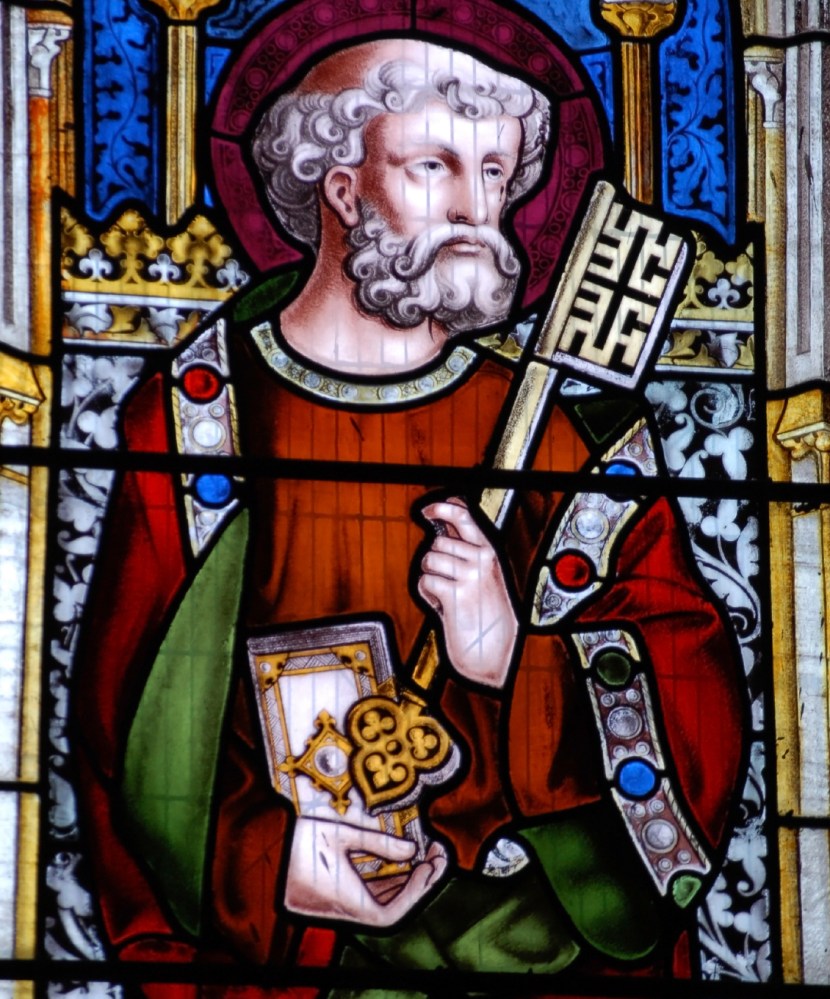
 After Simon Peter makes his famous declaration that Jesus is “the Messiah, the Son of the living God,” Jesus tells the apostle, “you are Peter, and on this rock I will build My church, and the forces of Hades will not overpower it” (Matt. 16:16, 18).
 “It is done!”
 Roman Catholics embrace at least seven doctrines that evangelical Christians reject as inconsistent with the Word of God. In the previous article, we explored five of these doctrines. This column examines two more.

 While Roman Catholics and evangelicals agree on a number of Christian doctrines, as we learned in the last column, there are profound differences between the teachings of Rome and the revealed word of God in Scripture.
 OnceDelivered.net