
Tagged: lake of fire

The lake of fire – Revelation 20:10

Previously: Fire came down from heaven – Revelation 20:9
The scripture
Rev. 20:10 – The Devil who deceived them was thrown into the lake of fire and sulfur where the beast and the false prophet are, and they will be tormented day and night forever and ever. (HCSB)
The lake of fire
At last we come to the end of the father of lies. John records, “The Devil who deceived them was thrown into the lake of fire and sulfur where the beast and the false prophet are, and they will be tormented day and night forever and ever” (v. 10). The lake of fire and sulfur is, of course, hell, or gehenna in the Greek. The name is drawn from the Valley of the Son of Hinnom just outside Jerusalem, a place where apostate Israelites in Old Testament times sacrifice their children to the pagan god Moloch. Hell is a place of conscious existence where Satan, demons and the wicked spend eternity apart from Christ.
This passage should be seen in light of Rev. 14:9-11, which describes the destiny of the one who worships the beast: “he will also drink the wine of God’s wrath, which is mixed full strength in the cup of His anger. He will be tormented with fire and sulfur in the sight of the holy angels and in the sight of the Lamb, and the smoke of their torment will go up forever and ever. There is no rest day or night for those who worship the beast and his image, or anyone who receives the mark of his name.”
Jesus calls hell “the eternal fire prepared for the Devil and his angels” (Matt. 25:41). People who reject God’s gracious offer of eternal life join Satan and his demons in the lake of fire. Jesus also calls hell “outer darkness” where there is weeping and gnashing of teeth. It is place where the worm does not die and the fire is never quenched, meaning that the resurrected bodies of unbelievers do not die and are not annihilated.
Hell is a place to be avoided at all costs, yet a place where no person or demon goes beyond his or her will. As C.S. Lewis famously wrote, “There are two kinds of people: those who say to God, ‘Thy will be done,’ and those to whom God says, ‘All right, then, have it your way.’”
Continue reading
The rest of the dead – Revelation 20:5-6
 Previously: The first resurrection – Revelation 20:4b-5
The scripture
Rev. 20:5 – The rest of the dead did not come to life until the 1,000 years were completed. This is the first resurrection. 6 Blessed and holy is the one who shares in the first resurrection! The second death has no power over them, but they will be priests of God and of the Messiah, and they will reign with Him for 1,000 years.
The rest of the dead
John writes, “The rest of the dead did not come to life until the 1,000 years were completed” (v.5). He then mentions that their fate is the “second death” (v.6). John tells us in verse 15 that the second death is “the lake of fire” into which death and hades are cast.
More will be said about this subject in our discussion of the great white throne judgment (Rev. 20:11-15), but it’s important to note that John sees a clear separation between the first and second resurrections and, as we’ll see shortly, different destinations for those who take part in the first and second resurrections.
It’s important to note that the second death has no power over the redeemed (v. 6). The finished work of Christ assures that all who come to Him by faith are released from the penalty of sin. Once they were dead spiritually but now they have everlasting life. They will die physically one day but will be raised and given glorified bodies similar to the resurrected body of Jesus. The lake of fire is not created for them, nor will they experience it.
In contrast, the lake of fire is created for Satan and his demons, and these evil creatures most assuredly spend eternity there. Joining them are those who reject Christ. They have chosen to spend eternity in a place not made for them.
Continue reading
The beast and his armies defeated – Revelation 19:17-21
 Previously: The rider on a white horse – Revelation 19:11-16
The scripture
Rev. 19:17 – Then I saw an angel standing in the sun, and he cried out in a loud voice, saying to all the birds flying in mid-heaven, “Come, gather together for the great supper of God, 18 so that you may eat the flesh of kings, the flesh of commanders, the flesh of mighty men, the flesh of horses and of their riders, and the flesh of everyone, both free and slave, small and great.”
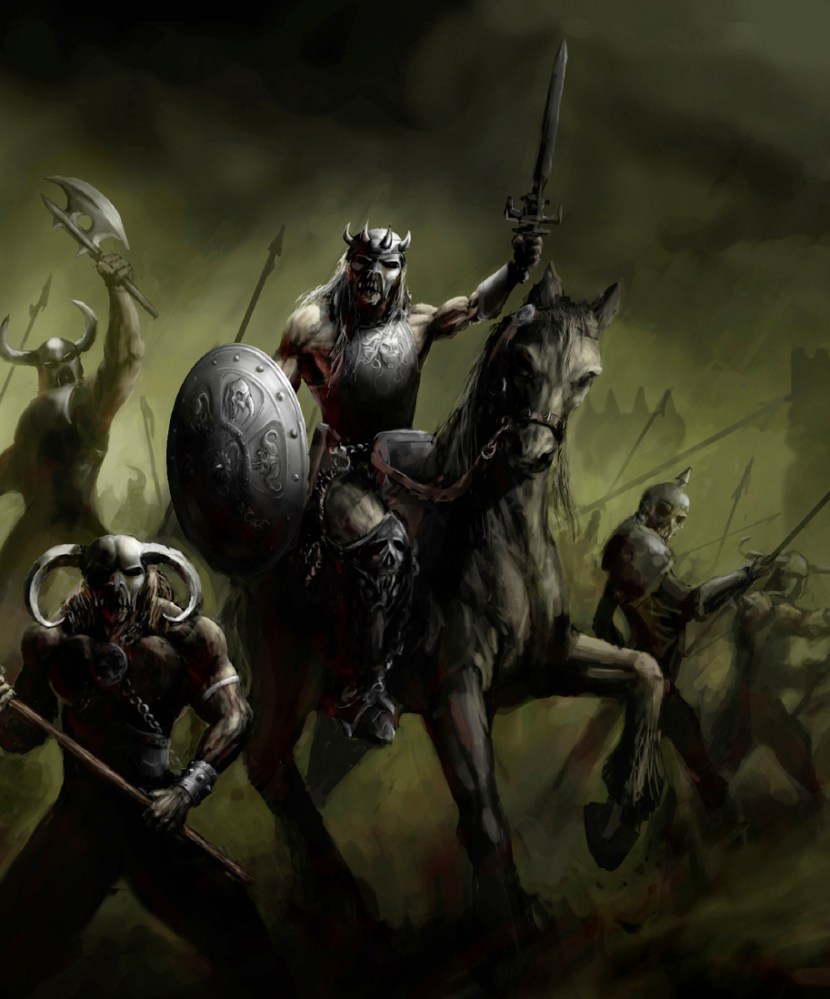
19 Then I saw the beast, the kings of the earth, and their armies gathered together to wage war against the rider on the horse and against His army. 20 But the beast was taken prisoner, and along with him the false prophet, who had performed signs on his authority, by which he deceived those who accepted the mark of the beast and those who worshiped his image. Both of them were thrown alive into the lake of fire that burns with sulfur. 21 The rest were killed with the sword that came from the mouth of the rider on the horse, and all the birds were filled with their flesh. (HCSB)
The beast and his armies defeated
Next, John sees an angel standing on – or some translations say in – the sun. He cries out in a loud voice to the birds, “Come, gather together for the great supper of God, so that you may eat the flesh of kings, the flesh of commanders, the flesh of mighty men, the flesh of horses and of their riders, and the flesh of everyone, both free and slave, small and great” (vv. 17-18).
We should note a stark contrast between this supper, in which the fowls of the air are summoned to feast on the corpses of the wicked (and their horses), and the marriage supper of the Lamb, in which believers enjoy intimate fellowship with the Bridegroom. As in Jesus’ parable of the wedding feast for the king’s son, those who are not dressed appropriately for a marriage feast are cast into outer darkness, while those who respond positively to the king’s invitation, and willingly wear the white linen robes the king provides for all guests, enjoy the comforts of the royal court (see Matt. 22:1-14).
Continue reading
And a third angel followed them – Revelation 14:9-11
Previously: A second angel followed – Revelation 14:8
The scripture
Rev. 14:9 – And a third angel followed them and spoke with a loud voice: “If anyone worships the beast and his image and receives a mark on his forehead or on his hand, 10 he will also drink the wine of God’s wrath, which is mixed full strength in the cup of His anger. He will be tormented with fire and sulfur in the sight of the holy angels and in the sight of the Lamb, 11 and the smoke of their torment will go up forever and ever. There is no rest day or night for those who worship the beast and his image, or anyone who receives the mark of his name.” (HCSB)
 A third angel followed them

A third angel follows the other two and pronounces woe on those who worship the beast and his image and receive a mark on their foreheads or hands. The consequences of rejecting God – who has revealed Himself in creation, conscience, Christ, and the canon of scripture – are spelled out plainly. The one who embraces the beast will experience the consequences of his or her rebellion.
First, the beast worshiper will “drink the wine of God’s wrath, which is mixed full strength in the cup of His anger” (v. 10a). The Greek word for “cup,” poterion, is used 82 times in the New Testament (HCSB) and denotes a drinking vessel of any sort. Commonly, a cup is a small bowl made of pottery, wider and shallower than today’s tea cups. However, the wealthy enjoy their drinks in goblet-shaped cups of metal or glass. The cup used at the Last Supper likely is an earthenware bowl large enough for all to share.
Figuratively, however, throughout the Bible the word “cup” may describe a measure of blessings or wrath divinely allotted to people or nations:
- In Psalm 16:5, David calls the Lord “my portion and my cup of blessing.”
- In Psalm 116:12-13, the writer declares, “How can I repay the Lord for all the good He has done for me? I will take the cup of salvation and call on the name of Yahweh.”
- But in Isaiah 51:17, the prophet warns, “Wake yourself, wake yourself up! Stand up, Jerusalem, you have drunk the cup of His fury from the hand of the Lord; you who have drunk the goblet to the dregs – the cup that causes people to stagger.”
- In the Garden of Gethsemane, as Jesus agonizes over His impending suffering and death, He prays, “My Father! If it is possible let this cup pass from Me. Yet not as I will, but as You will” (Matt. 26:39).
- And moments later, after Peter cuts of the ear of the high priest’s slave, Jesus tells him, “Sheathe your sword! Am I not to drink the cup the Father has given Me?” The cup Jesus endures, of course, is His sacrificial and substitutionary death on the cross to secure our salvation, a most bitter cup as “the One who did not know sin [became] sin for us so that we might become the righteousness of God in Him” (2 Cor. 5:21). It’s also a cup Jesus endures “for the joy that lay before Him” because it results in our salvation (Heb. 12:2).
But now in Revelation the cup, which the Babylonians entice the world to drink, is turned into the cup of God’s wrath.
He also performs great signs – Revelation 13:13-14
Previously: The beast from the earth – Revelation 13:11-18
The scripture
Rev. 13:13 – He also performs great signs, even causing fire to come down from heaven to earth in front of people. 14 He deceives those who live on the earth because of the signs that he is permitted to perform on behalf of the beast, telling those who live on the earth to make an image of the beast who had the sword wound and yet lived.
He also performs great signs
In verses 13-14 we read of the second beast: “He also performs great signs, even causing fire to come down from heaven to earth in front of people. He deceives those who live on the earth because of the signs that he is permitted to perform on behalf of the beast, telling those who live on the earth to make an image of the beast who had the sword wound and yet lived.”
 The beast from the earth is a miracle worker, but his purpose is deceitful. His goal is to cause all people to turn away from the one true and living God to a false god, and even to his image. What a contrast to Jesus, whose miracles confirm His deity, and to the apostles, whose signs and wonders establish them as Christ’s anointed representatives. As Paul writes to the Corinthians, “The signs of an apostle were performed with great endurance among you – not only signs but also wonders and miracles” (2 Cor. 12:12).
Further, the writer of Hebrews tells us, “[H]ow will we escape if we neglect such a great salvation? It was first spoken by the Lord and was confirmed to us by those who heard Him. At the same time, God also testified by signs and wonders, various miracles, and distributions of gifts from the Holy Spirit according to His will” (Heb. 2:3-4).
 OnceDelivered.net