
Tagged: Devil

Satan: Murderer by proxy

The following excerpt is taken from What Every Christian Should Know About Satan. Order your copy in print, Kindle, or Audible versions here.
As a general observation, Satan does not appear to murder directly, although he could – with God’s permission. Rather, the evil one carries out his murderous pursuits through various agents. We might say the evil one commits murder by proxy.
A few examples: When God permits Satan to test Job, the evil one uses the Sabeans and Chaldeans to kill Job’s stock, as well as some of Job’s servants (Job 1:15, 17). Satan then employs fire from heaven and a great whirlwind to kill more of Job’s servants and all of his children (Job 1:16, 18-19). He incites David to take a census of Israel, resulting in the deaths of many people (2 Sam. 24; 1 Chron. 21). He uses Roman and Jewish authorities, along with a back-stabbing apostle, to bring about the death of Jesus (Luke 22:3; John 13:2, 27). And he fills the hearts of Ananias and Sapphira to lie against the Holy Spirit, resulting in their deaths (Acts 5:1-11).
And there’s more.
Continue reading
Satan the murderer

The following excerpt is taken from What Every Christian Should Know About Satan. Order your copy in print, Kindle, or Audible versions here.
James Fairweather was only fifteen years old when he stabbed a drunken and helpless man 102 times during an encounter in Colchester, England. Three months later, Fairweather stabbed a second victim in both eyes as she walked along a nature trail in the same Essex community, resulting in her death. He was stalking a third victim when police arrested him. What made his capture particularly chilling was his admission that he wanted to kill at least fifteen more people.
When the judge handed down the teenager’s sentence, Fairweather turned toward his parents and mouthed, “I don’t give a s—.”
Fairweather is one of the world’s youngest serial killers. He’s also one of the few who showed absolutely no remorse for his crimes. His mother branded him a “monster.” His teachers heard him express a desire to be a murderer but didn’t believe him, thinking him to be merely an “edgy teenager.” He idolized Peter Sutcliffe, the “Yorkshire Ripper,” and regarded American serial killer Ted Bundy as his favorite murderer. He claimed possession by the devil and said he heard voices in his head that compelled him to kill. Both killings showed elements of planning and sadism.
Continue reading
Horns and a pitchfork?
The following excerpt is taken from What Every Christian Should Know About Satan. Order your copy in print, Kindle, or Audible versions here.
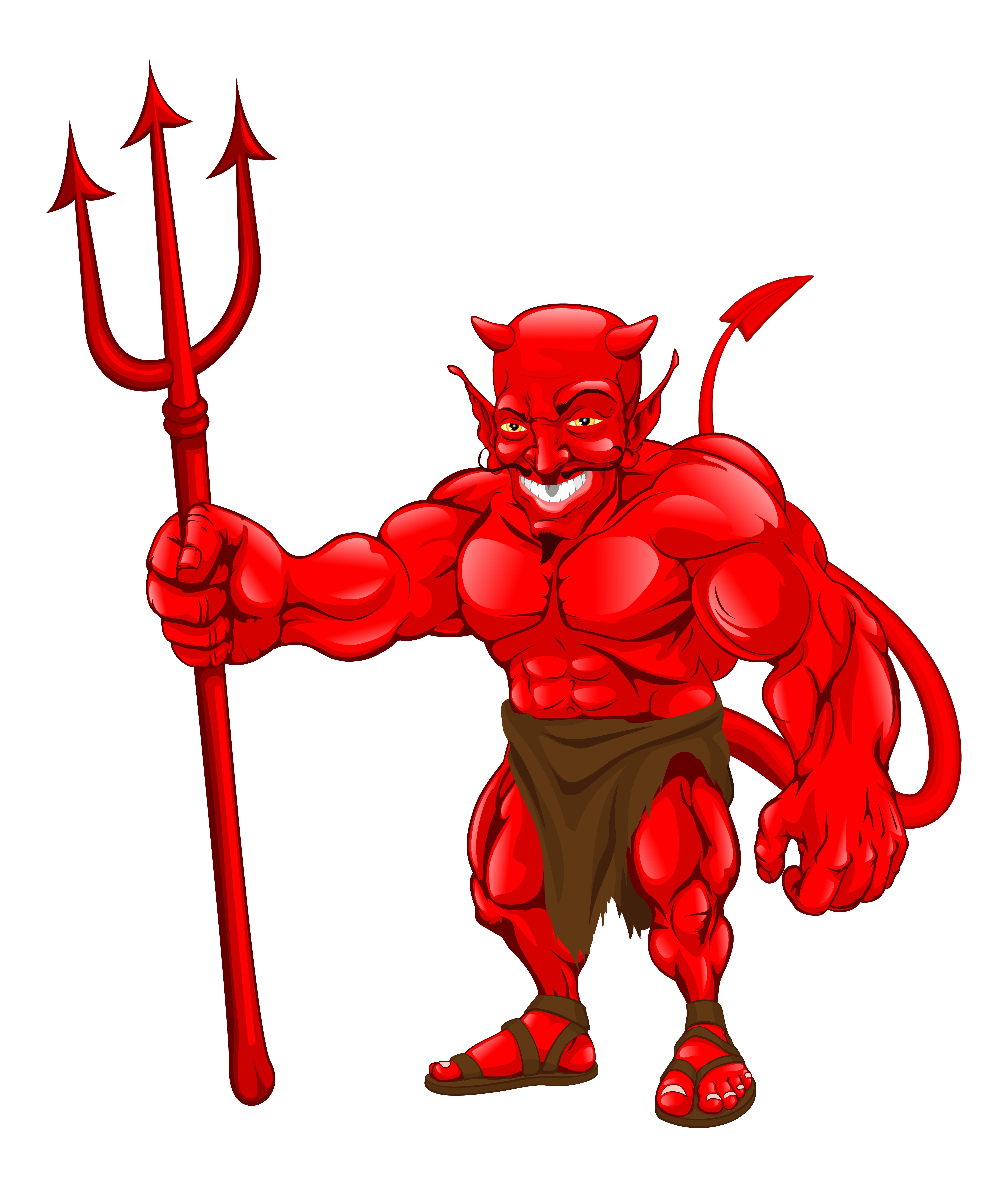
The subtlety of the father of lies is rooted in his character as the master of a million faces. And these faces are beautifully bathed in light. The grotesque images of the evil one as a fiery red beast with horns, a pointy tail, and a pitchfork come to us, not from Scripture, but from Middle-Age caricatures.
The medieval church believed firmly in the reality of Satan. It understood that the evil one was a fallen angel whose head swelled with pride. So, the church proposed attacking Satan at his point of weakness – his arrogance – and he would flee. As R. C. Sproul puts it, “What better way to attack Satan’s pride than to depict him as a cloven-hoofed court jester in a red suit?” Unfortunately, later generations, including ours, maintain these distortions as if they are intended to be the real thing.
Continue reading
He seized the dragon – Revelation 20:2-3
 Previously: The key to the abyss – Revelation 20:1
The scripture
Rev. 20:2 – He seized the dragon, that ancient serpent who is the Devil and Satan, and bound him for 1,000 years. 3 He threw him into the abyss, closed it, and put a seal on it so that he would no longer deceive the nations until the 1,000 years were completed. After that, he must be released for a short time. (HCSB)
He seized the dragon
In verses 2-3 Satan is “seized,” bound for 1,000 years, and thrown into the abyss. Note the different names by which the evil one is called: the dragon, that ancient serpent, the Devil, and Satan. We have explored these names before, most notably in “The woman, the dragon, and the child – Rev. 12:1-6,” and “Then war broke out in heaven – Rev. 12:7-12.” But a quick review is in order.
Continue reading
And a third angel followed them – Revelation 14:9-11
Previously: A second angel followed – Revelation 14:8
The scripture
Rev. 14:9 – And a third angel followed them and spoke with a loud voice: “If anyone worships the beast and his image and receives a mark on his forehead or on his hand, 10 he will also drink the wine of God’s wrath, which is mixed full strength in the cup of His anger. He will be tormented with fire and sulfur in the sight of the holy angels and in the sight of the Lamb, 11 and the smoke of their torment will go up forever and ever. There is no rest day or night for those who worship the beast and his image, or anyone who receives the mark of his name.” (HCSB)
 A third angel followed them
A third angel follows the other two and pronounces woe on those who worship the beast and his image and receive a mark on their foreheads or hands. The consequences of rejecting God – who has revealed Himself in creation, conscience, Christ, and the canon of scripture – are spelled out plainly. The one who embraces the beast will experience the consequences of his or her rebellion.
First, the beast worshiper will “drink the wine of God’s wrath, which is mixed full strength in the cup of His anger” (v. 10a). The Greek word for “cup,” poterion, is used 82 times in the New Testament (HCSB) and denotes a drinking vessel of any sort. Commonly, a cup is a small bowl made of pottery, wider and shallower than today’s tea cups. However, the wealthy enjoy their drinks in goblet-shaped cups of metal or glass. The cup used at the Last Supper likely is an earthenware bowl large enough for all to share.
Figuratively, however, throughout the Bible the word “cup” may describe a measure of blessings or wrath divinely allotted to people or nations:
- In Psalm 16:5, David calls the Lord “my portion and my cup of blessing.”
- In Psalm 116:12-13, the writer declares, “How can I repay the Lord for all the good He has done for me? I will take the cup of salvation and call on the name of Yahweh.”
- But in Isaiah 51:17, the prophet warns, “Wake yourself, wake yourself up! Stand up, Jerusalem, you have drunk the cup of His fury from the hand of the Lord; you who have drunk the goblet to the dregs – the cup that causes people to stagger.”
- In the Garden of Gethsemane, as Jesus agonizes over His impending suffering and death, He prays, “My Father! If it is possible let this cup pass from Me. Yet not as I will, but as You will” (Matt. 26:39).
- And moments later, after Peter cuts of the ear of the high priest’s slave, Jesus tells him, “Sheathe your sword! Am I not to drink the cup the Father has given Me?” The cup Jesus endures, of course, is His sacrificial and substitutionary death on the cross to secure our salvation, a most bitter cup as “the One who did not know sin [became] sin for us so that we might become the righteousness of God in Him” (2 Cor. 5:21). It’s also a cup Jesus endures “for the joy that lay before Him” because it results in our salvation (Heb. 12:2).
But now in Revelation the cup, which the Babylonians entice the world to drink, is turned into the cup of God’s wrath.
 OnceDelivered.net