Just released: The Last Apologist

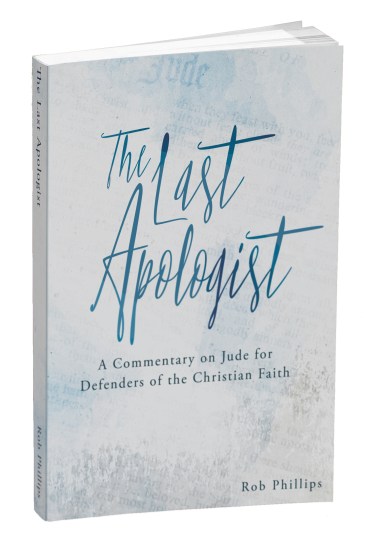
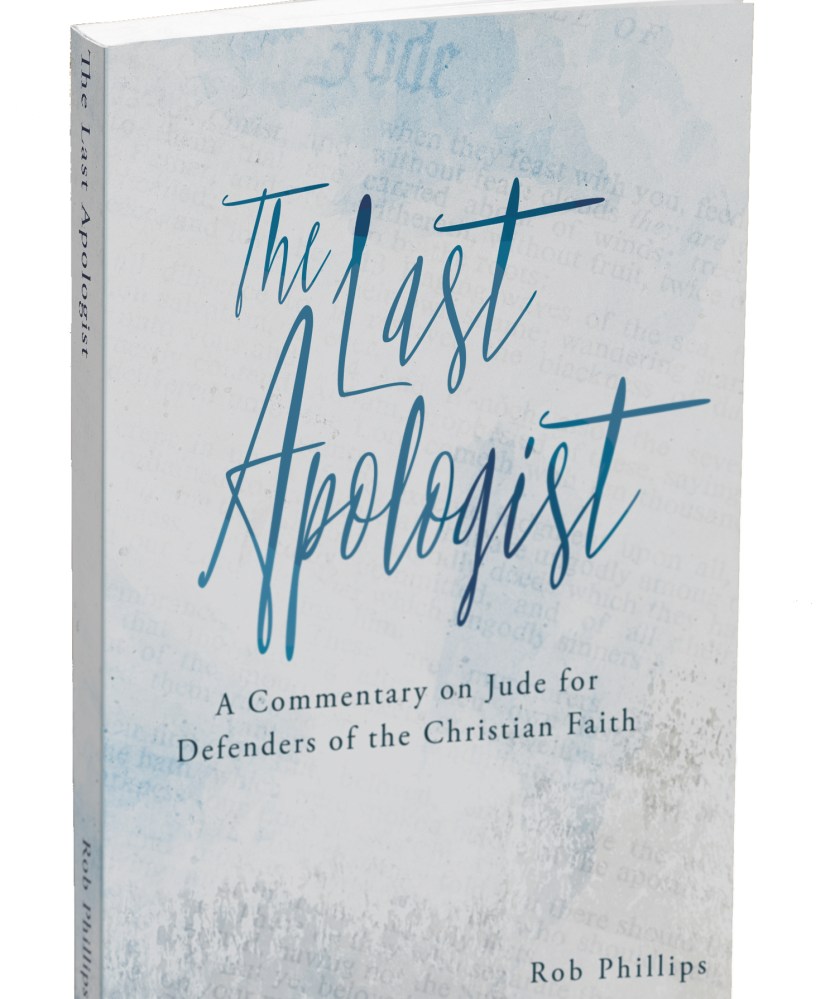
lastapologist3d_softcover_3-jpgThe Missouri Baptist Convention has just released a new apologetics resource for personal or group study titled The Last Apologist: A Commentary on Jude for Defenders of the Christian Faith.

The 275-page book, written by the MBC’s Rob Phillips, offers a verse-by verse study of the short epistle. It also explores key words and phrases, and poses thought-provoking questions that make the book a handy reference and study guide.

The General Epistle of Jude may be one of the most neglected New Testament books, according to Phillips. Bible readers are tempted — in part by its brevity and in part by its similarity to 2 Peter 2 — to skip over Jude on the way to Revelation, or to give the book little more than a glance.

This is unfortunate, because Jude speaks volumes about the value of Christian apologetics. Whether exhorting believers to contend for the faith, or urging them to keep themselves in the love of God, Jude addresses the importance of sound doctrine and the threat of false teachers. And Jude does so with humility, boldness, and remarkable foresight.
Continue reading

The number 12 – Revelation 21:12-14

Closeup of a license plate with the number twelvePreviously: A massive high wall – Revelation 21:12-14

The scripture

Rev. 21:12 – The city had a massive high wall, with 12 gates. Twelve angels were at the gates; the names of the 12 tribes of Israel’s sons were inscribed on the gates. 13 There were three gates on the east, three gates on the north, three gates on the south, and three gates on the west. 14 The city wall had 12 foundations, and the 12 names of the Lamb’s 12 apostles were on the foundations. (HCSB)

The number 12

The number 12 is repeated many times in this passage:

  • The city walls have 12 gates.
  • Twelve angels are at the gates.
  • The names of the 12 tribes of Israel’s sons are inscribed on the gates.
  • The city wall has 12 foundations.
  • The 12 names of the Lamb’s 12 apostles are on the foundations.
  • The city measures 12,000 stadia.
  • The wall’s thickness is 144 cubits (12 x 12).
  • The 12 gates are 12 pearls.

What is the significance of the number 12 in this passage, and throughout scripture?

Continue reading

Fake news and false prophets

Touching News On Mobile SmartphoneNews flash: Ireland is now accepting Trump refugees from the U.S.
From our Washington bureau: Hillary Clinton sold weapons to ISIS while secretary of state.

And in sports: The Chicago Cubs win the World Series.

Fake news is everywhere. (Okay, that last story might be true.) And one of the biggest breaking stories of 2016 was the widespread impact of verifiably false news hosted on bogus websites and amplified through social media.

“Yellow journalism” has long been with us — the use of sensationalism and exaggeration to increase a news outlet’s share of the market.

What’s new about today’s fake news is that anyone — not just journalists — can create and disseminate it. Thanks to the Internet and social media, nearly anyone with a smart phone and an imagination can say anything and make it look like reputable journalism.

Facebook’s Mark Zuckerberg has announced plans to minimize the fake news running on his social media platform, while some media outlets are redoubling their efforts to more carefully vet stories, even at the expense of being first with the news.

Even so, consumers of today’s news content should view everything with discernment.
Continue reading

A massive high wall – Revelation 21:12-14

Way to new world.Previously: Arrayed with God’s glory – Revelation 21:10-11

The scripture

Rev. 21:12 – The city had a massive high wall, with 12 gates. Twelve angels were at the gates; the names of the 12 tribes of Israel’s sons were inscribed on the gates. 13 There were three gates on the east, three gates on the north, three gates on the south, and three gates on the west. 14 The city wall had 12 foundations, and the 12 names of the Lamb’s 12 apostles were on the foundations. (HCSB)

A massive high wall

In verses 12-21 John describes the exterior of the New Jerusalem, turning to the interior in verses 22-27. The New Jerusalem has a “massive high wall, with 12 gates.” The walls and gates speak of protection, which angels ensure as they stand guard.

God’s people have nothing to fear from their enemies any longer. Though hated and harassed on earth, these pilgrims are now safe from all harms. Where once they wore shackles behind prison walls, they now walk freely within the gates of the heavenly city. Where once they wandered about in sheepskins, destitute, afflicted, and mistreated, wandering in deserts and on mountains, hiding in caves and holes in the ground, they now receive a better inheritance as they bask in the never-ending daylight of their eternal home.

Continue reading

Is baptism for the dead biblical?

Baptism LetterpressThe Church of Jesus Christ of Latter-day Saints teaches that baptism is essential to salvation. Since many people have died without being baptized, or because they were baptized outside the LDS Church, they cannot obtain exaltation, or godhood.

However, “Because God is merciful, He has prepared a way for all people to receive the blessings of baptism,” according to the church’s official website. “By performing proxy baptisms in behalf of those who have died, Church members offer these blessings to deceased ancestors. Individuals can then choose to accept or reject what has been done in their behalf.”

The LDS Church cites Jesus as its primary source for the necessity of baptism (John 3:5), and posits that “baptisms for the dead were done during the Apostle Paul’s time (1 Cor. 15:29). This practice has been restored with the establishment of the Church of Jesus Christ of Latter-day Saints. The Prophet Joseph Smith first taught about the ordinance of baptism for the dead during a funeral sermon in August 1840.”

No doubt, Paul’s statement about baptism for the dead has been widely misunderstood – and much abused. In his teaching on the resurrection, Paul inserts the statement, “Otherwise, what do people mean by being baptized on behalf of the dead? If the dead are not raised at all, why are people being baptized on their behalf?” (1 Cor. 15:29 ESV).
Continue reading