 This is the first in a two-part series on Stephen Hawking’s contention that science has resolved the need for God.
Every so often, a renowned scientist captivates a global audience through a combination of brilliance, charisma, and an uncanny ability to communicate complex ideas in simple terms.
Carl Sagan comes immediately to mind. So does Neil deGrasse Tyson. And, of course, theoretical physicist Stephen Hawking, whose dazzling intellect and sense of humor, despite severe physical limitations, make him a popular author, speaker, and occasional guest star on television sit-coms.
So, when the Discovery Channel launched a mini-series, “Stephen Hawking’s Grand Design,” it captured the attention of millions around the world.
Narrated by English actor Benedict Cumberbatch, the series features numerous sound bites of Hawking, who is wracked by Lou Gehrig’s disease and speaks through a voice synthesizer. Hawking begins episode three, “Did God Create the Universe?” with this statement:
“I have no desire to tell anyone what to believe. But for me, asking if God exists is a valid question for science. After all, it is hard to think of a more important or fundamental mystery than what, or who, created and controls the universe.”
Fair enough. If the heavens declare the glory of God (Ps. 19:1), and if God has revealed Himself to all people through His creation, leaving them with no excuse for rejecting Him (Rom. 1:20), then an exploration of the natural world should lead us to the conclusion that God exists.
Continue reading →


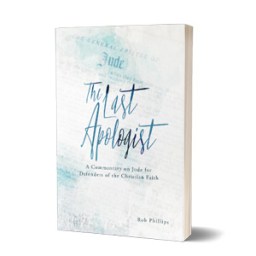 The Missouri Baptist Convention recently published a new resource called The Last Apologist: A Commentary on Jude for Defenders of the Christian Faith. The 275-page book is available in print and Kindle editions on Amazon, and in print from the MBC. But we also want to make each of the 16 chapters available online. So, this post introduces the study, and then in the weeks to come we are posting The Last Apologist one chapter at a time, or, in some cases, one portion of a chapter at a time. We pray that it is a help and encouragement to you.


 Our verse-by-verse study of the Book of Revelation comes to a close with chapter 22. For several years now, we’ve been focusing on four major views of the so-called Apocalypse of John.
 OnceDelivered.net