
The Error of Balaam

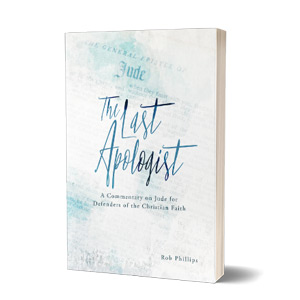
The Missouri Baptist Convention has published a new resource called The Last Apologist: A Commentary on Jude for Defenders of the Christian Faith. The 275-page book is available in print and Kindle editions on Amazon, and in print from the MBC. But we also want to make each of the 16 chapters available online. This post features a portion of Chapter 10: Woe to Them! Cain, Balaam, and Korah

Previously: The Way of Cain

_______________

Woe to them! For they have traveled in the way of Cain, have abandoned themselves to the error of Balaam for profit, and have perished in Korah’s rebellion. (Jude 11 HCSB)

What is the error of Balaam?

We find the story of Balaam in Numbers 22-24, with additional information in chapter 31. It’s a classic tale of a prophet for hire, someone greatly gifted by God who allows greed to drive him to “madness” (2 Peter 2:16). The Greek word translated “madness” is paraphronia, which literally means “beside one’s own mind.” In other words, Balaam’s fleshly cravings are such that they overcome his ability to think and act rationally.

Interestingly, some commentators believe Balaam is portrayed as a good character in Numbers 22-24, before coming under criticism elsewhere in the Old Testament. But there are hints of his greedy motivations from the start.

Balak, king of Moab, hires Balaam to curse the people of Israel as they wander in the wilderness. Balak sees the Israelites as a military threat and seeks help from inside the Israelite camp to defeat them. Initially, it appears that Balaam is a faithful prophet, but his stall tactics “imply that he hoped to negotiate a higher payment from Balak before performing his prophetic service.” In the end, he accepts Balak’s riches because he loves the wages of unrighteousness (cf. Prov. 11:18).

The Lord knows Balaam wants to curse Israel in exchange for treasure, so God rebukes him through his donkey, who miraculously speaks to the prophet. Balaam is empowered only to bless Israel. But he’s not finished.
Continue reading

The Islamic Inquisition

This is the fourth in a series of articles contrasting Allah and Yahweh.

Previously: A Simple Start to Understanding the Trinity

Christians and Muslims agree that God is one. Christians believe in a triune God: one being in three persons. But Islam’s understanding of Allah as a monad — monolithic and non-relational — creates two significant challenges to a consistent doctrine of God in Islamic theology.

First, how do Muslims reconcile their belief that Allah is eternal and self-existent with their belief that the Qur’an also is eternal? It seems either that the Qur’an came into being, or there are two eternally existing entities: Allah and his word.

Second, since the Qur’an depicts Allah as loving, merciful, and gracious, with whom was he loving, merciful, and gracious before he decided to create? It seems that Allah and his attributes are contingent upon creation.

These issues, particularly the first one, prompted the Minha, an Islamic inquisition in the 9th century.
Continue reading

The Way of Cain

The Missouri Baptist Convention has published a new resource called The Last Apologist: A Commentary on Jude for Defenders of the Christian Faith. The 275-page book is available in print and Kindle editions on Amazon, and in print from the MBC. But we also want to make each of the 16 chapters available online. This post features the first portion of Chapter 10: Woe to Them! Cain, Balaam, and Korah.

Previously: Where Does Jude Get This Story?


Woe to them! For they have traveled in the way of Cain, have abandoned themselves to the error of Balaam for profit, and have perished in Korah’s rebellion. (Jude 11 HCSB)

We all have role models. Athletes, actors, and rock stars are among the most popular people we seek to mimic – even when their legendary falls from grace are captured in tabloid headlines and social-media hashtags. Unfortunately, we often take for granted those who exemplify honesty, integrity, and hard work, choosing to conform our behavior to those whose actions – no matter how outrageous – get noticed and rewarded. This is a process Susan Krauss Whitbourne, a professor of psychology at the University of Massachusetts, refers to as “vicarious reinforcement.”

Maybe that’s why entertainers like Miley Cyrus, athletes like Dennis Rodman, and selfie-stick wielders like Kim Kardashian are so popular. It seems the more shockingly they behave, the more their celebrity grows. History takes a longer view and tends to judge such characters more harshly. After all, there aren’t too many baby boomers named Adolf. And it’s doubtful that moms and dads want their little boys growing up to be like Charlie Sheen.

In a similar vein, Jude reminds his readers of some unsavory role models in Israel’s past, men whose wicked deeds so overshadowed whatever good they accomplished that they are forever held up as examples of how not to live. In warning against false teachers, and in urging believers to earnestly contend for the faith, Jude reminds us of three characters who are not to be emulated. Yet the first-century false teachers unwittingly model their lives after Cain, Balaam, and Korah.
Continue reading

A simple start to understanding the Trinity

This is the third in a series of articles contrasting Allah and Yahweh.

Previously: The oneness of God

The doctrine of the Trinity sets Christians and Muslims apart. In fact, to suggest to a follower of Allah that God has a Son, or that God exists in tri-unity, is to commit the unpardonable sin of shirk, which damns a soul to hell.

Islam is unwavering in its belief in Allah as a singular being — monolithic, distant, and unknowable. He only relates to people in acts of the will, not out of an eternal nature that is loving, merciful, and gracious.

What’s more, when engaging Muslims in conversation, it’s challenging to explain how one God exists in three co-equal, co-eternal persons. Some simplify the doctrine by employing analogies. For example, just as water from a single bucket can exist in three states — solid, liquid, and gas — so the Godhead is one essence in three persons.

But all analogies applied to the Trinity break down at some point. They simply cannot do justice to the magnificence of our Creator. So, maybe a better start is to lay out three biblical truths that offer a framework for the tri-unity of God.

Continue reading

Where Does Jude Get This Story?

The Missouri Baptist Convention has published a new resource called The Last Apologist: A Commentary on Jude for Defenders of the Christian Faith. The 275-page book is available in print and Kindle editions on Amazon, and in print from the MBC. But we also want to make each of the 16 chapters available online. This post features the last portion of Chapter 9: Where Does Jude Get This Story?

Previously: What Are “Eternal Chains in Darkness”?

_______________

Yet Michael the archangel, when he was disputing with the Devil in a debate about Moses’ body, did not dare bring an abusive condemnation against him, but said, “The Lord rebuke you!” (Jude 9 HCSB)

The death of Moses is recorded in Deut. 34:1-7, but there is no mention in this passage of Michael and Satan disputing about Moses’ body. There are many Jewish traditions about the death of Moses, but we should always approach non-biblical embellishments with caution.

In Jude’s day, however, there is an apocryphal writing called The Assumption of Moses that records a conflict between Michael and Satan. According to this account, Satan argues over the body of Moses because Moses has killed an Egyptian overseer (Ex. 2:11-12). Satan evidently argues his right to the body because Moses is a murderer.

We should not assume that Jude has erred in quoting from an apocryphal book, nor should we declare The Assumption of Moses divinely inspired because Jude quotes from it. It may help to remember that Paul cites Greek poets and sayings without suggesting their work is authoritative (Acts 17:28; 1 Cor. 15:33; Titus 1:12).

“Jude did not intend to put a canonical stamp on Assumption of Moses simply because he cited it,” writes Thomas Schreiner.  “He viewed this story as true or helpful, or he believed it was an illustration of the truth he desired to teach.”
Continue reading