
Who Are Those Guys? How to Identify False Teachers
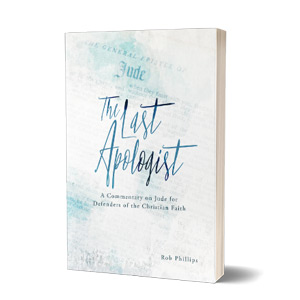
 

The Missouri Baptist Convention has published a new resource called The Last Apologist: A Commentary on Jude for Defenders of the Christian Faith. The 275-page book is available in print and Kindle editions on Amazon, and in print from the MBC. But we also want to make each of the 16 chapters available online. This post features the first half of Chapter 6: Who Are Those Guys? How to Identify False Teachers.

Previously: The last half of Chapter 5: Why Is Contending for the Faith Necessary?

_______________

For certain men, who were designated for this judgment long ago, have come in by stealth; they are ungodly, turning the grace of our God into promiscuity and denying our only Master and Lord, Jesus Christ. (Jude 4)

In the 1969 film Butch Cassidy and the Sundance Kid, a relentless posse interrupts the legendary duo’s run of train robberies. Fleeing across rivers, plains, and rocky outcroppings, Butch and Sundance engage in playful, but increasingly annoyed, banter about the skilled men tracking them. At one point, Butch tries to assure Sundance that their escape tactics are working. Sundance is not convinced and keeps looking back over his shoulder.

“Ah, you’re wasting your time,” says Butch. “They can’t track us over rocks.”

“Tell them that,” Sundance replies, nodding toward the horizon.

Butch looks for himself and sees that the trackers indeed are still hot on their trail.  “They’re beginning to get on my nerves,” he says. “Who are those guys?”

Who indeed. “Who are those guys?” becomes a running gag line throughout the film.

Butch and Sundance eventually discover their pursuers’ names, as well as the identity of the railroad executive bankrolling the posse. The news forces them to flee to South America, where they revive their nefarious careers before meeting a bloody end.

Like Butch and Sundance, Jude can’t seem to shake the posse on his trail. Rather than pistol-packing bounty hunters, however, these are false teachers doggedly determined to bring down the infant church. Jude avoids calling them by name, choosing instead to describe them as “certain/some men” (HCSB, NIV, KJV), “certain people” (ESV), or “certain persons” (NASB). In a parallel passage, Peter simply refers to them as “false teachers” (2 Peter 2:1).
Continue reading


Jesus as the firstborn

Jehovah’s Witnesses have a disturbing take on the apostle Paul’s description of Jesus as the “firstborn over all creation.”


Consider how the Watch Tower renders Col. 1:15-17 in its New World Translation: “He is the image of the invisible God, the firstborn of all creation; because by means of him all other things were created in the heavens and on earth, the things visible and the things invisible, whether they are thrones or lordships or governments or authorities. All other things have been created through him and for him. Also, he is before all other things, and by means of him all other things were made to exist …”

Note the unjustified insertion of the word “other” before “things” four times in the NWT.

The Watch Tower’s official website explains: “Jesus is Jehovah’s most precious Son — and for good reason. He is called ‘the firstborn of all creation,’ for he was God’s first creation. There is something else that makes this Son special. He is the ‘only-begotten Son.’ This means that Jesus is the only one directly created by God. Jesus is also the only one whom God used when He created all other things.”

To summarize, JWs believe Jesus is the first created being, known as Michael the archangel, who is sent to earth temporarily as a man, then recreated as an exalted angel after his death on a torture stake and subsequent annihilation as a human being.

But is this the proper way to understand Paul’s meaning of firstborn?

In a word, no.
Continue reading

Why is Contending for the Faith Necessary?

The Missouri Baptist Convention has published a new resource called The Last Apologist: A Commentary on Jude for Defenders of the Christian Faith. The 275-page book is available in print and Kindle editions on Amazon, and in print from the MBC. But we also want to make each of the 16 chapters available online. This post features the last portion of Chapter 5: I Found it Necessary: Going from Good to Better in Defense of the Faith.

Previously: Chapter 5: I Found It Necessary: Going from Good to Better in Defense of the Faith

_______________


Dear friends, although I was eager to write you about our common salvation, I found it necessary to write and exhort you to contend for the faith that was delivered to the saints once for all. (Jude 3)

Jude expresses great concern with these words: “I found it necessary to write and exhort you to contend for the faith that was delivered to the saints once for all” (v. 3b). He places on hold his plans to write about the common salvation grounded in the person and work of Christ in order to address an urgent matter. “Circumstances had arisen that demanded immediate action, thus presenting an emergency situation. Jude addressed himself to a recognized problem, and exhorted the believers to respond with positive determination.”

The Greek word translated “necessary” is anagke and means by constraint, compulsion, distress, or hardship. In other New Testament passages, the term is used to describe the influence of other persons, circumstances, or a sense of obligation or duty.

For example, in urging the Corinthians to share their financial resources, Paul writes, “Each person should do as he has decided in his heart – not out of regret or out of necessity, for God loves a cheerful giver” (2 Cor. 9:7 – emphasis added). In his appeal to Philemon to welcome back a runaway slave, Paul remarks, “But I didn’t want to do anything without your consent, so that your good deed might not be out of obligation, but of your own free will” (Philemon 14 – emphasis added).

The writer of Hebrews addresses his audience with an appeal to consider the superiority of the new covenant ministry in Christ. About the law’s requirements for the shedding of blood, he writes, “Therefore it was necessary for the copies of the things in the heavens to be purified with these sacrifices, but the heavenly things themselves to be purified with better sacrifices than these” (Heb. 9:23 – emphasis added).

And in regard to a Christian’s duties to the state, Paul remarks, “Therefore, you must submit, not only because of wrath, but also because of your conscience” (Rom. 13:5 – emphasis added).

For Jude, the necessity to write an urgent exhortation comes not from peer pressure or an obligation to fleshly authority. Rather, it appears the Holy Spirit has stirred Jude’s heart and caused him to grieve over the manner in which his beloved friends are allowing false teachings to seep into the church. They must not sit idly by while interlopers undermine the first-order doctrines established by the eyewitnesses of the life of Christ.

Warren Wiersbe comments, “I must confess that I sympathize with Jude. In my own ministry, I would much rather encourage the saints than declare war on the apostates. But when the enemy is in the field, the watchmen dare not go to sleep. The Christian life is a battleground, not a playground.”
Continue reading

Does the Bible support self-defense?

The mass shooting earlier this month at Sutherland Springs Baptist Church in Texas left 26 people dead, made a hero of a civilian who confronted and shot the murderer, and raised lots of security-related questions for Christians:

  • Should I buy a gun?
  • Does my church have a security plan?
  • Is it ok to defend myself, or my church family, when threatened?
  • How do I reconcile Jesus’ instructions to buy swords with His rebuke of Peter for using one?
  • What would Jesus have done in Sutherland Spring?

The answers to at least some of these questions are matters of Christian conscience over which followers of Jesus sincerely disagree. Others concern proper exegesis of Scripture, or simply create fodder for social media.

So, perhaps we should ask: Does the Bible say anything about self-defense?

The answer is yes.
Continue reading

I Found It Necessary: Going from Good to Better in Defense of the Faith

The Missouri Baptist Convention has published a new resource called The Last Apologist: A Commentary on Jude for Defenders of the Christian Faith. The 275-page book is available in print and Kindle editions on Amazon, and in print from the MBC. But we also want to make each of the 16 chapters available online. This post features the first part of Chapter 5: I Found It Necessary: Going from Good to Better in Defense of the Faith.

Previously: Chapter 4: Copycats? The apologist’s challenge concerning Jude and 2 Peter 2

_______________


Dear friends, although I was eager to write you about our common salvation, I found it necessary to write and exhort you to contend for the faith that was delivered to the saints once for all. (Jude 3)

It’s Christmas night 1776, and General George Washington’s Continental Army could use some rest. Tired, cold, and harried, the soldiers would welcome a blazing fire, a warm meal, and a good night’s sleep as a holiday respite from their travails.

But instead, Washington leads 2,400 troops across the icy Delaware River, where they stun German Hessian mercenaries garrisoned at Trenton, New Jersey. The Patriot forces catch the British-sponsored enemy completely off guard. “The lasting effect was that the success raised rebel morale and proved that the most professional army in the West could be beaten.”

Some 17 centuries earlier, Jude ponders a good thing for the harried believers besieged by false teachers. Evidently, he has given much thought to writing about their common salvation, but the Holy Spirit prompts him to take a more aggressive tack and spur his fellow believers to engage in a doctrinal battle that influences the course of the early church.

Jude demonstrates a sensitivity to the Holy Spirit, and a willingness to turn from something good to something better in defense of the Christian faith.
Continue reading