
How false religions undermine the Scriptures

Evangelicals may disagree about many things, but we stand together on the non-negotiables that define the Christian faith: The Trinity, justification by faith, and the inspiration and authority of the Scriptures, to name a few.

Many false belief systems, from Mormonism to Islam, profess a high regard for the Word of God. But, in fact, they deny its inspiration, inerrancy, or preservation and thus reject the Bible as supremely authoritative.

Specifically, false religions employ four tactics to undermine the Scriptures:

(1) They change it. The most notorious offender is the Watch Tower Bible and Tract Society, whose members are known as Jehovah’s Witnesses.

In the late 1800s, Charles Taze Russell launched a Bible study to spread his denials of the Trinity, Jesus’ physical resurrection, and eternal punishment of the wicked in hell, cleverly twisting the Scriptures to buttress his false teachings. Not to be outdone, his successors produced their own version of the New Testament in 1950, and the completed New World Translation (NWT) in 1961.

Revised in 1984, and again in 2013, the NWT is a sanitized version of the Bible. Six translators — only one of whom had any training in biblical languages — essentially scrubbed the deity of Christ out of passages like John 1:1, John 8:58, and Col. 1:15-17, and blurred other essential doctrines.
Continue reading

The Rebellion of Korah

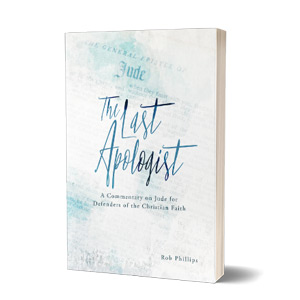
The Missouri Baptist Convention has published a new resource called The Last Apologist: A Commentary on Jude for Defenders of the Christian Faith. The 275-page book is available in print and Kindle editions on Amazon, and in print from the MBC. But we also want to make each of the 16 chapters available online. This post features a portion of Chapter 10: Woe to Them! Cain, Balaam, and Korah.

Previously: The Error of Balaam


Woe to them! For they have traveled in the way of Cain, have abandoned themselves to the error of Balaam for profit, and have perished in Korah’s rebellion. (Jude 11 HCSB)

What is Korah’s rebellion?

Korah is a Levite from the Kohathite clan, which enjoys a favored position among the three clans of Levi in the assignment of priestly responsibilities (Num. 3:27-32; 4:1-20). But Korah wants more. So, he incites 250 prominent Israelites to rebel against Moses and Aaron. Together, they challenge God’s appointed leaders, accusing Moses and Aaron of exalting themselves above the Lord’s assembly.

Moses tells Korah and his followers to appear before the Lord the next morning, along with Aaron. Each is to take his firepan, place incense in it, and present his firepan before the Lord, who will choose the true leaders of Israel. When the sun rises, Korah assembles the whole community at the entrance of the tabernacle. The Lord instructs Moses and Aaron to tell the people to get away from the dwellings of Korah, along with the tents of two other rebels, Dathan and Abiram.

Immediately after Moses’ warning, the Lord intervenes in dramatic fashion: “Just as he finished speaking all these words, the ground beneath them split open. The earth opened its mouth and swallowed them and their households, all Korah’s people, and all their possessions. They went down alive into Sheol with all that belonged to them. The earth closed over them, and they vanished from the assembly…. Fire also came out from the Lord and consumed the 250 men who were presenting the incense” (Num. 16:31-33, 35).

If that isn’t enough, the next day the entire Israelite community complains that Moses has killed the Lord’s people. Immediately, the Shekinah glory appears, covering the tabernacle. God sends a plague that takes the lives of 14,700 – a number that would have been greater had Moses and Aaron not intervened on the people’s behalf.

Korah’s rebellion is not so much against God’s anointed leaders as it is against God Himself. By rejecting Moses and Aaron, and by embracing arrogant substitutes who foolishly portray themselves as eminently qualified, the people become eyewitnesses of God’s judgment and then suffer the consequences of their hard-hearted rebellion.
Continue reading

Three personal questions about God

This is the last in a series of articles contrasting Allah and Yahweh.

Previously: The Islamic Inquisition

Muslims and Christians agree that there is one God but understand Him differently. While it is politically correct to say Christians and Muslims worship the same God, no Muslim or Christian who truly understands his faith would agree with that statement.

In fact, we can see that Christians and Muslims worship distinctly different Gods by asking three personal questions: (1) Does God know me? (2) Does God love me? (3) Did God die for me?
Continue reading

The Error of Balaam

The Missouri Baptist Convention has published a new resource called The Last Apologist: A Commentary on Jude for Defenders of the Christian Faith. The 275-page book is available in print and Kindle editions on Amazon, and in print from the MBC. But we also want to make each of the 16 chapters available online. This post features a portion of Chapter 10: Woe to Them! Cain, Balaam, and Korah

Previously: The Way of Cain

_______________

Woe to them! For they have traveled in the way of Cain, have abandoned themselves to the error of Balaam for profit, and have perished in Korah’s rebellion. (Jude 11 HCSB)

What is the error of Balaam?

We find the story of Balaam in Numbers 22-24, with additional information in chapter 31. It’s a classic tale of a prophet for hire, someone greatly gifted by God who allows greed to drive him to “madness” (2 Peter 2:16). The Greek word translated “madness” is paraphronia, which literally means “beside one’s own mind.” In other words, Balaam’s fleshly cravings are such that they overcome his ability to think and act rationally.

Interestingly, some commentators believe Balaam is portrayed as a good character in Numbers 22-24, before coming under criticism elsewhere in the Old Testament. But there are hints of his greedy motivations from the start.

Balak, king of Moab, hires Balaam to curse the people of Israel as they wander in the wilderness. Balak sees the Israelites as a military threat and seeks help from inside the Israelite camp to defeat them. Initially, it appears that Balaam is a faithful prophet, but his stall tactics “imply that he hoped to negotiate a higher payment from Balak before performing his prophetic service.” In the end, he accepts Balak’s riches because he loves the wages of unrighteousness (cf. Prov. 11:18).

The Lord knows Balaam wants to curse Israel in exchange for treasure, so God rebukes him through his donkey, who miraculously speaks to the prophet. Balaam is empowered only to bless Israel. But he’s not finished.
Continue reading

The Islamic Inquisition

This is the fourth in a series of articles contrasting Allah and Yahweh.

Previously: A Simple Start to Understanding the Trinity

Christians and Muslims agree that God is one. Christians believe in a triune God: one being in three persons. But Islam’s understanding of Allah as a monad — monolithic and non-relational — creates two significant challenges to a consistent doctrine of God in Islamic theology.

First, how do Muslims reconcile their belief that Allah is eternal and self-existent with their belief that the Qur’an also is eternal? It seems either that the Qur’an came into being, or there are two eternally existing entities: Allah and his word.

Second, since the Qur’an depicts Allah as loving, merciful, and gracious, with whom was he loving, merciful, and gracious before he decided to create? It seems that Allah and his attributes are contingent upon creation.

These issues, particularly the first one, prompted the Minha, an Islamic inquisition in the 9th century.
Continue reading