Who is the angel of the LORD?

This is the 19th in a series of articles on the Trinity, excerpted from “What Every Christian Should Know About the Trinity,” available through Amazon and other booksellers.

Identified as Yahweh and yet distinct from Him, “the angel of the LORD” appears numerous times throughout the Old Testament. This messenger is above all others. He is called “commander of the LORD’s army,” “the God of Abraham,” “Judge,” and “I AM WHO I AM” – a name only the one true God ever claims.

Who is this awe-inspiring messenger? Ancient Jews believed him to be a special angel, the highest revelation of the unseen God. Similarly, Roman Catholics generally regard the angel of the LORD as an angelic representative of God, as do some Protestants. Many evangelicals, however, consider him either as a manifestation of Yahweh – a theophany, derived from the Greek words theos (God) and pheino (to appear) – or as the preincarnate Son of God, a Christophany, the Lord Jesus.

We should note that the Hebrew word malak and the Greek term angelos, translated “angel,” mean “messenger.” While angels in Scripture normally are spirit beings of higher intelligence and power than humans, there are times when the term refers to human messengers, or to the Son of God. The context helps us determine the correct application.

Norman Geisler writes, “Jesus Christ appears in the Old Testament in His preincarnate state as ‘the Angel [Messenger] of the Lord’ … Once the Son (Christ) came in permanent incarnate form (John 1:14), never again does the Angel of the Lord appear. Angels appear, but no angel that is worshiped or claims to be God ever appears again. The Father and Holy Spirit never appear as a man. Hence, Jesus Christ, as a person, eternally existed and appeared as a man before His virginal conception on earth.”

Just as the Holy Spirit is active on the earth prior to the Day of Pentecost, so Jesus works collaboratively with the Father and the Spirit to bring a divine word, direction, and deliverance prior to His conception in a virgin’s womb.
Continue reading
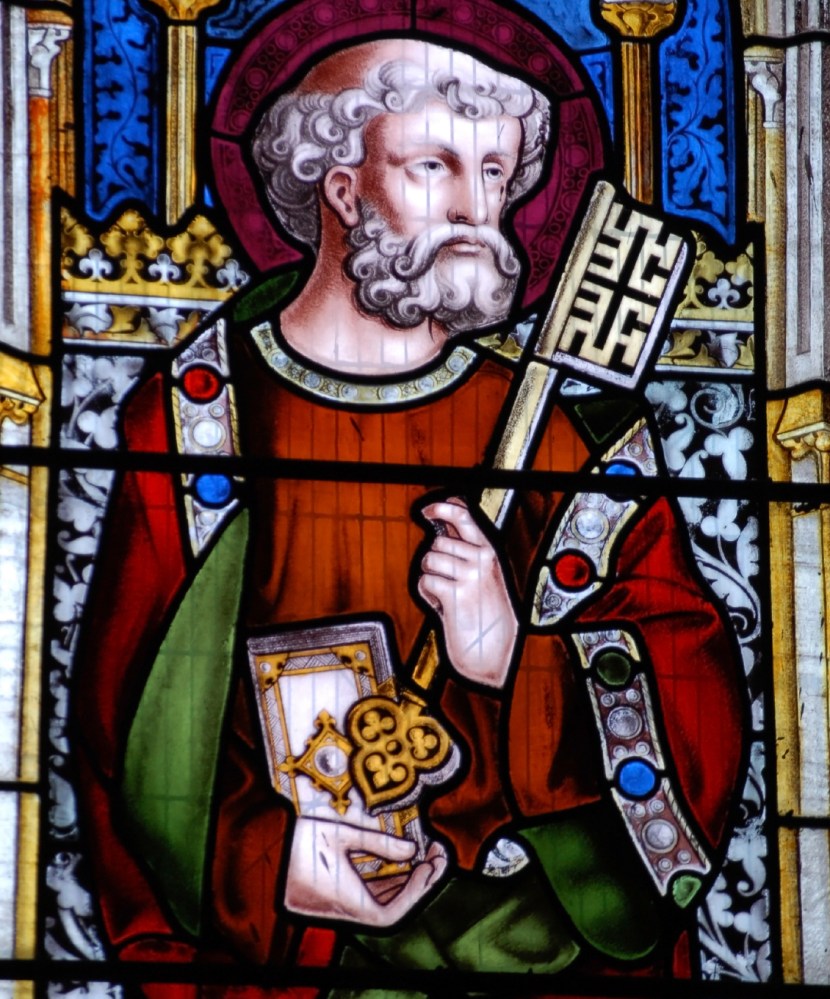
Are Jude and Peter plagiarists?

This is the second in a series of excerpts from “The Last Apologist: A Commentary on Jude for Defenders of the Christian Faith,” available here.

____________________________

History is rife with famous plagiarists. Primatologist Jane Goodall “borrowed” from sources ranging from Wikipedia to astrology websites to produce a 2013 book, Seeds of Hope: Wonder and Wisdom from the World of Plants.

Alex Haley’s epic Roots is now considered a mixture of facts, fiction, and thievery.

Joe Biden scuttled his own run for president in 1987 by stealing lines – and even whole pages – from other people’s speeches, including Neil Kinnock of the British Labour Party and American President John F. Kennedy.

And that’s not all. Martin Luther King Jr., rocker Led Zeppelin, and composer John Williams all stand accused in varying degrees of taking other people’s creative work and calling it their own.

So, how do we deal with the reality that portions of Jude and Peter’s second epistle are uncannily similar? Are we dealing with one or more plagiarists claiming divine inspiration?
Continue reading

Jude: A slave of Jesus Christ

last-apologist-thumbThis is the first in a series of excerpts from “The Last Apologist: A Commentary on Jude for Defenders of the Christian Faith,” available in print and Kindle editions here.

My business card is standard fare. It identifies me and describes my role at the MBC. It also tells how to get in touch with me. That’s what most business cards do: serve as practical, brief, and efficient introductions.

Some people, however, use business cards more creatively. Take Guangbiao Chen, for example, a Chinese tycoon and philanthropist. His business card details illustrious titles and heroic accomplishments:

  • Most Influential Person of China
  • Most Prominent Philanthropist of China
  • China Earthquake Rescue Hero
  • Most Well-Loved and Beloved Chinese Role Model

We’re only halfway through Chen’s list, but you get the idea. This may be one of the cheekiest business cards ever produced.

But how would you respond if someone handed you a business card that simply read, “Jude, a slave”? That’s how the author of the Epistle of Jude opens his letter. With profound humility, he models the manner in which followers of Jesus should defend the Christian faith.
Continue reading

Jesus in the Old Testament

This is the 18th in a series of articles on the Trinity, excerpted from “What Every Christian Should Know About the Trinity,” available through Amazon and other booksellers.

Prophetic portions of the Old Testament anticipate a coming Messiah. While explicit references to his deity are rare, key passages offer clues of the Anointed One’s eternal nature and divine power. 

Isaiah 9:6-7 is one example: “For a child will be born for us, a son will be given to us, and the government will be on his shoulders. He will be named Wonderful Counselor, Mighty God, Eternal Father, Prince of Peace. The dominion will be vast, and its prosperity will never end. He will reign on the throne of David and over his kingdom, to establish and sustain it with justice and righteousness from now on and forever. The zeal of the LORD of Armies will accomplish this.” 

Since the Israelites are strict monotheists, the very idea of “Mighty God, Eternal Father” coming to sit on King David’s throne and rule forever no doubt fuels great wonder and encouragement in God’s people. The name “Mighty God” means more than a godlike person, for the same Hebrew term, El Gibhor, is applied elsewhere in the Old Testament to Yahweh (Isa. 10:21; Jer. 32:18). Isaiah understands that the Messiah is God in the same sense of the term.

As for “Everlasting Father,” Isaiah does not mean to confuse the Father and the Messiah as if they are the same person. Rather, the prophet uses a Jewish idiom to describe the Messiah’s relationship to time, not His relationship with the other members of the Trinity. The Messiah is everlasting, just as God the Father is called the “Ancient of Days” in Daniel 7:9. It is similar to Micah’s messianic prophecy, which declares, “His origin is from antiquity, from ancient times” (Mic. 5:2).

Continue reading

What is the kingdom of heaven?

Excerpted from The Kingdom According to Jesus: A Study of Jesus’ Parables on the Kingdom of Heaven.

—————————————-

The terms kingdom of God, kingdom of heaven, and kingdom (with reference to the kingdom of God/heaven) appear nearly 150 times in Scripture. None of these references gives a simple, straightforward definition of the kingdom, and many passages appear to be contradictory.

Yet the kingdom is the primary focus of Jesus’ teaching. Many of his parables describe the kingdom. The apostles preach the “gospel of the kingdom.” And end-times prophecy points us toward the day when God’s kingdom comes in its fullness.

So, what is the kingdom of heaven? Are the kingdom of heaven and the kingdom of God the same thing? Is the kingdom here already, or are we to wait for it? What does it look like? Who’s in the kingdom and who’s not? And what is required to enter the kingdom?

To begin, we need to understand what the Bible says the kingdom of heaven is—and is not.
Continue reading