The Spirit’s intimate relationship

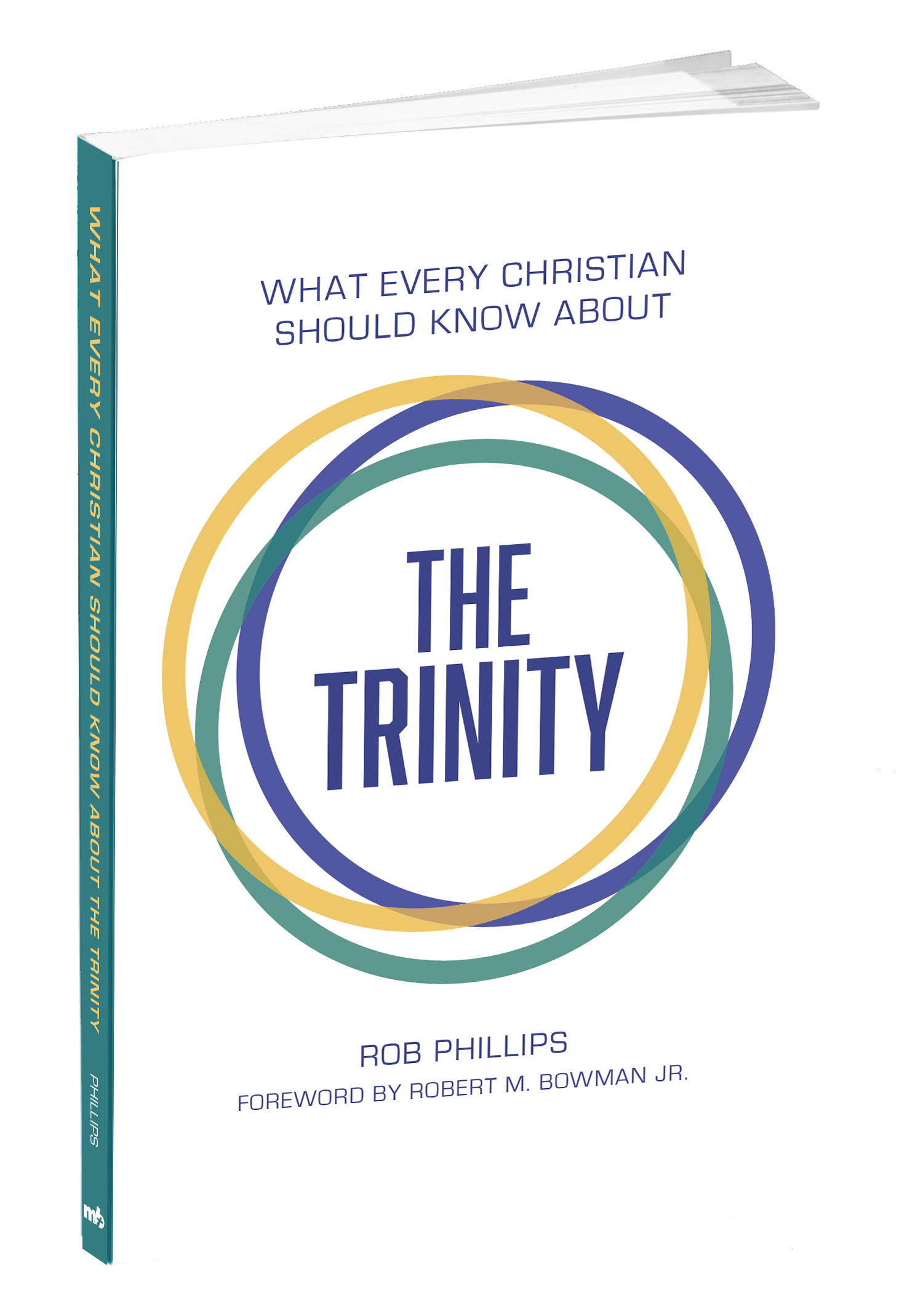
This is another in a series of excerpts from “What Every Christian Should Know About the Trinity,” published by the MBC’s High Street Press and available through Amazon and other booksellers.

In the last two columns, we examined biblical evidence for the personhood and deity of the Holy Spirit. In this column, we see how the Holy Spirit enjoys an eternal, intimate relationship with God the Father and God the Son.

Scripture reveals the relationship between the Holy Spirit and the other members of the Godhead. As one example, note how the synoptic Gospel writers report Jesus’ promise to be with His followers when they face persecution:

Matthew 10:19-20 – â€śBut when they hand you over, don’t worry about how or what you are to speak. For you will be given what to say at that hour, because it isn’t you speaking, but the Spirit of your Father is speaking through you.”

Mark 13:11 – â€śSo when they arrest you and hand you over, don’t worry beforehand what you will say, but say whatever is given to you at that time, for it isn’t you speaking, but the Holy Spirit.”

Luke 21:14-15 – â€śTherefore make up your minds not to prepare your defense ahead of time, for I [Jesus] will give you such words and a wisdom that none of your adversaries will be able to resist or contradict.” 

These accounts are not in conflict. Rather, they illustrate the inseparability of the divine persons of the Trinity. That is, the Father, Son, and Holy Spirit, while distinct persons within the Godhead, share the same divine essence and act in perfect harmony. 

Continue reading

Heaven can’t wait; more on purgatory

Save us from the fire

This is the seventh in a series of articles on biblical terms that describe the afterlife and the unseen world.

In the last column we defined the Roman Catholic doctrine of purgatory and argued that this long-held teaching finds no support in Scripture.

Perhaps the strongest argument against the doctrine of purgatory is that it undermines the sufficiency of Christ. Just before His death on the cross, Jesus declares triumphantly, “It is finished!” (John 19:30). Among other things, this means the work of redemption is complete and that no more sacrifice for sins is required.

The wrath of God has been satisfied as the One who knew no sin became sin for us, so that we might become the righteousness of God in Christ (2 Cor. 5:21).

The writer of Hebrews echoes this truth: “After making purification for sins, He [Jesus] sat down at the right hand of the Majesty on high” (1:3b). Further, “For by one offering He has perfected forever those who are sanctified” (10:14).

Continue reading

The deity of the Holy Spirit

This is another in a series of excerpts from What Every Christian Should Know About the Trinity, published by High Street Press (visit highstreet.press).

In the last column, we examined the biblical evidence for the personhood of the Holy Spirit; that is, the Spirit is a He, not an it. Once the Spirit’s personality is established, His deity is a logical, and biblically faithful, next step. So, what do we see the Spirit doing that only God can do?

For starters, the Holy Spirit creates. Genesis 1:2 records, “Now the earth was formless and empty, darkness covered the surface of the watery depths, and the Spirit of God was hovering over the surface of the waters.” The Hebrew verb translated “was hovering,” used also in Deuteronomy 32:11, suggests that the Spirit of God was watching over His creation just as a bird watches over its young. Further, creatures come into being when God sends His Spirit (Ps. 104:30).

In addition, the Spirit demonstrates omniscience and omnipresence, displaying qualities that establish Him as co-equal and co-eternal with the Father and the Son. 

Of the Spirit’s omniscience, Paul writes, “Now God has revealed these things to us by the Spirit, since the Spirit searches everything, even the depths of God. For who knows a person’s thoughts except his spirit within him? In the same way, no one knows the thoughts of God except the Spirit of God” (1 Cor. 2:10-11). 

Of the Spirit’s omnipresence, the psalmist asks, “Where can I go to escape your Spirit? Where can I flee from your presence? If I go up to heaven, you are there; if I make my bed in Sheol, you are there” (Ps. 139:7-8).

What’s more, the Spirit shares a divine name, symbolic of divine presence, with the other members of the triune Godhead. Before Jesus ascends into heaven, He commands His followers, “Go, therefore, and make disciples of all nations, baptizing them in the name of the Father and of the Son and of the Holy Spirit” (Matt. 28:19).

Continue reading

Does the Bible teach purgatory?

Save us from the fire

This is the sixth in a series of excerpts from “What Everyone Should Know About the Afterlife,” available through Amazon and other booksellers.

Do some Christians undergo purification from the stain of sin between death and entrance into heaven? Many who answer yes to that question embrace the doctrine of purgatory, which became official Roman Catholic dogma in A.D. 1438.

Simply stated, purgatory is a place or state of suffering where the dead bound for heaven achieve the holiness necessary to enter into the presence of God.

It should be noted, according to Catholic teaching, that some saints go directly to heaven upon death, needing no purification, while those who die in the state of unrepented mortal sin find themselves at once, and eternally, in hell. All those in purgatory ultimately make it to heaven.

Preparation for heaven

As the Catechism of the Catholic Church explains, “All who die in God’s grace and friendship, but still imperfectly purified, are indeed assured of their eternal salvation; but after death they undergo purification, so as to achieve the holiness necessary to enter the joy of heaven.”

The Pocket Catholic Dictionary puts it this way: “The souls of those who have died in the state of grace suffer for a time in purging that prepares them to enter heaven. The purpose of purgatory is to cleanse one of imperfections, venial sins, and faults, and to remit or do away with the temporal punishment due to mortal sins that have been forgiven in the Sacrament of Penance. It is an intermediate state in which the departed souls can atone for unforgiven sins before receiving their final reward.”

The amount of time one spends in purgatory depends on the degree of purging needed. Some proponents of purgatory, however, argue that because the afterlife is experienced outside the element of time, purgatory should be seen as a state or dimension rather than as a place.

Indeed, Catholic theologians speak of the great diversity of purgatorial suffering in both its intensity and duration.

Even so, the question for evangelical Christians is: Does the Bible support the doctrine of purgatory?

Continue reading

A look into Tartarus

This is the fifth in a series of excerpts from “What Everyone Should Know About the Afterlife,” available through Amazon and other booksellers.

If Sheol or Hades is the temporary abode of deceased people, is there a transitory place of punishment for some demons?

It seems the answer is yes, in a place the New Testament refers to as Tartarus.

Tartarus is mentioned only once, in 2 Peter 2:4. Many translations render it “hell,” including the King James Version and the New American Standard Bible, while others, like the English Standard Version and the New International Version, provide footnotes linking the English word “hell” to the Greek name Tartarus.

The Holman Christian Standard Bible simply transliterates the Greek word in this passage, which reads: “For if God did not spare the angels who sinned, but threw them down into Tartarus and delivered them to be kept in chains of darkness until judgment …”

A footnote in the HCSB reads: “Tartarus is a Greek name for a subterranean place of divine punishment lower than Hades.”

In the apocryphal Book of 1 Enoch (20:2), Tartarus is used as a place where fallen angels are punished, an interpretation Peter affirms.

So, Tartarus seems to be a place separate from Sheol, the Hebrew term for the abode of the dead; Hades, roughly the Greek equivalent of Sheol; and Gehenna, the lake of fire created for the Devil and his angels (Matt. 25:41) where wicked people also spend eternity (Rev. 20:15).

Ancient Greeks regarded Tartarus as a place where rebellious gods and other wicked ones are punished. Peter refers to Tartarus as the abode of certain fallen angels.

Continue reading