Article II-A of the Baptist Faith & Message 2000: God the Father

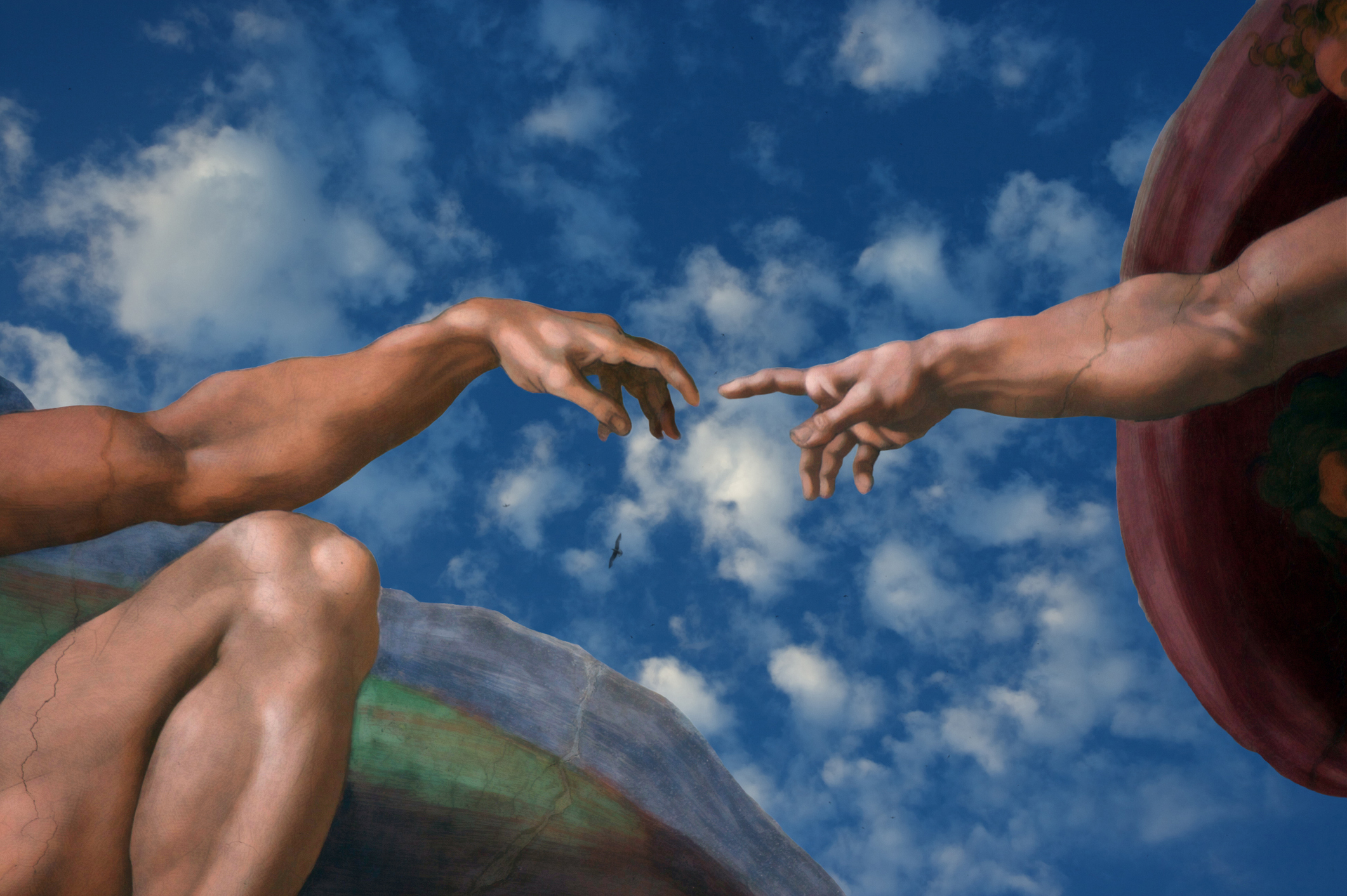
God the Father is the first person of the Trinity. He is a divine, eternal, non-human person who is immortal and invisible. He adopts believing sinners as his sons and daughters.

Article II-A of The Baptist Faith & Message 2000 reads:

“God as Father reigns with providential care over His universe, His creatures, and the flow of the stream of human history according to the purposes of His grace. He is all powerful, all knowing, all loving, and all wise. God is Father in truth to those who become children of God through faith in Jesus Christ. He is fatherly in His attitude toward all men.”


There is little dispute among professing Christians that our Heavenly Father is God. But if we fail to understand the Father correctly, and if we miss the clear teachings of Scripture with respect to his relationship with the other members of the Godhead, then the biblical doctrines of creation, redemption, and restoration suffer as well.

It’s important to note while the Father is a person, he is not human. Balaam – a scoundrel who prophesied for hire – nevertheless spoke the truth concerning God’s unchanging decrees when he said, “God is not a man, that he might lie, or a son of man, that he might change his mind. Does he speak and not act, or promise and not fulfill?” (Num. 23:19).

On another occasion, the prophet Samuel informs Saul that the Lord has torn away the kingship of Israel from Saul and given it to David. “Furthermore,” he says, “the Eternal One of Israel does not lie or change his mind, for he is not man who changes his mind” (1 Sam. 15:29). Other Old Testament passages make similar claims (Job 9:32; Isa. 31:2; Hos. 11:9). 

Continue reading

Is Melchizedek the Preincarnate Christ?

Before the angel of the Lord appears to Hagar in Genesis 16, Abram encounters a curious king and priest named Melchizedek. He appears suddenly in the wake of Abram’s victory over King Chedorlaomer and his allies. We read about his brief visit to Abram in Genesis 14:17-24. 

Melchizedek, king of Salem (Jerusalem) and a priest of God Most High, presents bread and wine to Abram and his battle-weary men. He further bestows a blessing on Abram in the name of El Elyon, God Most High, and praises God for granting Abram victory. In response, Abram offers Melchizedek a tithe of all the items he has won in battle, an act that acknowledges the priest as one who ranks higher spiritually than Abram.

All of which begs the question: Is the story of Melchizedek the first recorded appearance of the angel of the Lord? Put another way, is Melchizedek the preincarnate Christ? 

While he could be, it seems more biblically faithful to see Melchizedek as a type, or prophetic preview, of Christ rather than as Jesus himself prior to the Incarnation. While we take the position that Jesus comes to Abram as the angel of the Lord in Genesis 17, 18, and 22, the preincarnate Christ does not materialize as an earthly priest or king in Genesis, or anywhere else in the Old Testament.

Continue reading

How the Angel of the Lord is Revealed

When we encounter the angel of the Lord in Scripture, he reveals himself primarily in four ways:

The angel of the Lord speaks

In his first recorded appearance, the angel of the Lord speaks to Hagar after she has been sent away from Sarai. The text strongly suggests a physical manifestation, for the angel finds Hagar by a spring in the wilderness. Later, Hagar names him El-roi, which means “God sees me,” and she asks, “In this place, have I actually seen the one who sees me?” (Gen. 16:13). 

At the same time, the angel converses with Hagar. He asks where she has come from and where she is going. He tells Hagar to return to Sarai, and he promises to greatly multiply her offspring, although Ishmael is going to be a wild donkey of a man who battles with everyone around him (Gen. 16:8-12). Later, after Abraham has sent Hagar and her son away, the angel calls to Hagar from heaven and comforts her (Gen. 21:17-18).

When Abraham takes Isaac up Mount Moriah and is about to thrust his knife into the son of promise, the angel of the Lord calls from heaven to Abraham to spare the young man. Then, the angel calls a second time, promising to bless Abraham and his offspring (Gen. 22:11-18). 

As one other example, the angel of the Lord sends Elijah to the messengers of King Ahaziah and later instructs the prophet to go with a captain of fifty soldiers to meet with the king (2 Kings 1:3, 15).

Continue reading

ARTICLE II of The Baptist Faith & Message 2000: God

There is one living and true God who reveals himself to us in three persons: Father, Son, and Holy Spirit, with distinct personal attributes, but without division of nature, essence, or being.

The first paragraph of Article II of The Baptist Faith & Message 2000 reads:

There is one and only one living and true God. He is an intelligent, spiritual, and personal Being, the Creator, Redeemer, Preserver, and Ruler of the universe. God is infinite in holiness and all other perfections. God is all powerful and all knowing; and His perfect knowledge extends to all things, past, present, and future, including the future decisions of His free creatures. To Him we owe the highest love, reverence, and obedience. The eternal triune God reveals Himself to us as Father, Son, and Holy Spirit, with distinct personal attributes, but without division of nature, essence, or being. 


One living and true God

The Bible consistently declares there is one living and true God, the self-revealed creator who alone must be loved and worshiped. All other gods are false. The physical depictions of these gods, as carved images or naturally occurring phenomena such as stars and trees, in fact represent demons (see Deut. 32:16-17; 1 Cor. 10:19-20).

Perhaps nowhere is the exclusivity of God stated more clearly than in the Shema, an affirmation of Judaism and a declaration of faith in one God. It is the oldest fixed daily prayer in Judaism, recited morning and evening since ancient times. It consists of three biblical passages (Deut. 6:4-9; 11:13-21; Num. 15:37-41), two of which instruct the Israelites to speak of these things “when you lie down and when you get up” (Deut. 6:7; 11:19).

The best-known part of the Shema is from the first biblical passage: “Listen, Israel: The LORD our God, the LORD is one. Love the LORD your God with all your heart, with all your soul, and with all your strength” (Deut. 6:4-5). 

The prophet Isaiah echoes this cry as he calls the Israelites to return to the Lord. Isaiah 44:6 – 45:25 is a powerful reminder from Yahweh that he alone is God. Consider just a small portion of this passage: 

“This is what the LORD, the King of Israel and its Redeemer, the LORD of Armies, says: I am the first and I am the last. There is no God but me” (44:6).

“I am the LORD, and there is no other; there is no God but me” (45:5).

Continue reading

Walking in the Garden

There is intimacy between God and humans from the moment God forms Adam from the dust of the ground and breathes life into his body (Gen. 2:7). The Lord blesses Adam and Eve, speaks with them, commands them, and offers them dominion over the created order. All is well until the serpent enters the scene. He deceives Eve, who successfully beckons Adam to disobey God. At the point of sin, everything changes.

Even so, there is an interesting encounter between God and his fallen human creatures beginning in Genesis 3:8. Adam and his wife hear the sound of the Lord walking in the garden at the time of the evening breeze, and they hide from him. This is the earliest theophany in Scripture after the Fall, and it indicates a physical manifestation of the Lord.

Could this also be the first recorded Christophany – the first appearance of the preincarnate Christ? We can’t say with certainty. He is not depicted as the angel of the Lord in this passage. But God does appear physically and speaks personally with Adam and Eve. He asks them questions in which they confess their sin, although they also make excuses for it.

Continue reading