The Presence in the Pillar

When Pharaoh finally lets the Israelites go, Yahweh leads his people on a round-about journey through the wilderness rather than a shortcut through the land of the Philistines. This is because God knows his people will change their minds if they go directly from captivity into warfare. So, the Lord takes them toward the Red Sea, where they camp at Etham on the edge of the wilderness. 

Exodus 13:21-22 picks up the story:

The LORD went ahead of them in a pillar of cloud to lead them on their way during the day and in a pillar of fire to give them light at night, so that they could travel day or night. The pillar of cloud by day and the pillar of fire by night never left its place in front of the people.

Note several key truths in this passage:

First, the Lord goes ahead of the Israelites. He has vowed to lead them to the Promised Land, and he may be taken at his word. 

Second, the Lord is in the pillar. The pillar of cloud and fire is a real phenomenon the Israelites experience with their senses – a theophany in which Yahweh crosses the threshold between the spirit realm and the physical world. 

Continue reading

Article II-C of The Baptist Faith & Message 2000: God the Holy Spirit

The Holy Spirit is the third person of the Trinity. He is both divine and personal, co-equal and co-eternal with the Father and the Son, and he is a full partner within the Godhead in creation, redemption, and the revealing of Scripture.

Article II-C of The Baptist Faith & Message 2000 reads:

“The Holy Spirit is the Spirit of God, fully divine. He inspired holy men of old to write the Scriptures. Through illumination He enables men to understand truth. He exalts Christ. He convicts men of sin, of righteousness, and of judgment. He calls men to the Saviour, and effects regeneration. At the moment of regeneration He baptizes every believer into the Body of Christ. He cultivates Christian character, comforts believers, and bestows the spiritual gifts by which they serve God through His church. He seals the believer unto the day of final redemption. His presence in the Christian is the guarantee that God will bring the believer into the fullness of the stature of Christ. He enlightens and empowers the believer and the church in worship, evangelism, and service.”


In some ways, the Holy Spirit is the neglected, if not forgotten, member of the Trinity. 

The biblical doctrines of foreknowledge, election, predestination, and adoption awaken us to the eternal love of God the Father. 

Through the Incarnation, the second person of the triune Godhead becomes flesh and pitches his tent with us (John 1:14). He experiences in full measure what it means to be human, including facing temptation – yet without sinning so that he may clothe us in God’s righteousness (2 Cor. 5:21). 

Christians are said to have a personal relationship with Jesus Christ and to be the adopted sons and daughters of God the Father. 

But where is the Holy Spirit in all of this? As we know from Scripture, none of the persons of the Godhead acts alone. As such, the Holy Spirit is a co-equal and co-eternal partner in all of the Trinity’s work. 

So, it’s important for us to understand how thoroughly the Bible depicts both the personhood and deity of the Holy Spirit. 

Continue reading

The Destroyer

When the angel of the Lord appears to Moses in the burning bush, he presents himself as a deliverer. He has seen the suffering of his people, and he has come down to snatch them from Pharaoh’s grasp and lead them to the Promised Land. Now, in Exodus 12, the angel perhaps appears again when the last of ten plagues descends on the Egyptians. 

Hardened in heart, despite judgments involving such unsavory elements as blood, frogs, lice, hail, and darkness, Pharaoh stands defiantly as Moses announces the final feat that proves the power of the one true God over the magic arts of Pharaoh’s priests. But by morning, the death of every unprotected firstborn male breaks the tyrant’s will and forces him to let the Israelites go.

Passover is the oldest continuous feast in recorded history. Even today, the observance is celebrated in Jewish homes around the world. But in a sense, there is only one Passover. It took place in Egypt 3,500 years ago, when the Lord passed over the homes of believing Hebrews who sacrificed a spotless lamb and sprinkled its blood on their doorposts, sparing the loss of their firstborn males. 

In the same way, there is only one occasion when the Messiah’s body is pierced and his blood poured out for our sins. To memorialize his coming death, Jesus institutes the Lord’s Supper during the feast of Passover. Just as faithful Jews have observed the Passover for thirty-five centuries, Christians have observed the memorial meal of the Lord’s Supper for two thousand years. That’s why the apostle Paul reminds the Corinthians, “For Christ our Passover lamb has been sacrificed” (1 Cor. 5:7).

But is Jesus actually in Egypt on the night of the first Passover?

Continue reading

Article II-B of The Baptist Faith & Message 2000: God the Son

Jesus is the eternal Son of God who, in the Incarnation, set aside his privileged position at the Father’s right hand (but not his deity) in order to become a human being who rescued us from sin by becoming sin for us on the cross.

Article II-B of The Baptist Faith & Message 2000 reads:

“Christ is the eternal Son of God. In His incarnation as Jesus Christ He was conceived of the Holy Spirit and born of the virgin Mary. Jesus perfectly revealed and did the will of God, taking upon Himself human nature with its demands and necessities and identifying Himself completely with mankind yet without sin. He honored the divine law by His personal obedience, and in His substitutionary death on the cross He made provision for the redemption of men from sin. He was raised from the dead with a glorified body and appeared to His disciples as the person who was with them before His crucifixion. He ascended into heaven and is now exalted at the right hand of God where He is the One Mediator, fully God, fully man, in whose Person is effected the reconciliation between God and man. He will return in power and glory to judge the world and to consummate His redemptive mission. He now dwells in all believers as the living and ever present Lord.”


Simply stated, the doctrine of the Incarnation means the eternal Son of God took on human flesh in the person of Jesus of Nazareth. As such, Jesus is one person in two natures: divine and human. As the apostle John writes, “The Word became flesh and dwelt among us” (John 1:14).

The importance of this truth should not be overlooked. If Jesus is not divine, he cannot be the Christ; if he is not human, he cannot be our Mediator. 

The doctrine of the Incarnation flows naturally from a biblical understanding of the Trinity. Historic Christianity affirms belief in one infinitely perfect, eternal, and personal God, the transcendent creator and sovereign sustainer of the universe. This one God is triune, existing eternally and simultaneously as three distinct, but not separate, persons: Father, Son, and Holy Spirit. 

In this light, Jesus clearly may be seen as the eternal Son of God who, in the Incarnation, set aside his privileged position (but not his deity) at the Father’s right hand  in order to become a sinless human who rescued us from sin by becoming sin for us on the cross (2 Cor. 5:21). 

Continue reading

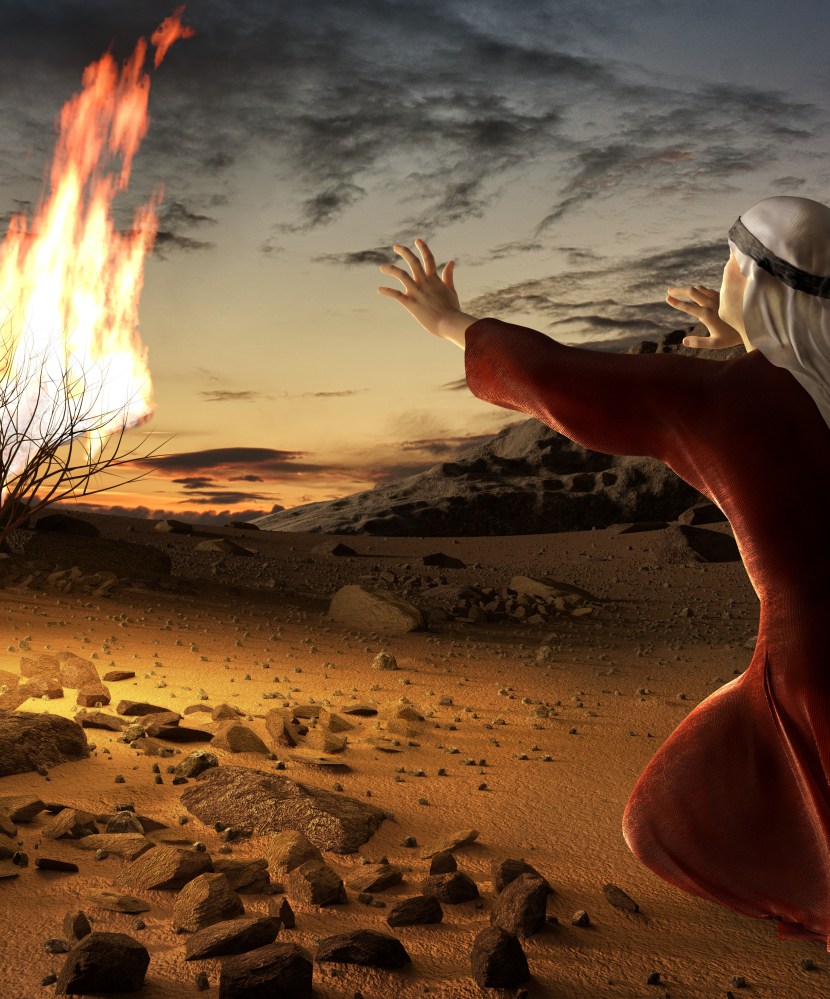
The Angel of the Lord at the Burning Bush

In the Book of Exodus, we encounter the angel of the Lord in several contexts: (1) as a voice from a burning bush; (2) as the destroyer on the night of Passover; (3) as the divine presence in a pillar of cloud and fire; and (4) as the promised deliverer who leads the Israelites from Egypt to the Promised Land. 

Each appearance is unique. Moses’ encounter with the angel on the backside of the desert ends forty years of hard-knocks leadership development and launches a dramatic return to ministry. After Moses goes back to Egypt, on the night of the tenth and final plague, one called the destroyer sweeps through the land and strikes the firstborn of every male not sheltered behind a doorpost stained with lambs’ blood. Then, with Pharaoh and his army in hot pursuit of the escaping Israelites, the angel of God inhabits a pillar of cloud and fire that separates God’s people from their pursuers. Finally, the Lord reminds Moses and the Israelites that he is sending my angel to see them safely into the land of milk and honey.

In this post, we’ll examine the angel’s appearance to Moses at the burning bush.

Continue reading