Every island fled – Revelation 16:20-21

Previously: “It is done!” – Revelation 16:17-19

The scripture

Rev. 16:20 – Every island fled, and the mountains disappeared. 21 Enormous hailstones, each weighing about 100 pounds, fell from the sky on people, and they blasphemed God for the plague of hail because that plague was extremely severe. (HCSB)

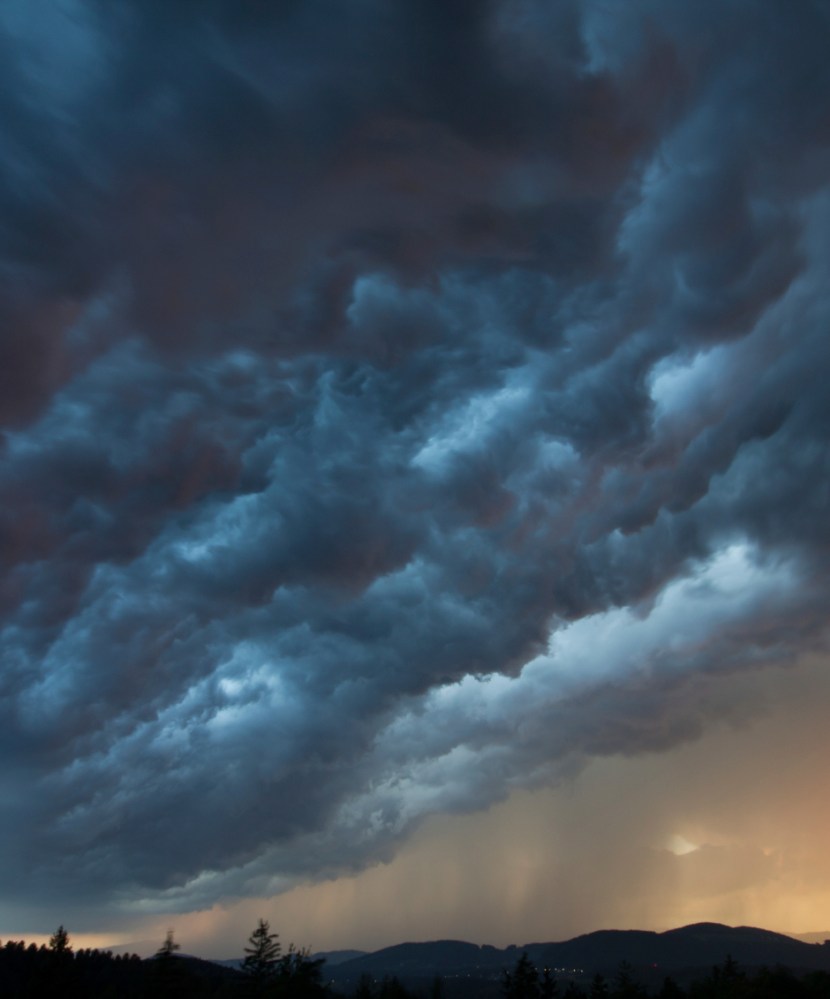
HailstormEvery island fled

Verse 20 reads, “Every island fled, and the mountains disappeared.” Some translations say the islands “disappeared” or “vanished.” There is a similar image from the sixth seal in Rev. 6:14. We are told that “every mountain and island was moved from its place.” All of creation is shaken violently in preparation for its renovation into new heavens and a new earth, although some see this in figurative terms as the dramatic end to the times of the Jews and/or the Roman Empire.

Those who see this passage as a prelude to the return of Christ note that Rev. 21:1 tells us that the first heaven and earth have passed away and the sea exists no more.

Isaiah pictures a day when the Lord of Hosts is coming “against all that is proud and lofty, against all that is lifted up – it will be humbled – against all the cedars of Lebanon, lofty and lifted up, against all the oaks of Bashan, against all the high mountains, against all the lofty hills, against every high tower, against every fortified wall, against every ship of Tarshish, and against every splendid sea vessel. So human pride will be brought low, and the loftiness of men will be humbled; the Lord alone will be exalted on that day” (Isa. 2:12-17).

Continue reading

Was St. Peter the first pope?

This is the last in a four-part series on Roman Catholicism.

Read part one: Who are Roman Catholics?

Read part two: What do Roman Catholics believe?

Read part three: What do Roman Catholics believe (continued)

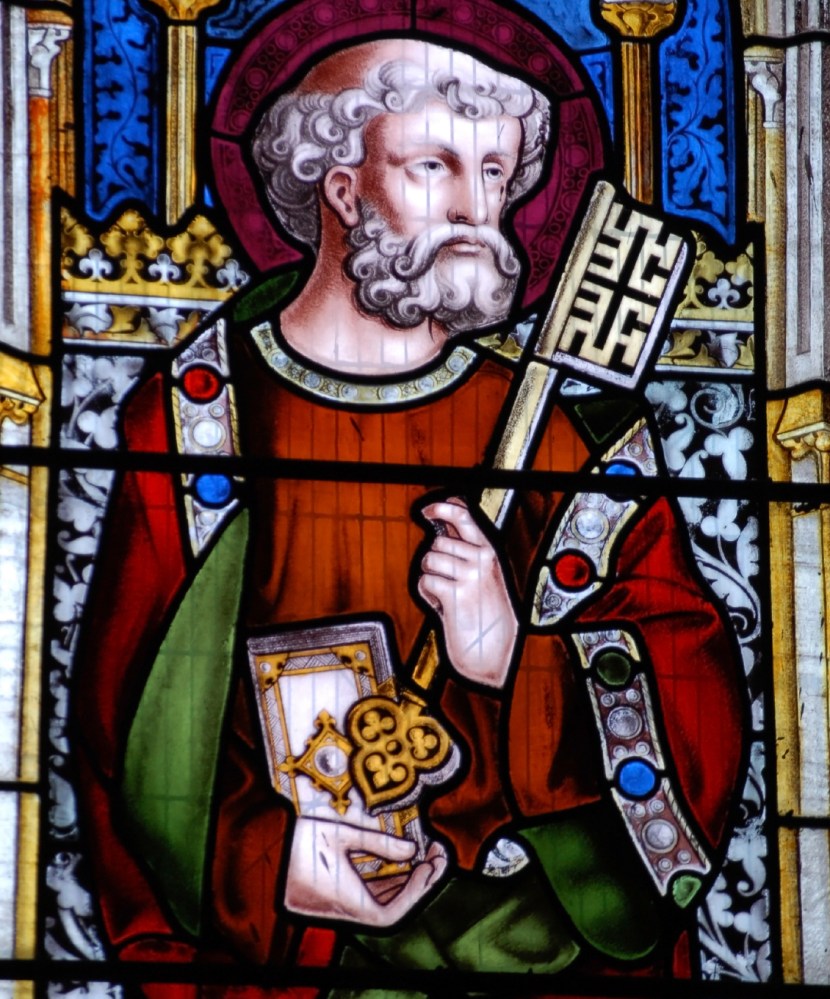
Saint PeterAfter Simon Peter makes his famous declaration that Jesus is “the Messiah, the Son of the living God,” Jesus tells the apostle, “you are Peter, and on this rock I will build My church, and the forces of Hades will not overpower it” (Matt. 16:16, 18).

Jesus further states, “I will give you the keys of the kingdom of heaven, and whatever you bind on earth is already bound in heaven, and whatever you loose on earth is already loosed in heaven” (v. 19).

Is Jesus declaring Peter the first pope and thus establishing apostolic succession? The Roman Catholic Church says yes, as the Catechism of the Catholic Church makes clear:

“The Lord made Simon alone, whom he named Peter, the ‘rock’ of His Church. He gave him the keys of his Church and instituted him the shepherd of the whole flock…. This pastoral office of Peter and the other apostles belongs to the Church’s very foundation and is continued by the bishops under the primacy of the Pope….

“For the Roman Pontiff, by reason of his office as Vicar of Christ, and as pastor of the entire Church has full, supreme, and universal power over the whole Church, a power which he can always exercise unhindered.”

Of course, not everyone agrees.
Continue reading

“It is done!” – Revelation 16:17-19

Previously: Assemble them for battle – Revelation 16:14-16

The scripture

Rev. 16:17 –Then the seventh [angel] poured out his bowl into the air, and a loud voice came out of the sanctuary from the throne, saying, “It is done!” 18 There were flashes of lightning and rumblings of thunder. And a severe earthquake occurred like no other since man has been on the earth – so great was the quake. 19 The great city split into three parts, and the cities of the nations fell. Babylon the Great was remembered in God’s presence; He gave her the cup filled with the wine of His fierce anger. (HCSB)

Lightning over the Rincon Mountains“It is done!”

When the seventh angel pours out his bowl into the air, a loud voice from the sanctuary declares, “It is done!” The 24 elders make a similar pronouncement in Rev. 11:15-19. They announce that “the time has come for the dead to be judged and to give the reward to Your servants the prophets, to the saints, and to those who fear Your name, both small and great, and the time has come to destroy those who destroy the earth” (v. 18).

More importantly, this cry echoes the declaration of a triumphant Jesus on the cross. Just before His death He shouts, “It is finished!” At Calvary, the Son of Man completes the work of redemption, bearing our sin and receiving the wrath of God on our behalf. Like a Roman commander overlooking the battlefield, He shouts, “It is finished!” because He has vanquished the evil one and released those bound to him in captivity. And like the high priest on the Day of Atonement, He shouts, “It is finished!” because no more sacrifices will be accepted. Both the Roman soldiers and the Jews around the cross have a clear context for understanding the significance of the Lord’s declaration. Jesus has fulfilled the law through His sinless life; fulfilled the types and shadows of the Old Covenant; fulfilled the prophecies of Messiah’s suffering; and completed the task for which the Father sent Him and the Spirit empowered Him. The work of redemption – it is finished!

Continue reading

What do Roman Catholics believe? (continued)

This is the third in a four-part series on Roman Catholicism.

Read part one: Who are Roman Catholics?

Read part two: What do Roman Catholics believe?

EucharistRoman Catholics embrace at least seven doctrines that evangelical Christians reject as inconsistent with the Word of God. In the previous article, we explored five of these doctrines. This column examines two more.

Sacramentalism

The Bible reveals that salvation is a gift of God received by faith in Jesus Christ. The Christian partakes of baptism and the Lord’s Supper as acts of obedience, or ordinances, which have no saving value.

Roman Catholics, however, teach seven sacraments that are essential to an individual’s eternal destiny. Sacraments in Catholic theology do not merely symbolize grace; they are said to be containers of grace, which participants receive as they partake.

The Catechism of the Catholic Church states plainly: “The Church affirms that for believers the sacraments of the New Covenant are necessary for salvation.”

Continue reading

Assemble them for battle: Revelation 16:14-16

Previously: The sixth bowl: Revelation 16:12-16

The scripture

Rev. 16:14 – For they are spirits of demons performing signs, who travel to the kings of the whole world to assemble them for the battle of the great day of God, the Almighty. 15 “Look, I am coming like a thief. Blessed is the one who is alert and remains clothed so that he may not go naked, and they see his shame.” 16 So they assembled them at the place called in Hebrew Armageddon. (HCSB)

Assemble them for the battle … in Armageddon

Now the kings of the world are assembled for “the battle of the great day of God, the Almighty” (v. 14). Verse 16 tells us the evil spirits assemble the kings at “the place called in Hebrew, Armageddon.” This is the only mention of “Armageddon” in the Bible. But the place is well known. The word “Armageddon” in Hebrew is har-megiddon, meaning “the mount of Megiddo.” Although there is no mountain by this name, the great city of Megiddo is strategically placed to guard the pass between the Mediterranean coast and the valley of Jezreel or Esdraelon.
Lightning over the roadThe outcome of this battle is reported in Rev. 17:14 and 19:11-21 as the Lamb obliterates the forces of evil. As the Dictionary of Biblical Prophecy and End Times points out, the gathering of the wicked for destruction is a common theme in the Old Testament. For example:

  • In Joel 3:11-16 the Lord invites the nations to come to the “Valley of Jehoshaphat, for there I will sit down to judge all the surrounding nations.”
  • In Zeph. 3:8 the Lord declares, “For My decision is to gather nations, to assemble kingdoms, in order to pour out My indignation on them, all My burning anger; for the whole earth will be consumed by the fire of My jealousy.”
  • And in Zech. 12:3-4 and 14:2-5 Yahweh promises, “On that day I will make Jerusalem a heavy stone for all the people; all who try to lift it will injure themselves severely when all the nations of the earth gather against her…. I will gather all the nations against Jerusalem for battle…. Then the Lord will go out to fight against those nations as He fights on a day of battle …”

More specifically, the valley of Jezreel or Esdraelon is the site of many important battles in the history of Israel. It is the place where earthly kings are no match for the Lord’s heavenly host; indeed, they are punished for oppressing God’s people (Judges 5:19). It is where the prophets of Baal are slaughtered in the days of Elijah (1 Kings 18:40). And it is where good king Josiah is killed, resulting in national mourning (2 Kings 23:29; 2 Chron. 35:20-25).

A common thread in these battles is that this valley is a place where unrighteous nations attack the people of God. Certainly, Megiddo in scripture is connected with warfare. It’s possible, however, that John’s reference to Megiddo is in fact a reference to Jerusalem. David Stern writes, “[T]he final war may not take place at Har Megiddo at all, but in Jerusalem, at Har Migdo, the ‘mount of his choice fruit,’ i.e., the mountain of God’s blessing, Mount Zion. Mount Zion has already been mentioned at 14:1; moreover, the imagery resembles Joel’s picture of the Day of Adonai, when God’s power goes forth from Mount Zion against the forces of evil (Joel 2:1-11, 4:16-17 [3:16-17]; compare also Isaiah 31:4-9). The next passage (vv. 17-21) resembles 14:14-20, which also draws on imagery from Joel 4…. Strengthening the case further Zechariah 12:11 … mentions Jerusalem along with Megiddon” (Jewish New Testament Commentary, p. 835).

So how should we view Armageddon?

Continue reading