
Category: Uncategorized

Jude: A slave of Jesus Christ
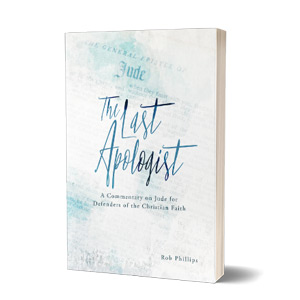 This is the first in a series of excerpts from “The Last Apologist: A Commentary on Jude for Defenders of the Christian Faith,” available in print and Kindle editions here.
My business card is standard fare. It identifies me and describes my role at the MBC. It also tells how to get in touch with me. That’s what most business cards do: serve as practical, brief, and efficient introductions.
Some people, however, use business cards more creatively. Take Guangbiao Chen, for example, a Chinese tycoon and philanthropist. His business card details illustrious titles and heroic accomplishments:
- Most Influential Person of China
- Most Prominent Philanthropist of China
- China Earthquake Rescue Hero
- Most Well-Loved and Beloved Chinese Role Model
We’re only halfway through Chen’s list, but you get the idea. This may be one of the cheekiest business cards ever produced.
But how would you respond if someone handed you a business card that simply read, “Jude, a slave”? That’s how the author of the Epistle of Jude opens his letter. With profound humility, he models the manner in which followers of Jesus should defend the Christian faith.
Continue reading

What is the kingdom of heaven?
 Excerpted from The Kingdom According to Jesus: A Study of Jesus’ Parables on the Kingdom of Heaven.
—————————————-
The terms kingdom of God, kingdom of heaven, and kingdom (with reference to the kingdom of God/heaven) appear nearly 150 times in Scripture. None of these references gives a simple, straightforward definition of the kingdom, and many passages appear to be contradictory.
Yet the kingdom is the primary focus of Jesus’ teaching. Many of his parables describe the kingdom. The apostles preach the “gospel of the kingdom.” And end-times prophecy points us toward the day when God’s kingdom comes in its fullness.
So, what is the kingdom of heaven? Are the kingdom of heaven and the kingdom of God the same thing? Is the kingdom here already, or are we to wait for it? What does it look like? Who’s in the kingdom and who’s not? And what is required to enter the kingdom?
To begin, we need to understand what the Bible says the kingdom of heaven is—and is not.
Continue reading
A verse-by-verse commentary on Jude
The epistle of Jude may be one of the most neglected New Testament books. Bible readers are tempted — in part by its brevity and in part by its similarity to 2 Peter 2 — to skip over Jude on the way to Revelation, or to give this short epistle little more than a glance.
That’s unfortunate, because Jude speaks volumes about the value of Christian apologetics. The Last Apologist: A Commentary on Jude for Defenders of the Christian Faith, is more than a verse-by-verse study. Each chapter explores key words and phrases, and poses thought-provoking questions that make this a handy resource for personal or group study.
Order your soft-cover copy or Kindle version from Amazon.
Last, you might want to check out the short video below.

What does it mean to be regenerated?
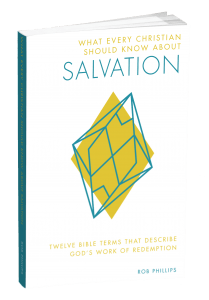 This column is excerpted from “What Every Christian Should Know About Salvation,” available from Amazon and other booksellers.
Regeneration is the work of the Holy Spirit that brings a sinner from spiritual death into spiritual life. While Christians may disagree about such issues as the relationship between regeneration and baptism, or whether regeneration precedes faith, it is biblically faithful for a follower of Jesus to say, “I am regenerated.”
While the Greek noun palingenesia appears only twice in the New Testament (Matt. 19:28; Titus 3:5), the concept of regeneration, or new birth, is a consistent theme of Jesus and the New Testament writers. Jesus makes it clear that people must be “born again,” or “born of the Spirit,” if they are to see the kingdom of heaven (John 3:3, 5).
The work of the Holy Spirit, making an individual a “new creation” (2 Cor. 5:17; Gal. 6:15), prepares that person for the future work of Christ as He creates “new heavens and a new earth” (2 Pet. 3:13). All those the Spirit regenerates are assured a place with Christ when He refurbishes the cosmos, purging it completely of sin and its stain.
Regeneration is necessary because the Bible describes unbelievers as the walking dead. Not only are they spiritually dead (Eph. 2:1), but they are depicted as natural / without the Spirit (1 Cor. 2:14); blinded in their minds (2 Cor. 4:4); bound by Satan (2 Tim. 2:26); alienated from God (Eph. 4:17-18); enemies of the Lord (Rom. 5:6-11; Col. 1:21-22); condemned in their unbelief (John 3:18); and in spiritual darkness (Acts 26:18; Eph. 5:8; Col. 1:13; 1 Pet. 2:9).
Regeneration is a one-time, non-repeatable act by which the Holy Spirit enters the dead human spirit of a sinner and makes him or her spiritually alive. Regeneration also is permanent. That is, a person whom God foreknows, predestines, calls, justifies, and glorifies cannot lose the gift of regeneration without losing all of the associated links in God’s golden chain of redemption.
Continue reading

Seven promises in Revelation 22 (Conclusion)
 There are at least seven promises given to us in Revelation 22 that confirm Jesus’ victory over Satan, sin and death. These promises also assure us that all the effects of the Fall are reversed in Christ’s finished work and the salvation He has provided for us by grace through faith.
In the previous post, we looked at promises 1-4. We conclude our brief survey now.
Promise No. 5: Light (v. 5)
Before creation there was darkness (Gen. 1:2), but God, who is light, brought light into the universe. Just as darkness is the absence of light, so evil is depicted in Scripture as darkness because it is an absence – perhaps more accurately, a shunning – of God’s holy presence. Eternal separation from God is called “outer darkness” (Matt. 8:12).
While Jesus suffered the wrath of God for the sins of the world there was darkness over the whole land (Mark 15:33). Unbelievers love darkness rather than light because their deeds are evil (John 3:19). Jesus came to deliver us from darkness (John 12:46). Darkness is associated with Satan and his kingdom (Acts 26:18; Rom. 13:12; Col. 1:13).
But in the New Jerusalem there is abundant light; in fact, there is no need of the sun, moon or stars, or of any artificial light, because God provides light for us. Why is this light promised to us? Because Jesus is the light of the world (John 8:12).
Continue reading
 OnceDelivered.net