
Category: Uncategorized

The Book of Life: A Real Book

This is another in a series of excerpts from The Book of Life: What the Bible Says about God’s Registry of the Redeemed from High Street Press and available at Amazon. This except comes from Chapter 2: A Real Book.
When studying biblical realities we’ve never seen with the naked eye, it’s good to ask whether a writer of Scripture is expressing his divinely inspired thoughts literally or figuratively. For example, is the millennium a literal one thousand years, or simply a long stretch of time (Rev. 20:1-7)? Is “the arm of the LORD” a muscle-bound appendage of God’s, or an anthropomorphism – an expression of God in human terms (Isa. 53:1)? And is the book of life an actual scroll-and-pen publication, or a way to explain God’s unrestricted knowledge of people and events (Ps. 69:28)?
To address the last of these questions, and to better set the tone for our study of the book of life, it may help to briefly explore how Scripture uses the words “book” and “life.”
Continue readingWhat have we done with the Christmas story?
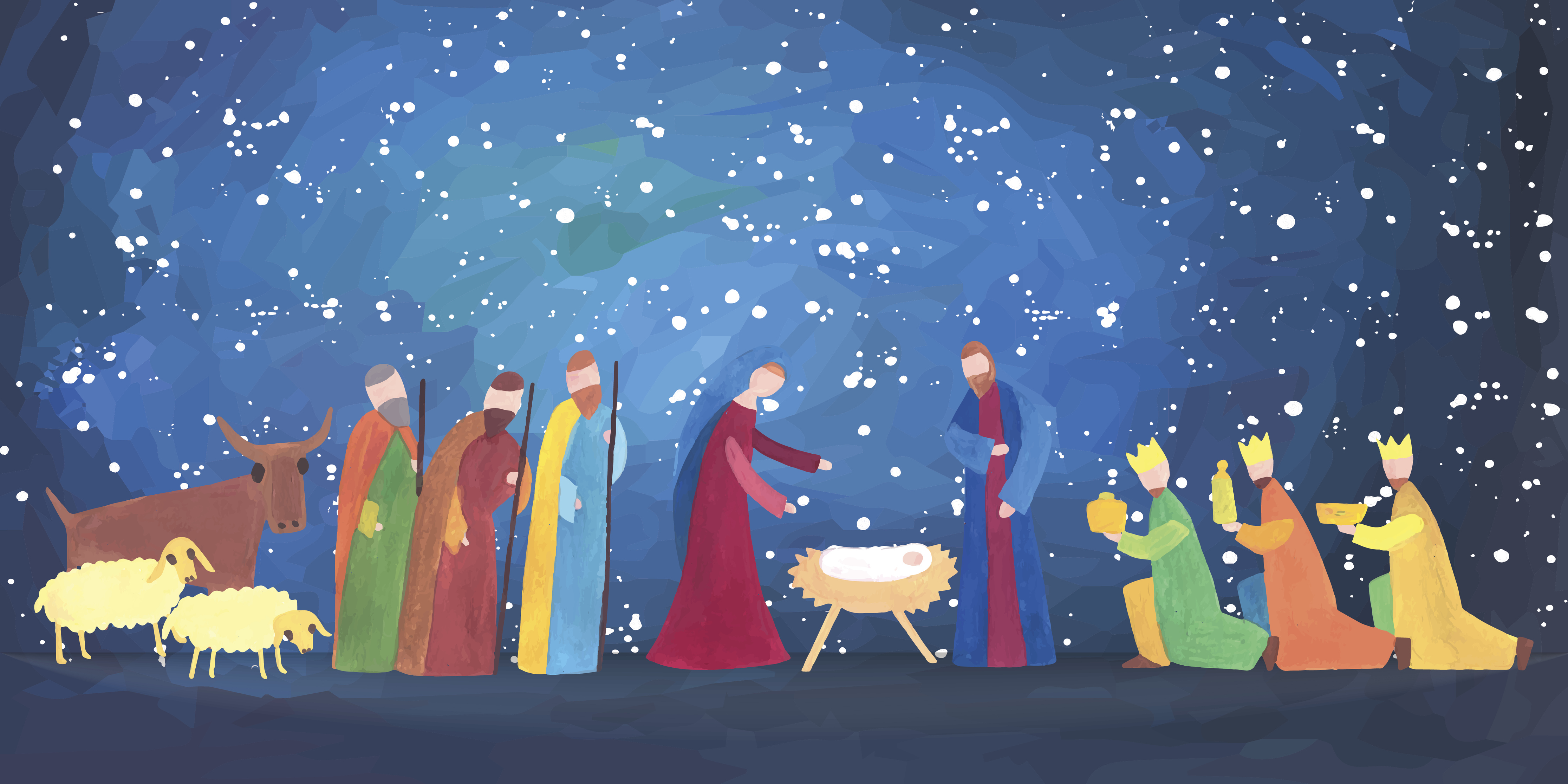 Christians love to hear and tell the traditional Christmas story. The birth of Jesus includes Mary and Joseph seeking shelter on a winter night, no room in the inn, a baby born in a stable, and angels visiting lowly shepherds nearby.
But our modern telling of the account in Luke 2:1-20 embraces critical flaws, according to Kenneth E. Bailey, who spent 40 years teaching the New Testament in the Middle East and who authored Jesus Through Middle Eastern Eyes: Cultural Studies in the Gospels.
According to Bailey, a careful reading of the text, along with an understanding of Jewish culture, illuminate five biblical truths that challenge our Westernized version of the Christmas story:
Continue reading
What have we done with the Christmas story?
Christians love to hear and tell the traditional Christmas story. The birth of Jesus includes Mary and Joseph seeking shelter on a winter night, no room in the inn, a baby born in a stable, and angels visiting lowly shepherds nearby.
But our modern telling of the account in Luke 2:1-20 embraces critical flaws, according to Kenneth E. Bailey, who spent 40 years teaching the New Testament in the Middle East and who authored Jesus Through Middle Eastern Eyes: Cultural Studies in the Gospels.
According to Bailey, a careful reading of the text, along with an understanding of Jewish culture, illuminate five biblical truths that challenge our Westernized version of the Christmas story:
Continue reading

Jesus Before Bethlehem

High Street Press offers a unique resource for personal or group study titled Jesus Before Bethlehem: What Every Christian Should Know About the Angel of the LORD.
Written by Rob Phillips of the Missouri Baptist Convention, the 338-page book explores dozens of Old Testament appearances by a figure often identified as “the angel of the LORD.” This figure not only speaks for God; he speaks as God. He appears as a man, a voice from heaven, a flame within a thorn bush, and a divine presence in a pillar of cloud and fire – all of which come to us as Christophanies, or appearances of Jesus before Bethlehem.
The book addresses the question: What was Jesus doing prior to his conception in Mary’s womb? While we see the Father and the Holy Spirit actively engaged in human affairs across the pages of the Old Testament, the other member of the Trinity (Jesus) is foreshadowed in messianic prophecies but otherwise absent from the earth. Or is he?
Jesus Before Bethlehem is designed to show how the eternal Son of God has always taken a personal interest in those he created to be his imagers on earth.

Did Jesus descend into hell? (part 2)

This is the second in a two-part series on the whereabouts of Jesus between His death and resurrection.
In the previous column we addressed different views about where Jesus went between His death and resurrection.
Now, we briefly examine five New Testament passages that in some way touch on the subject. Keep in mind the most biblically faithful view: Jesus neither went to hell (Gehenna) nor to Hades (the temporary abode of the dead) but to heaven after His death.
Acts 2:27 – “Because thou wilt not leave my soul in hell, neither wilt thou suffer thine Holy One to see corruption. “(KJV)
In this portion of Peter’s sermon on the day of Pentecost, he quotes from Ps. 16:10, a psalm of David and a Messianic psalm that Peter applies to Jesus.
The word translated “hell” in the King James rendering of Acts 2:27 is the Greek term Hades, which is similar to the Hebrew word Sheol. In both cases, it is a flexible term that most often refers to the temporary abode of the dead but can mean “grave.”
The New International Version (NIV) translates this, “Because you will not abandon me to the grave, nor will you let your Holy One see decay.” This is preferable because the context emphasizes that Christ rose bodily from the dead as opposed to David, whose body is still there.
The Holman Christian Standard Bible (HCSB) renders this passage, “because you will not leave my soul in Hades, or allow your Holy One to see decay.” This translation acknowledges that David’s soul went to Hades without assigning Jesus’ soul to the same place.
 OnceDelivered.net