
Tagged: Satan

Anointed Guardian Cherub
Following is an excerpt from What Every Christian Should Know About Satan. Order your copy now in paperback, Kindle, or Audible versions.

Marcus Licinius Crassus was one of the wealthiest and most powerful men in ancient Rome. Born in 115 BC, he amassed a fortune through various enterprises, which ranged from dealing in slaves to restoring fire-ravaged land and selling it at huge profits. His wealth enabled him to crush rivals and buy influence with Julius Caesar. In fact, he bankrolled the army sent out to quash the Spartacus-led slave rebellion.
In gratitude, Caesar named Crassus governor of Syria, a land rich in resources. It should have been one more step in Crassus’ meteoric rise, but he flamed out like a falling star. He led a disastrous campaign against the Parthian Empire. After the battle of Carrhae, he parlayed for peace. But the Parthians poured liquid gold down his throat. One of the richest men who ever lived choked to death from a scalding dose of what he valued most in life. An exalted crony of Caesar, Crassus died in humiliation – a spectacle for the ancient world to behold.
Curiously, we know more about Crassus’ rise and fall than we do about Satan’s. The Bible offers little insight into the evil one’s exaltation and rebellion, although it does tell us something of his fall and ignominious destiny. We know the devil is a created being. We know he is powerful, clever, deceitful, rapacious, and deadly. We know he throws his full weight into a guerilla campaign against God and God’s people. We know he has a vast army of evil spirits who engage holy angels and humans in spiritual warfare. We know he has a kingdom and great authority over those he has taken captive.
But we also know his limits. Satan is neither omniscient, omnipotent, nor omnipresent, for these attributes belong to God alone. Equally important, we know that no matter how highly exalted he once was, or makes himself appear today, he is on a steep downward trajectory. He has been cast out of God’s throne room and banished from the heavenly realm. Today, he furiously bides his time prowling the earth. One day, the fires of hell – stoked particularly for him and his minions – are to be his everlasting place of torment (Matt. 25:41).
But when did Satan become the evil one? How did wickedness rise in his heart? How did he ever get the notion he could defeat his creator? And why does he insist on taking as many people to hell with him as possible?
Continue reading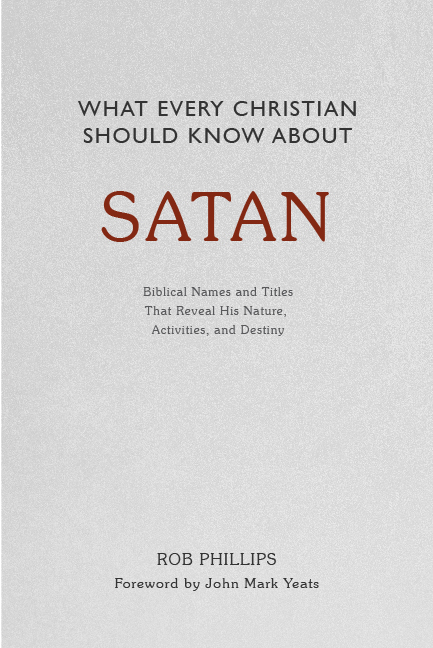
Satan: What’s in a name?

Learn more above the evil one from a biblical view, and order your copy of this new resource from High Street Press.
What’s in a name? Our parents may have named us after beloved ancestors, movie stars, heroic leaders, or even favorite songs. Our daughter Aubrey, for example, shares the name of the title character in a 1970s pop hit. Popular names in one generation may fade as trendy new names emerge, only to return later. Others seem timeless, like James and Mary, which have remained the most popular U.S. baby names for a century.
It’s hard to know what on earth celebrity parents are thinking when they christen their kids “Moon Unit” or “Pilot Inspektor.” But even lyricist Shel Silverstein revealed a motive behind the dad who named his son “Sue”:
But ya ought to thank me, before I die
For the gravel in ya guts and the spit in ya eye
Biblical names seem a bit more purposeful. God names the first human Adam, which generally denotes “human being” or “mankind” and links to the Hebrew adama to indicate the earth from which he is formed. Pharaoh’s daughter names her adopted baby Moses, based on a Hebrew term that means “to draw out [of the water].”
The LORD commands Hosea to name his sons Jezreel and Lo-ammi, and his daughter Lo-ruhamah, all of which signify pending judgment on Israel. Elizabeth and Zechariah insist on naming their child John, resisting all pressure to name him after his father, because that’s what the angel Gabriel has instructed them to do.
And then, of course, there are nicknames and descriptive titles. The son of Elizabeth and Zechariah comes to be known as John the Baptizer. God changes the names of Abram and Sarai to Abraham and Sarah, who receive a portion of the divine name, Yahweh, as a sign of God’s covenant with them.
Disciples James and John are the sons of thunder. The apostle Thomas is called Didymus, which means “the twin.” And Saul of Tarsus becomes Paul, who gives himself a scathing nickname, “the worst of them [sinners].”
Continue reading What Every Christian Should Know about Satan
 The Missouri Baptist Convention, through its High Street Press imprint, has released a new resource for personal or group study titled What Every Christian Should Know about Satan.
Written by the MBC’s Rob Phillips, the 400-page book explores more than a dozen biblical names and titles that reveal the evil one’s character, tactics, and ultimate destiny in hell. It’s designed for pastors and laypersons who desire a deeper study of Satan’s doomed campaign against God and God’s people.
Curiously, the Hebrew satan means “accuser” and is not a title devoted solely to the evil one. Even the angel of the Lord – the preincarnate Christ – plays the role of satan / accuser on one occasion (Num. 22). However, God’s progressive revelation in Scripture reveals one particular accuser who stands in opposition to his Creator – the diabolos, or devil, of the New Testament.
Numerous biblical names and titles appear, focusing on a single fallen angel who reigns over a host of demonic followers. These names include: dragon, serpent, father of lies, murderer, tempter, deceiver, evil one, Beelzebul, ruler of this world, and destroyer.

Where Does Jude Get This Story?
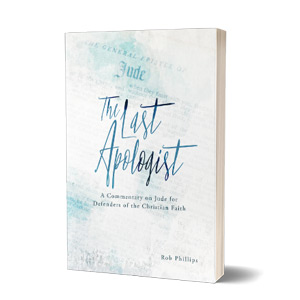 The Missouri Baptist Convention has published a new resource called The Last Apologist: A Commentary on Jude for Defenders of the Christian Faith. The 275-page book is available in print and Kindle editions on Amazon, and in print from the MBC. But we also want to make each of the 16 chapters available online. This post features the last portion of Chapter 9: Where Does Jude Get This Story?
Previously: What Are “Eternal Chains in Darkness”?
_______________
Yet Michael the archangel, when he was disputing with the Devil in a debate about Moses’ body, did not dare bring an abusive condemnation against him, but said, “The Lord rebuke you!” (Jude 9 HCSB)
The death of Moses is recorded in Deut. 34:1-7, but there is no mention in this passage of Michael and Satan disputing about Moses’ body. There are many Jewish traditions about the death of Moses, but we should always approach non-biblical embellishments with caution.
In Jude’s day, however, there is an apocryphal writing called The Assumption of Moses that records a conflict between Michael and Satan. According to this account, Satan argues over the body of Moses because Moses has killed an Egyptian overseer (Ex. 2:11-12). Satan evidently argues his right to the body because Moses is a murderer.
We should not assume that Jude has erred in quoting from an apocryphal book, nor should we declare The Assumption of Moses divinely inspired because Jude quotes from it. It may help to remember that Paul cites Greek poets and sayings without suggesting their work is authoritative (Acts 17:28; 1 Cor. 15:33; Titus 1:12).
“Jude did not intend to put a canonical stamp on Assumption of Moses simply because he cited it,” writes Thomas Schreiner. “He viewed this story as true or helpful, or he believed it was an illustration of the truth he desired to teach.”
Continue reading
The Lord Rebuke You: Michael and the Devil
The Missouri Baptist Convention has published a new resource called The Last Apologist: A Commentary on Jude for Defenders of the Christian Faith. The 275-page book is available in print and Kindle editions on Amazon, and in print from the MBC. But we also want to make each of the 16 chapters available online. This post features the first portion of Chapter 9: The Lord Rebuke You: Michael and the Devil.
Previously: What Are “Eternal Chains in Darkness”?
Nevertheless, these dreamers likewise defile their flesh, despise authority, and blaspheme glorious beings. Yet Michael the archangel, when he was disputing with the Devil in a debate about Moses’ body, did not dare bring an abusive condemnation against him, but said, “The Lord rebuke you!” But these people blaspheme anything they don’t understand, and what they know by instinct, like unreasoning animals – they destroy themselves with these things. (Jude 8-10 HCSB)
Several years ago as I trimmed grass in my yard, a small garter snake slithered out from the weeds. He coiled and struck my electronic weed trimmer. This was an odd scene, as garter snakes generally flee predators and prefer to hide their heads and flail their tails rather than move aggressively. They also discharge a malodorous, musky-scented secretion to ward off danger, or simply slither away into the brush. Even when they do attack, the mild venom in the fangs in the backs of their mouths is muted by large gums in the front, making it difficult to deliver venom to larger predators.
So, the sight of this relatively harmless snake, less than a foot in length, taking the fight to my weed trimmer, was curious to say the least. His open jaws were far too small to capture the housing of the trimmer, and he bounced backward after his first strike. Then, he recoiled and struck again. And again. Then he struck a final time, connecting with the whirring fishing line beneath the housing, which spun him around a couple of times and tossed him several feet into a ditch, where he gave up the fight (and ultimately, the ghost).
How remarkable was the snake’s tenacity in the face of overwhelming odds. But even more notable was the realization that the snake could not distinguish between a lethal living predator and a buzzing weed whacker. It cost him his life.
We see a similar comparison in Jude, as the author likens false teachers to brute beasts who operate on instinct, are incapable of reasoning, and who bring swift and certain destruction on themselves as they speak arrogantly to demons, pollute their souls, and slough off the authority of their Creator.
 OnceDelivered.net