
Satan: What’s in a name?
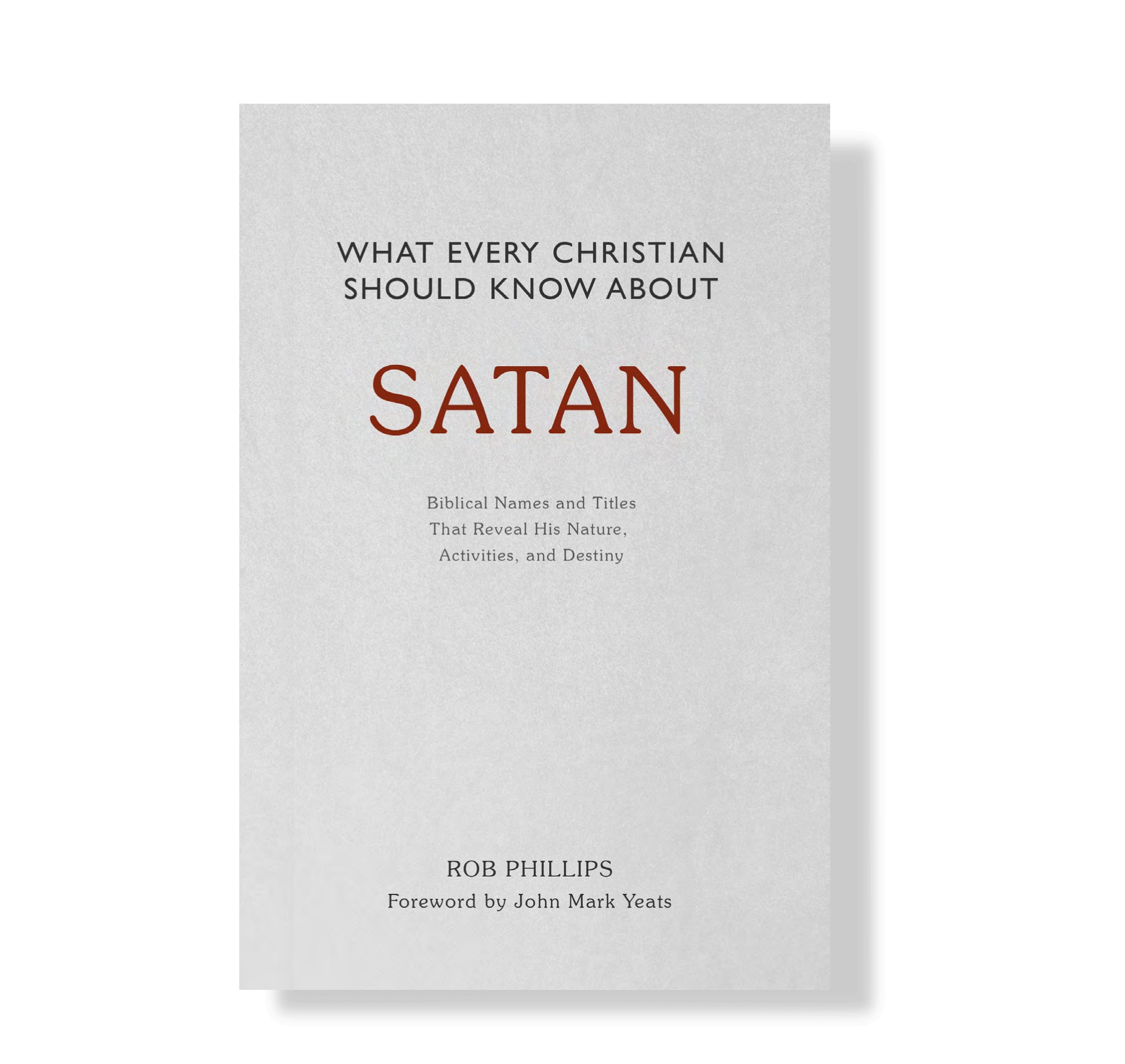
Learn more above the evil one from a biblical view, and order your copy of this new resource from High Street Press.
What’s in a name? Our parents may have named us after beloved ancestors, movie stars, heroic leaders, or even favorite songs. Our daughter Aubrey, for example, shares the name of the title character in a 1970s pop hit. Popular names in one generation may fade as trendy new names emerge, only to return later. Others seem timeless, like James and Mary, which have remained the most popular U.S. baby names for a century.
It’s hard to know what on earth celebrity parents are thinking when they christen their kids “Moon Unit” or “Pilot Inspektor.” But even lyricist Shel Silverstein revealed a motive behind the dad who named his son “Sue”:
But ya ought to thank me, before I die
For the gravel in ya guts and the spit in ya eye
Biblical names seem a bit more purposeful. God names the first human Adam, which generally denotes “human being” or “mankind” and links to the Hebrew adama to indicate the earth from which he is formed. Pharaoh’s daughter names her adopted baby Moses, based on a Hebrew term that means “to draw out [of the water].”
The LORD commands Hosea to name his sons Jezreel and Lo-ammi, and his daughter Lo-ruhamah, all of which signify pending judgment on Israel. Elizabeth and Zechariah insist on naming their child John, resisting all pressure to name him after his father, because that’s what the angel Gabriel has instructed them to do.
And then, of course, there are nicknames and descriptive titles. The son of Elizabeth and Zechariah comes to be known as John the Baptizer. God changes the names of Abram and Sarai to Abraham and Sarah, who receive a portion of the divine name, Yahweh, as a sign of God’s covenant with them.
Disciples James and John are the sons of thunder. The apostle Thomas is called Didymus, which means “the twin.” And Saul of Tarsus becomes Paul, who gives himself a scathing nickname, “the worst of them [sinners].”
The accuser
So, what are we to make of Satan and his many names and titles? Curiously, the Hebrew satan means “accuser” and is not a title devoted solely to the evil one; even the angel of the LORD plays the role of satan on one occasion (Num. 22:22, 32). The Greek diabolos, from which we get “devil,” is used in the Septuagint – the Greek translation of the Old Testament – to translate satan and thus bears essentially the same meaning.
However, there are biblical names that focus on a single fallen angel who reigns over a host of demonic followers. These names include dragon, serpent, father of lies, murderer, tempter, deceiver, evil one, Beelzebul, Belial, ruler of this world, and destroyer.
In the posts to follow, we explore these and other names in an effort to learn more about the archenemy of God and his people.
The next post, for example, examines a single scriptural reference to an anointed guardian cherub. Could this be Satan prior to his rebellion and fall?
Then, we explore the serpent, or dragon, introduced in Genesis 3 and cast into the lake of fire and sulfur in Revelation 20.
After that, we read about this creature’s most common titles: Satan and the devil. But neither is used exclusively to depict the evil one.
Later, we are taken to the words of Jesus, who describes the enemy as the father of lies. As such, he is the original liar and the instigator of all untruths – especially when set against Jesus, who is the truth.
Satan also is as a murderer – in fact, the first murderer. First, he murders the human race through his successful temptation of Adam and Eve. Then he prompts Cain to kill his brother Abel. He has been the CEO of Murder Incorporated ever since.
He is the tempter, a role he plays from his first recorded encounter with human beings, and a role he relishes throughout human history.
He is the deceiver, one who often presents himself as an angel of light.
Satan is the evil one, the archetype of everything opposed to God and God’s people.
He also carries the ancient name Beelzebul, tying him to idolatrous practices in ancient Israel. He is the well-known prince of evil spirits.
One future post briefly visits a single but important reference to the evil one as Belial.
Next, we survey Satan’s role as the ruler of this world. We learn how he commands an ever-shrinking army in a kingdom destined for defeat.
Then, we review Satan’s frightening role as the destroyer, called Abaddon and Apollyon in the Book of Revelation.
After that, we reveal the ultimate destiny of the evil one: hell, a place Jesus says has been prepared for Satan and his messengers.
Finally, we examine Paul’s teaching on the armor of God, which enables all believers to stand firm in the face of Satan’s relentless onslaught.
These excerpts from What Every Christian Should Know About Satan feature terrifying tales of Satan’s power, and frightening accounts of his devious ways. Yet, we have no reason to fear the evil one, for he is a lion on God’s leash and his destiny in the lake of fire is as certain as the sovereign hand of God.
As we study the evil one, we do well to remember that our enemy is not the atheist, animist, or Muslim. They truly are victims of the evil one, who takes them captive to do his will (2 Tim. 2:26). Our anger should be directed at Satan, for he is the true enemy of God and God’s people. And our prayers should be for the deliverance of all people whom the evil one has blinded, bound, and taken captive.
No matter how dark this world may seem, Christians always should look up, for our redemption draws near (Luke 21:28). The day approaches when the archenemy is cast into the lake of fire (Rev. 20:10), and our Savior creates new heavens and a new earth (2 Pet. 3:10-13; Rev. 21-22).
Next: Anointed Guardian Cherub

