 The Missouri Baptist Convention has published a new resource called The Last Apologist: A Commentary on Jude for Defenders of the Christian Faith. The 275-page book is available in print and Kindle editions on Amazon, and in print from the MBC. But we also want to make each of the 16 chapters available online. This post features the last portion of Chapter 8: Kept with Eternal Chains: When Angels Desert.
Previously: Principles of Biblical Interpretation
_______________
… and He has kept, with eternal chains in darkness for the judgment of the great day, angels who did not keep their own position but deserted their proper dwelling. (Jude 6)
Whoever these particularly nasty angels are, God is keeping them under wraps until the day they are cast into the lake of fire. The word “kept” in Jude 6 is from the same root word Jude uses in verse 1 to describe believers, who are “kept” by Jesus Christ. Some translations render it “reserved” rather than “kept.” In a parallel passage, Peter writes that these fallen angels are “delivered … to be kept in chains” (2 Peter 2:4 – emphasis added).
The questions, then, are where these demons are imprisoned, and how. Certainly, if they are spiritual beings, physical chains cannot hold them. The Greek actually describes them as being confined, without hope of escape. While Jude does not name this place (or state) of confinement, Peter, in the parallel passage just referenced, calls it Tartarus.
Many translations render this word, found only in 2 Peter 2:4, as “hell,” including the King James Version and the New American Standard Bible, while others, like the English Standard Version and the New International Version, provide footnotes linking the English word “hell” to the Greek name Tartarus.
The Holman Christian Standard Bible simply transliterates the Greek word in this passage, which reads: “For if God did not spare the angels who sinned, but threw them down into Tartarus and delivered them to be kept in chains of darkness until judgment …” A footnote in the HCSB reads, “Tartarus is a Greek name for a subterranean place of divine punishment lower than Hades.”
In the apocryphal Book of Enoch (20:2), Tartarus is used as a place where fallen angels are punished, an interpretation Peter affirms.
So, Tartarus seems to be a place separate from Sheol, the Hebrew term for the abode of the dead; Hades, roughly the Greek equivalent of Sheol; and Gehenna, the lake of fire created for the Devil and his angels (Matt.25:41), where wicked people also spend eternity (Rev. 20:15). Ancient Greeks regarded Tartarus as a place where rebellious gods and other wicked ones are punished.
Continue reading →

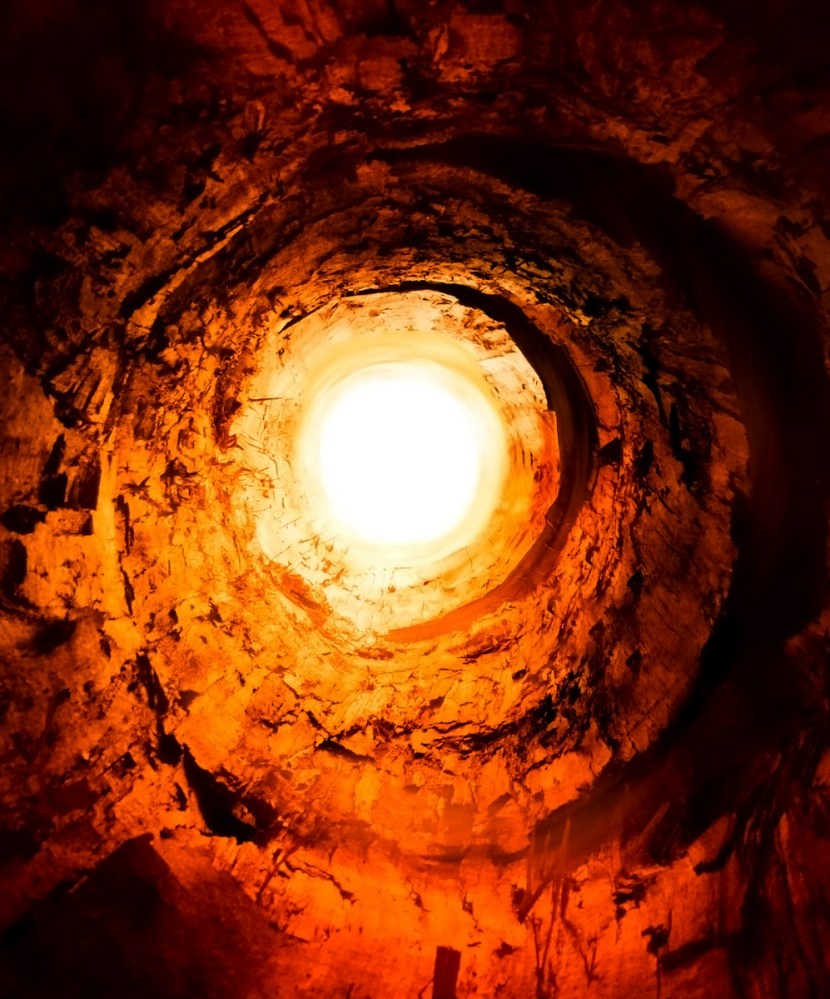
 The doctrine of hell is disturbing. The very idea of suffering and separation beyond the grave elicits a wide range of responses, from anguish to anger, and from despair to denial.
 You’re going to live forever. The questions are where, and how. With so many views about the afterlife — from reincarnation to annihilation — is there any way to know for sure what lies beyond the grave? The answer is a resounding yes!
 This is the first in a two-part series on the whereabouts of Jesus between His death and resurrection.
 OnceDelivered.net