
Tagged: abyss

Unreformed and Undeterred

This is another in a series of excerpts from What Every Christian Should Know About the Return of Jesus, released by High Street Press and available at Amazon.
After Satan’s release from the abyss, which John depicts in Revelation 20:7, the evil one proves himself unreformed and undeterred. He immediately returns to his life of crime, setting out to deceive the nations once again and gather them for battle against Christ and his followers. As soldiers of this newly formed axis of evil surround the encampment of the saints, fire from heaven consumes them (Rev. 20:7-9).
Then, we read: “The devil who deceived them was thrown into the lake of fire and sulfur where the beast and the false prophet are, and they will be tormented day and night forever and ever” (Rev. 20:10).
In this verse, John describes Satan’s ultimate destination as “the lake of fire and sulfur.” In Matthew 25:41, Jesus calls it “the eternal fire prepared for the devil and his angels.” Jesus and the New Testament writers also describe this place as “outer darkness,” “eternal punishment,” and “the second death” (e.g., Matt. 22:13; 25:46; Rev. 21:8). But there’s an even more descriptive term for this place: gehenna, or hell.
Continue reading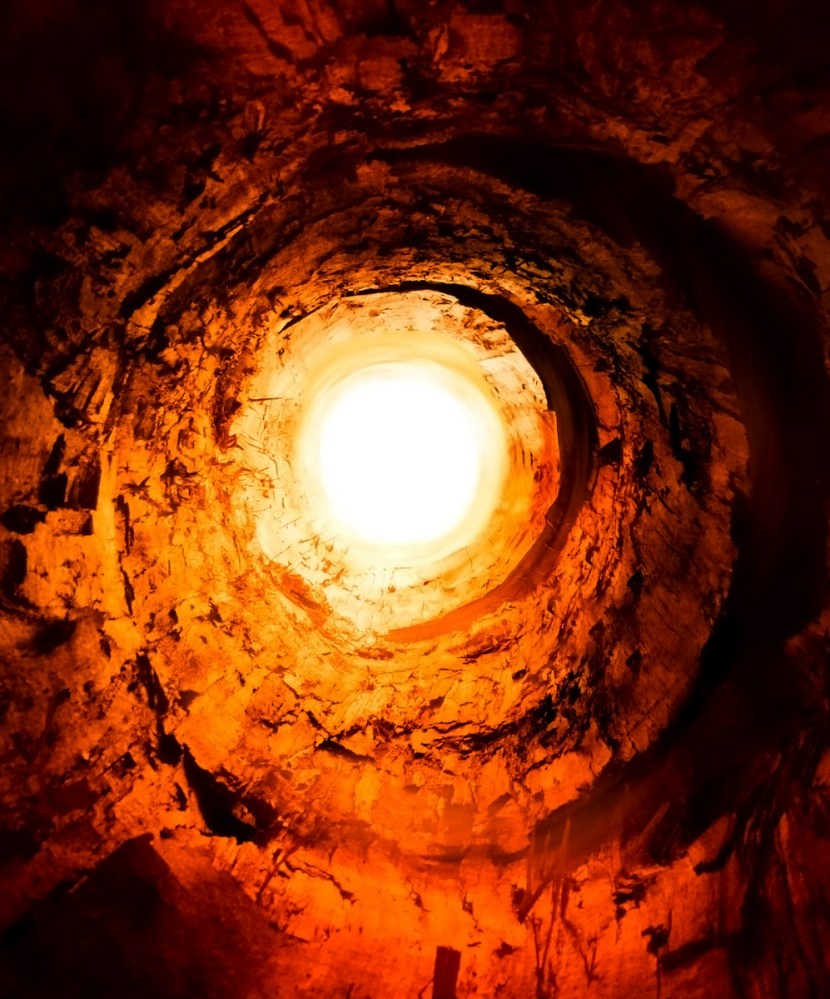
The Abyss

The following excerpt is taken from What Every Christian Should Know About Satan. Order your copy in print, Kindle, or Audible versions here.
Before Satan is cast into the lake of fire to be tormented forever, Revelation 20:1-3 details a thousand-year imprisonment:
Then I saw an angel coming down from heaven holding the key to the abyss and a great chain in his hand. He seized the dragon, that ancient serpent who is the devil and Satan, and bound him for a thousand years. He threw him into the abyss, closed it, and put a seal on it so that he would no longer deceive the nations until the thousand years were completed. After that, he must be released for a short time.
The Greek word abyssos, rendered “abyss,” “pit,” or “bottomless pit” in many English translations, occurs nine times in the New Testament. In most occurrences, it refers to a place of temporary confinement for certain evil spirits. For example, in Jesus’ encounter with “Legion,” the demons who possess this Gerasene man beg Jesus not to banish them to the abyss – no doubt a place evil spirits fear (Luke 8:31).
Continue reading A look into Tartarus
This is the fifth in a series of articles on biblical terms that describe the afterlife and the unseen world.
If Sheol or Hades is the temporary abode of deceased people, is there a transitory place of punishment for some demons?
It seems the answer is yes, in a place the New Testament refers to as Tartarus.
Tartarus is mentioned only once, in 2 Peter 2:4. Many translations render it “hell,” including the King James Version and the New American Standard Bible, while others, like the English Standard Version and the New International Version, provide footnotes linking the English word “hell” to the Greek name Tartarus.
The Holman Christian Standard Bible simply transliterates the Greek word in this passage, which reads: “For if God did not spare the angels who sinned, but threw them down into Tartarus and delivered them to be kept in chains of darkness until judgment …”
A footnote in the HCSB reads: “Tartarus is a Greek name for a subterranean place of divine punishment lower than Hades.”
In the apocryphal Book of Enoch (20:2), Tartarus is used as a place where fallen angels are punished, an interpretation Peter affirms.
So, Tartarus seems to be a place separate from Sheol, the Hebrew term for the abode of the dead; Hades, roughly the Greek equivalent of Sheol; and Gehenna, the lake of fire created for the Devil and his angels (Matt. 25:41) where wicked people also spend eternity (Rev. 20:15).
Ancient Greeks regarded Tartarus as a place where rebellious gods and other wicked ones are punished. Peter refers to Tartarus as the abode of certain fallen angels.
Continue reading

Satan will be released – Revelation 20:7-8
 Previously: The rest of the dead – Revelation 20:5-6
The scripture
Rev. 20:7 – When the 1,000 years are completed, Satan will be released from his prison 8 and will go out to deceive the nations at the four corners of the earth, Gog and Magog, to gather them for battle. Their number is like the sand of the sea. (HCSB)
Satan will be released
Verses 7-8 read, “When the 1,000 years are completed, Satan will be released from his prison and will go out to deceive the nations at the four corners of the earth, Gog and Magog, to gather them for battle. Their number is like the sand of the sea.”
Satan’s release from the abyss (Greek phulakes or prison) appears related to the well-known prophecy in Ezekiel 38-39. While there are similarities between these passages, there also are differences. The question has been raised as to whether the battle in Rev. 20:7-8 is the same battle prophesied in Ezekiel 38–39, where Gog and Magog also are mentioned (Ezek. 38:2).
These appear to be two different battles, however, for in the war of Ezekiel 38–39 the armies come primarily from the north and involve only a few nations of the earth, while the battle in Revelation 20 involves all nations. These two events are related, however, inasmuch as Israel is the focal point in both conflicts.
Why is Satan imprisoned for a time and then released? Why not cast him into hell before the 1,000 years? Joseph A. Seiss writes, “God uses even the wickedest of beings, and overrules the worst depravity, to his own good and gracious ends. He allows Satan liberty, and denies him liberty, and gives him liberty again, not because the Devil or the Devil’s malice is necessary to him, but to show his power to bring good out of evil, to make even the worst of creatures praise him, and to turn their very wickedness to the furtherance of the purposes they would fain defeat” (The Apocalypse, p. 476).
Continue reading
The beast from the sea — Revelation 13:1-10
Previously: Rejoice, O heavens — Revelation 12:12
The scripture
 Rev. 13:1 – And I saw a beast coming up out of the sea. He had 10 horns and seven heads. On his horns were 10 diadems, and on his heads were blasphemous names. 2The beast I saw was like a leopard, his feet were like a bear’s, and his mouth was like a lion’s mouth. The dragon gave him his power, his throne, and great authority. 3One of his heads appeared to be fatally wounded, but his fatal wound was healed. The whole earth was amazed and followed the beast. 4They worshiped the dragon because he gave authority to the beast. And they worshiped the beast, saying, “Who is like the beast? Who is able to wage war against him?”
5A mouth was given to him to speak boasts and blasphemies. He was also given authority to act for 42 months. 6He began to speak blasphemies against God: to blaspheme His name and His dwelling – those who dwell in heaven. 7And he was permitted to wage war against the saints and to conquer them. He was also given authority over every tribe, people, language, and nation. 8All those who live on the earth will worship him, everyone whose name was not written from the foundation of the world in the book of life of the Lamb who was slaughtered. 9If anyone has an ear, he should listen: 10If anyone is destined for captivity, into captivity he goes. If anyone is to be killed with a sword, with a sword he will be killed. Here is the endurance and the faith of the saints. (HCSB)
We are introduced to the first of two beasts in this passage: the beast from the sea. In verses 11-18 we will meet the beast from the earth. The dragon empowers both beasts; this is explicitly stated of the first beast and implied with respect to the second. The first beast is described in similar terms as the dragon, with 10 horns and seven heads, although unlike the dragon the beast wears his crowns on his horns and displays blasphemous names on his heads. He is likened to a leopard, a bear and a lion – ferocious and terrifying animals. The dragon gives him his power, his throne, and great authority to act for 42 months. He also grants the beast a mouth to speak haughty and blasphemous words.
The beast miraculously recovers from an apparently fatal head wound, causing the “whole earth” to worship him, perhaps out of fear rather than love, for they declare, “Who is like the beast? Who is able to wage war against him?” The dragon empowers (and the Lord permits) the beast to wage war successfully against the saints and to gain authority over all people. Those faithful to Christ suffer persecution and death, while unbelievers – “everyone whose name was not written from the foundation of the world in the book of life of the Lamb who was slaughtered” – survive only by worshiping the beast.
Who is this beast? Are we to take his description literally? Why does the dragon empower the beast rather than rule the earth himself? What is the apparently fatal head wound the beast receives? And how does he recover? When do these terrible 42 months take place? Finally, do verses 8-10 teach hard determinism, or even fatalism?
 OnceDelivered.net