
The Parable of the Ten Virgins
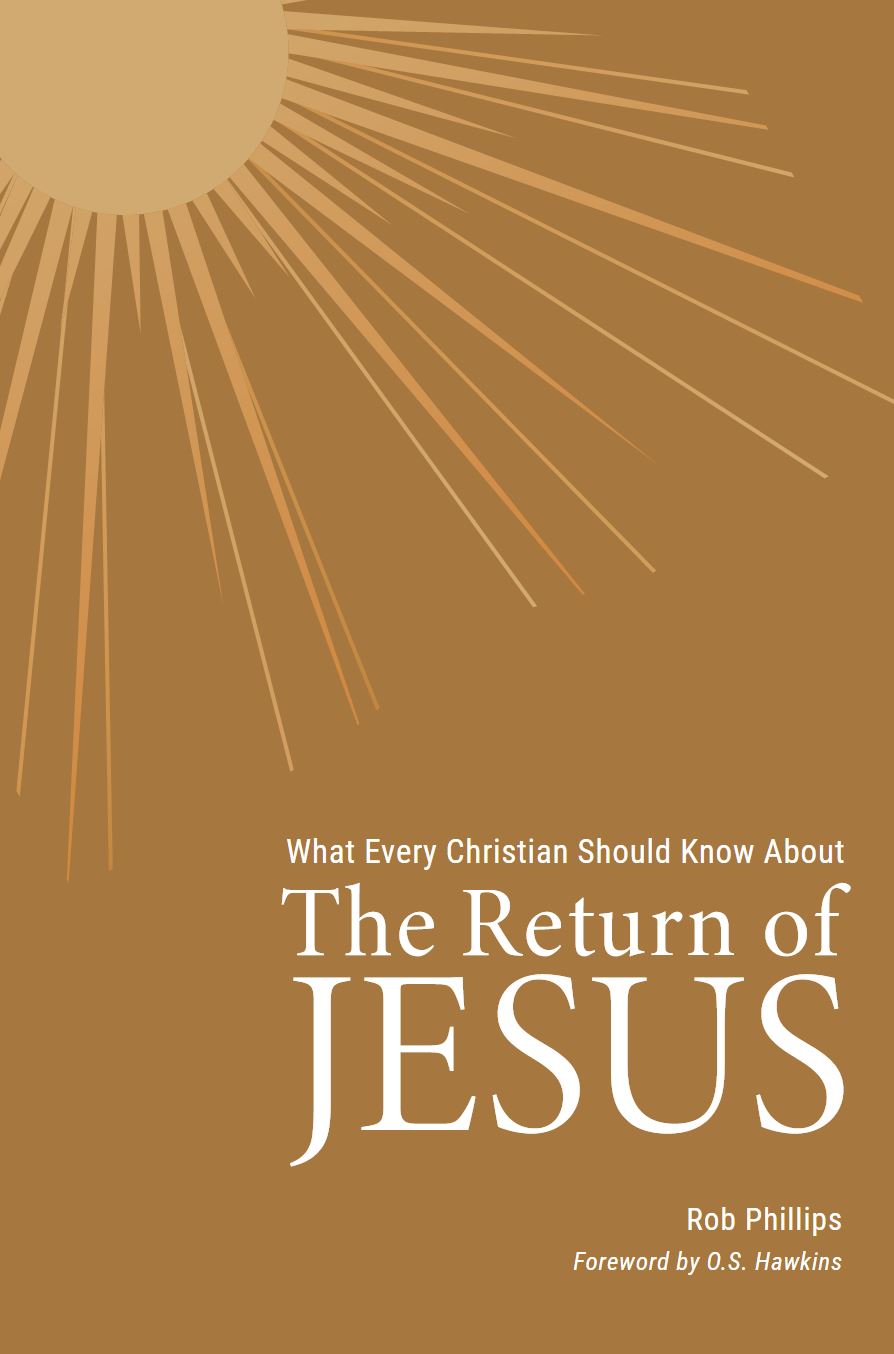
This is another in a series of excerpts from What Every Christian Should Know About the Return of Jesus, released by High Street Press and available at Amazon.
In the previous post, we looked at the contract that plays a vital role in a Jewish wedding. Now, we see how Jesus illustrates the erusin in his parable of the ten virgins.
In the parable of the ten virgins, Jesus compares the kingdom of heaven to this special time at the end of erusin, when the groom comes for his bride (Matt. 25:1-13). It’s a riveting story, which begins with ten virgins (or bridesmaids, likely twelve to sixteen years of age) taking their lamps and going out to meet the groom.
By most accounts, these lamps resemble torches, with oil-soaked cloth on the end of poles. Jars of olive oil are carried along as well, with bridesmaids dipping the fabric end of the poles in oil before lighting them. Five of the bridesmaids take extra oil along with their lamps, since the typical oil lamp would burn for only about fifteen minutes without additional fuel. So, the bridesmaids bring their lamps, but only half of them are adequately prepared.
There is no shortage of opinions as to what the oil represents in this parable: good works, love, joy, grace, conscience, or the Holy Spirit. But no one can buy these items, and no true believer may possess the Holy Spirit only to run out of him. It’s better to understand the oil in this parable simply as spiritual preparedness.
Next, we learn the groom is delayed. This may have been due to urgent matters such as finalizing a dowry, or it may have been intentional, heightening the element of surprise. In any case, all ten bridesmaids become drowsy and fall asleep. Suddenly, in the middle of the night, a cry in the streets awakens them all: “Here’s the groom! Come out to meet him” (Matt. 25:6).
At his father’s command, the son leads a procession from his house to the bride’s house. The sound of the shofar and the shouts of the wedding party fill the streets. At last, the groom stands outside the bride’s home and calls her out. She meets him, along with her bridesmaids, joins the wedding parade, and proceeds to the home where the marriage chamber awaits.
Hearing the distant cry, “Here’s the groom! Come out to meet him,” the virgins trim their lamps in order to join the procession, but the foolish virgins – unprepared, with no additional oil – find their lamps flickering. They implore the wise virgins, “Give us some of your oil, because our lamps are going out” (Matt. 25:8).
The wise virgins reply, “No, there won’t be enough for us and for you. Go instead to those who sell oil, and buy some for yourselves” (Matt. 25:9).
Where the foolish virgins may find oil to purchase in the middle of the night is a mystery. Yet, after some period of time, they are successful. They rush through the streets to join the procession, but the entire wedding party has entered the house, and the door has been shut.
“Master, master, open for us!” they cry. But the haunting reply comes from behind the locked door, “Truly, I tell you, I don’t know you!” (Matt. 25:11-12).
Jesus ends the parable with these words: “Therefore, be alert, because you don’t know either the day or the hour” (Matt. 25:13).
Three truths
While there are many details in this parable, we should not seek to allegorize it. That is, we should not impose meaning on every element. In most cases, parables are intended to convey one or more simple truths. In the case of this parable, three profound truths emerge.
First, Jesus is returning suddenly. While we don’t know the exact time of the second coming, we are to eagerly anticipate the joyous surprise of seeing the Son of Man coming on the clouds of heaven (Matt. 24:30).
Second, Jesus’ return is delayed, a truth Jesus shares in the parable of the talents (Matt. 25:14-30) and Peter addresses only a few decades after Jesus ascends into heaven:
Dear friends, don’t overlook this one fact: With the Lord one day is like a thousand years, and a thousand years like one day. The Lord does not delay his promise, as some understand delay, but is patient with you, not wanting any to perish but all to come to repentance (2 Pet. 3:8-9).
It’s now been nearly two thousand years since Jesus ascended into heaven from the Mount of Olives. Many people scoff, as unbelievers did in Peter’s day (2 Pet. 3:3-4), arguing that our eagerness for the Lord’s return is nothing more than false hope. But as it was in the days of Noah, when the wicked rejected Noah’s preaching, so it is today (2 Pet. 3:5-7).
The Lord’s delay in coming is two-fold. First, God doesn’t reckon time the way we do. He is eternal; we’re not. One day with him is like a thousand years, and a thousand years like one day. Second, the Lord’s delay is an extension of his mercy, an opportunity for the wicked to repent and the redeemed to share the gospel.
Albert Mohler remarks, “Thus, the delay is for God’s sovereign purpose, that the church be active in the world as the visible presence of the kingdom of Christ until such time that Christ returns in both judgment and glory.”
The third truth of this parable is that we are to be ready at all times, for indeed, like the bridegroom in an ancient Jewish wedding, “the day of the Lord will come like a thief” (2 Pet. 3:10). We are not to lose hope. Our bridegroom is busy preparing a place for us in his Father’s house. And though he’s delayed, he’s not deterred. He will come again.
James Montgomery Boice describes the foolish virgins this way: “They are good church people. They would never think of speaking a word against Jesus. But they are not born again. They do not have that inward change which alone entitles them to enter heaven.”
Jesus often speaks prophetically to his followers, not just about the suddenness of his return, but of the condition of the church at the time of his parousia. In this regard, the parable of the ten virgins borrows a theme from the parables of the wheat and weeds (Matt. 13:24-29, 36-43), and from the parable of the dragnet (Matt. 13:47-50).
True believers and pretenders occupy the same congregations. In many respects, they look and act the same – the way wheat and darnel, a false and poisonous weed, do, or the way edible and nonedible fish do – but on the day of judgment, they are separated. These parables also come before the final parable in the Olivet Discourse, the parable of the sheep and goats. The sheep and goats graze together and even resemble one another, yet they’re separated at the time of shearing (Matt. 25:31-46).
As Jesus makes clear in all his teachings, “Not everyone who says to me, ‘Lord, Lord,’ will enter the kingdom of heaven, but only the one who does the will of my Father in heaven” (Matt. 7:21).
Like the bride and her maidens, waiting for the groom to appear, we are to keep our lamps trimmed. That is, we are to be ready for the return of Christ. This is rooted in the confidence that we belong to Jesus. All who have trusted in him for salvation have that assurance – not based on emotions or human effort, but on the finished work of Christ.
Paul tells us the Lord’s salvation spans from eternity past to eternity future. We are foreknown, predestined, called, justified, and (in the future) glorified (Rom. 8:29-30). God finishes the good work he has begun in us (Phil. 1:6). Jesus himself tells us he knows his sheep, calls us by name, and keeps us secure (John 10:27-29). And John tells us he has written to us about the finished work of Christ so that we may “know” we have eternal life (1 John 5:13).
We have no reason to fear that Christ might revoke his work of redemption, or that we may falter and thus cause our eternal life to come unraveled. Jesus has desired us, pursued us, betrothed us to him, and promised both to prepare a place for us and come for us. Jesus ascended into heaven two millennia ago. Today, he’s still seated at the Father’s right hand as our mediator and intercessor. And he’s busy preparing a place for us in heaven.
But what, exactly, is this place?
The bridal chamber
Jesus returns to his Father’s house in heaven following his finished work on the cross. He has paid the dowry for his bride. He has established the marriage contract – the New Covenant – in his blood. He has immersed himself in the mikvah of the Jordan River and in the baptism of his passion (Luke 12:50). And he has shared the cup of anticipation with us (Luke 22:17-18).
So, just as a groom returns to his father’s house to prepare a bridal chamber for his beloved, Jesus prepares a place for us in heaven. This is not a mansion, as some English translations render the Greek word mone, unintentionally leading some to believe heaven is all about us and a future lavish lifestyle. Rather, mone means a dwelling place, abode, or room. In the context of John 14:2 – “In my Father’s house are many rooms” – mone means an extension of the Father’s house.
In Bible times, people didn’t build houses with the idea that they would spend most of their time in them. Jewish families often preferred to be outside, and they considered their home more of a shelter, or resting place. The typical home of common people in the days of Jesus was a one-room dwelling, perhaps with an animal stall in the front and a guest room on the roof. Jews have always considered themselves sojourners on earth, so the idea was not to build elaborate mansions but workable living quarters.
A father’s house in the ancient culture of Jesus’ day was where the extended family lived. Rooms were added as the family grew through birth and marriage. So, what Jesus is telling us is that he’s adding rooms onto his Father’s house designed specifically for us. Exactly what this bridal chamber looks like, or what its dimensions are, is not revealed to us. But it’s the most perfect dwelling place we’ll ever experience.
Candice Lucey explains it this way: “Nothing can match the glory of this heavenly realm, and this is the home where Jesus went to prepare a room for us. No one who lives here will ever want to leave. To abide in Heaven is to fulfill one’s purpose: living life in eternal devotion to and worship of Christ.”
But, as in ancient times, we won’t stay in the bridal chamber forever. The bridegroom also is a king. And when he returns to earth with his bride and the holy angels, he sits on the throne of King David on a restored earth (see Chapter 13). And we rule with him (1 Cor. 6:1-3; 2 Tim. 2:12; Rev. 5:10; 20:4-6).
Jesus makes a comforting promise to his bride: Where I am you may be also (John 14:3). Today, Jesus is present in us by virtue of the indwelling Holy Spirit, whom Jesus and the Father sent. He has taken up residence in our human spirits. He is the down payment on our heavenly home (2 Cor. 1:22; Eph. 1:13-14). In the future, Jesus takes us to the bridal chamber he’s preparing in heaven. After that, he returns to earth with us.
Our location – earth today, heaven tomorrow, and a renewed earth in the future – is not nearly as important as the one who shares it with us. Christ, living in us, proves to be a magnificent reality we can barely comprehend. Our bridal chamber in heaven is beyond our wildest dreams. And our future home in an earthly paradise purged of sin can only be compared to what little we read of Eden in the Book of Genesis before the Fall. But in every instance, the focal point is the eternal Son of God, our bridegroom, prophet, priest, and king.
If you’re blessed with a husband or wife, think back to the first days of your married life. Likely, you didn’t live in a mansion. Perhaps you stayed in your parents’ home, or a guest house, for a while. Perhaps your home was a small apartment, married student housing on a university or seminary campus, or a barely functional starter home in a sketchy neighborhood. But you and your spouse were together, and that was enough.
Our place in heaven is beautiful beyond imagination, yet it’s not our focus. Our focus is – and forever will be – on the bridegroom, who reminds us that we will live with him and be with him wherever he is. Forever. Heaven is not our final home; it’s the intermediate state between physical death and future glorification, which is pictured in the third and final act of ancient Jewish wedding ceremonies.
Next: Our Marriage to Christ
 OnceDelivered.net