
Tagged: commentary on Revelation

Arrayed with God’s glory – Revelation 21:10-11
 Previously: I will show you the bride – Revelation 21:9
The scripture
Rev. 21:10 – He then carried me away in the Spirit to a great and high mountain and showed me the holy city, Jerusalem, coming down out of heaven from God, 11 arrayed with God’s glory. Her radiance was like a very precious stone, like a jasper stone, bright as crystal. (HCSB)
Arrayed with God’s glory
John sees the bride, the wife of the Lamb, coming down out of heaven from God, “arrayed with God’s glory. Her radiance was like a very precious stone, like a jasper stone, bright as crystal” (v. 11).
The most significant quality of the New Jerusalem is stated at the outset. It is the radiance of God, the sign of His visible presence. As in the burning bush, the pillar of fire by night, the Shekinah glory in the Holy of Holies, and the brilliance of Jesus’ presence on the mount of transfiguration, God is light and in Him there is no darkness at all.
The prophet Isaiah foretells the work of the divine warrior who penetrates the earth’s spiritual darkness (Isa. 59:17-21). As a result, Isaiah exults, “Arise, shine, for your light has come, and the glory of the Lord shines over you” (Isa. 60:1).
Continue reading

The victor will inherit – Revelation 21:7-8
 Previously: Making everything new – Revelation 21:5-6
The scripture
Rev. 21:7 – The victor will inherit these things, and I will be his God, and he will be My son. 8 But the cowards, unbelievers, vile, murderers, sexually immoral, sorcerers, idolaters, and all liars – their share will be in the lake that burns with fire and sulfur, which is the second death.” (HCSB)
The victor will inherit these things
The words of God complete this section as He speaks in verses 7-8: “The victor will inherit these things, and I will be his God, and he will be My son. But the cowards, unbelievers, vile, murderers, sexually immoral, sorcerers, idolaters, and all liars – their share will be in the lake that burns with fire and sulfur, which is the second death.”
This expresses the intimate relationship that exists between the saints and God in the eternal state. We are joint-heirs with Jesus. We are God’s adopted sons and daughters. And the full expression of God’s work for us and in us will be realized when we are resurrected and glorified, and when we enjoy everlasting face-to-face intimacy with Him in the new heavens and earth.
The words “the victor” are translated “he who overcomes” or “the one who conquers” in other versions. This refers to the perseverance of the saints during a time of terrible persecution, and it links the promises of Jesus in the opening chapters of Revelation to their fulfillment in the return of the King.
Remember that in each of the seven letters to the churches of Asia Minor Jesus offers a word of encouragement to the overcomer:
To Ephesus: “I will give the victor the right to eat from the tree of life, which is in God’s paradise” (Rev. 2:7).
To Smyrna: “The victor will never be harmed by the second death” (Rev. 2:11)
To Pergamum: “I will give the victor some of the hidden manna. I will also give him a white stone, and on the stone a new name is inscribed that no one knows except the one who receives it” (Rev. 2:17).
To Thyatira: “The one who is victorious and keeps My words to the end: I will give him authority over the nations – and he will shepherd them with an iron scepter; he will shatter them like pottery – just as I have received this from My Father. I will also give him the morning star” (Rev. 2:24-26).
To Sardis: “In the same way, the victor will be dressed in white clothes, and I will never erase his name from the book of life but will acknowledge his name before My Father and before His angels” (Rev. 3:5).
To Philadelphia: “The victor: I will make him a pillar in the sanctuary of My God, and he will never go out again. I will write on him the name of My God and the name of the city of My God – the new Jerusalem, which comes down out of heaven from My God – and My new name” (Rev. 3:12).
And to Laodicea: “The victor: I will give him the right to sit with Me on My throne, just as I also won the victory and sat down with My Father on His throne” (Rev. 3:21).

Death and Hades gave up their dead – Revelation 20:13
 Previously: The book of life – Revelation 20:12b
The scripture
Rev. 20:13 – Then the sea gave up its dead, and Death and Hades gave up their dead; all were judged according to their works. (HCSB)
Death and Hades gave up their dead
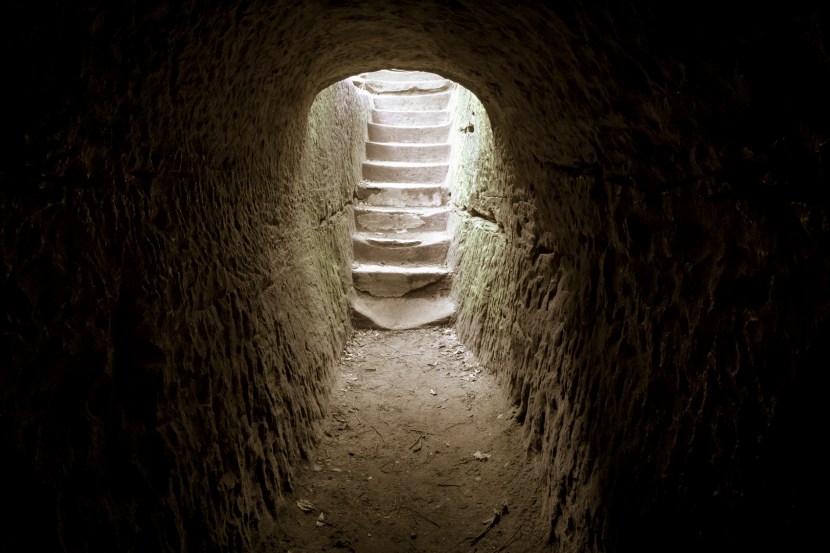
We should recall that the resurrected Jesus declares in Rev. 1:18, “I was dead, but look – I am alive forever and ever, and I hold the keys of death and Hades.” Even before the cross, Jesus tells Peter that the forces of Hades will not overpower His Church” (Matt. 16:18).
Death is a reality that all people experience as a consequence of sin (Gen. 2:17). Hades is the abode of the dead. Therefore, Death and Hades are tied inextricably to sin. But Jesus, who added to His deity sinless humanity (John 1:14), tasted death for everyone (Heb. 2:9). Through His finished work on the cross, He paid our sin debt and conquered the grave so that Death and Hades have no lasting grip on those who place their faith in Him.
The bottom line of John’s vision of Death and Hades giving up their dead is that ultimately every person will be physically resurrected and spend eternity either in the new heavens and earth or in the lake of fire. A time is coming when there is no longer physical death or an intermediate existence where people wait to put on resurrected bodies and stand in final judgment. Just as Jesus is Judge of all (John 5:22), He is Lord over sin, death, and the realm of the dead.
Continue reading

The book of life – Revelation 20:12b
 Previously: Books were opened – Revelation 20:12b
The scripture
Rev. 20:12b – Another book was opened, which is the book of life, and the dead were judged according to their works by what was written in the books. (HCSB)
The book of life
In Revelation, the “book of life” refers to a divine record of all believers – those who live eternally with God in the new heavens and the new earth. This book is mentioned several times:
- In Rev. 3:5, Jesus promises the faithful in Sardis that He will never erase their names from the book of life – a comfort to those familiar with the common practice of erasing the name of a condemned criminal from the citizenship registry.
- In Rev. 13:8, we are reminded that unbelievers’ names have never been written in the book of life.
- In Rev. 17:8, we are told that those who live on the earth whose names have not been written in the book of life from the foundation of the world will marvel when they see the beast whose fatal wound is healed.
- In Rev. 20:12, 15, we see resurrected unbelievers stand before the great white throne as books are opened in judgment, including the book of life; they are cast into the lake of fire because their names are not written in the book of life.
- And in Rev. 21:27, we see that only those whose names are written in the Lamb’s book of life enter the New Jerusalem.
Additionally, in Luke 10:20, Jesus’ followers are assured that their names are written in heaven. In Phil. 4:3, Paul writes about his coworkers whose names are in the book of life. And in Heb. 12:23, the author tells of the “assembly of the firstborn whose names have been written in heaven.”
Continue reading

Revelation 19: Download the free study
 We are nearly through with our verse-by-verse study of the Book of Revelation, focusing on four major views of the so-called Apocalypse of John.
You may read the commentary to date either by clicking on End Times or Revelation in the drop-down menu to the right.
Whether you’re a preterist, who sees the events of Revelation as fulfilled in the first centuries of the Christian era; a historicist, who views the events of Revelation as unfolding throughout the course of history; a futurist, who sees most of Revelation as yet unfulfilled; or an idealist, who sees Revelation setting forth timeless truths concerning the battle between good and evil, there are important truths the Lord reveals to all of us in this book.
We would do well to approach Revelation with caution — and with great anticipation, knowing God will fulfill all His promises to us. We also should be comforted by the fact that Revelation is the only book in Scripture specifically promising a blessing to those who hear its prophecies and keep them.
Download the commentary on Revelation 19:
 OnceDelivered.net