
Tagged: commentary on Jude

Why is Contending for the Faith Necessary?
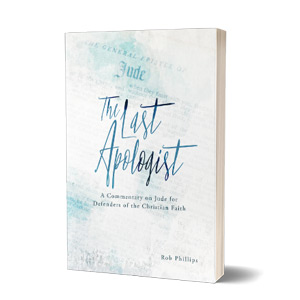 The Missouri Baptist Convention has published a new resource called The Last Apologist: A Commentary on Jude for Defenders of the Christian Faith. The 275-page book is available in print and Kindle editions on Amazon, and in print from the MBC. But we also want to make each of the 16 chapters available online. This post features the last portion of Chapter 5: I Found it Necessary: Going from Good to Better in Defense of the Faith.
Previously: Chapter 5: I Found It Necessary: Going from Good to Better in Defense of the Faith
_______________
Dear friends, although I was eager to write you about our common salvation, I found it necessary to write and exhort you to contend for the faith that was delivered to the saints once for all. (Jude 3)
Jude expresses great concern with these words: “I found it necessary to write and exhort you to contend for the faith that was delivered to the saints once for all” (v. 3b). He places on hold his plans to write about the common salvation grounded in the person and work of Christ in order to address an urgent matter. “Circumstances had arisen that demanded immediate action, thus presenting an emergency situation. Jude addressed himself to a recognized problem, and exhorted the believers to respond with positive determination.”
The Greek word translated “necessary” is anagke and means by constraint, compulsion, distress, or hardship. In other New Testament passages, the term is used to describe the influence of other persons, circumstances, or a sense of obligation or duty.
For example, in urging the Corinthians to share their financial resources, Paul writes, “Each person should do as he has decided in his heart – not out of regret or out of necessity, for God loves a cheerful giver” (2 Cor. 9:7 – emphasis added). In his appeal to Philemon to welcome back a runaway slave, Paul remarks, “But I didn’t want to do anything without your consent, so that your good deed might not be out of obligation, but of your own free will” (Philemon 14 – emphasis added).
The writer of Hebrews addresses his audience with an appeal to consider the superiority of the new covenant ministry in Christ. About the law’s requirements for the shedding of blood, he writes, “Therefore it was necessary for the copies of the things in the heavens to be purified with these sacrifices, but the heavenly things themselves to be purified with better sacrifices than these” (Heb. 9:23 – emphasis added).
And in regard to a Christian’s duties to the state, Paul remarks, “Therefore, you must submit, not only because of wrath, but also because of your conscience” (Rom. 13:5 – emphasis added).
For Jude, the necessity to write an urgent exhortation comes not from peer pressure or an obligation to fleshly authority. Rather, it appears the Holy Spirit has stirred Jude’s heart and caused him to grieve over the manner in which his beloved friends are allowing false teachings to seep into the church. They must not sit idly by while interlopers undermine the first-order doctrines established by the eyewitnesses of the life of Christ.
Warren Wiersbe comments, “I must confess that I sympathize with Jude. In my own ministry, I would much rather encourage the saints than declare war on the apostates. But when the enemy is in the field, the watchmen dare not go to sleep. The Christian life is a battleground, not a playground.”
Continue reading
I Reckon So: The Apologist’s Standing in Christ
The Missouri Baptist Convention has published a new resource called The Last Apologist: A Commentary on Jude for Defenders of the Christian Faith. The 275-page book is available in print and Kindle editions on Amazon, and in print from the MBC. But we also want to make each of the 16 chapters available online. This post features Chapter 3: I Reckon So: The Apologist’s Standing in Christ.
Previously: Chapter 2: Jude, Slave, Brother: The Identity of Apologists
_______________
To those who are the called, loved by God the Father and kept by Jesus Christ. May mercy, peace, and love be multiplied to you (Jude 1b-2)
In The Outlaw Josey Wales, Clint Eastwood plays a Missouri farmer driven to revenge by the murder of his wife and son at the hands of pro-Union Jayhawkers during the Civil War. Having joined a band of pro-Confederate Bushwhackers, Wales refuses an offer of amnesty at the end of the war, only to watch as surrendering fighters are slaughtered in cold blood. He races to the scene, overpowers a Union soldier manning a Gatling gun, and turns it on the Kansas Redlegs.
Now an outlaw, Wales flees to Texas. Though preferring to travel alone, he crosses paths with a diverse cadre of companions, from a spry old Cherokee named Lone Watie, to a young Navajo woman he rescues from rape, to a crotchety Kansas grandmother whose family he frees from raiding Comancheros.
Throughout the story, Wales exhibits an uncanny ability to see the world as it is – cruel, unforgiving, yet capable of redemption – and often he acknowledges the truthful observations of others with a simple, “I reckon so.”
Dogged by Redlegs and a Union officer known as Captain Fletcher, Wales helps his companions resettle a Texas homestead while negotiating peace with their Comanche neighbors. He then helps the settlers repel a Redlegs attack, finally avenging his family’s murder by killing their leader.
Wounded, and knowing that his continued presence at the homestead only invites further attacks, he heads out on his own, but not before a final encounter with Captain Fletcher, who mercifully avoids revealing his identity to Texas Rangers by calling him “Mr. Wilson.”
“I think I’ll go down to Mexico and try to find him [Josey Wales],” says Fletcher.
“And then?” asks Wales.
“He’s got the first move. I owe him that. I think I’ll try to tell him the war is over. What do you say, Mr. Wilson?”
“I reckon so.”
Wales gingerly mounts his horse and, listing badly, rides away. Fletcher turns away, leaving viewers convinced he and the outlaw have made their peace.
Like Josey Wales, some battle-hardened Christians have learned to see the world as it is without losing sight of who they really are. This comes to light in the opening verses of Jude’s epistle. These believers are urged not to surrender to the false teachers among them, to continue the fight for sound doctrine, and to persevere to the very end.
Continue reading
Jude, Slave, Brother: The Identity of Apologists
The Missouri Baptist Convention has published a new resource called The Last Apologist: A Commentary on Jude for Defenders of the Christian Faith. The 275-page book is available in print and Kindle editions on Amazon, and in print from the MBC. But we also want to make each of the 16 chapters available online. This post features Chapter 2: Jude, Slave, Brother: The Identity of Apologists.
Previously: Chapter 1: Jude, A Slave: The Attitude of Apologetics
_______________
Jude, a slave of Jesus Christ, and a brother of James … (Jude 1)
In June 1989 a young man made headlines – and history – when he singlehandedly slowed the advance of tanks heading for China’s Tiananmen Square. The Chinese government had begun cracking down on anti-communist demonstrations in Beijing. Feeling the crush of military muscle, most of the peacefully demonstrating Chinese dispersed, except for one man whose identity has never been positively confirmed.
Holding shopping bags, the man, dressed in dark pants and a white shirt, strode into the center of the broad street and, turning toward the approaching column of tanks, stood his ground. When the driver of the lead tank tried to maneuver around him, the bystander moved to his left and cut off the tank’s advance. He then climbed onto the tank and tried to talk with the soldiers inside before two unidentified men whisked him away.
“Tiananmen Square Guy,” as he came to be known, stands as a symbol of peaceful opposition to the oppression of totalitarian regimes. Conflicting claims about his name and whereabouts indicate that his true identity may never be discovered.
The names of other famous people in history may never be known, either, or at least positively confirmed – from the kissing sailor and nurse on VJ Day to the Zodiac Killer, and from “the babushka lady” in the Zapruder film of John F. Kennedy’s assassination to Jack the Ripper.
Sometimes famous people remain anonymous by design, and this is no less true of authors of New Testament books. For example, none of the Gospels is self-identified, although we’re quite confident of the writers’ identity. In contrast, the unnamed author of the book of Hebrews remains a mystery. Peter’s authorship of 2 Peter is disputed.
But we face a different challenge with the book of Jude – namely, that Jude (Greek Ioudas, or Judas, Judah) is a common first-century name, and there happen to be eight such characters in the New Testament:
- Judas Iscariot, one of the twelve apostles and the betrayer of Jesus (Matt. 10:4)
- Judas the son of James, one of the twelve apostles (Luke 6:16; Acts 1:13)
- Judas, Paul’s host in Damascus (Acts 9:11)
- Judas, called Barsabbas, a leading Christian in Jerusalem and a companion of Paul (Acts 15:22, 27, 32)
- Judas, a revolutionary leader (Acts 5:37)
- Judah, an otherwise unknown person in the genealogy of Jesus (Luke 3:30)
- Judah, a son of Jacob in the genealogy of Jesus and an ancestor of an Israelite tribe (Matt. 1:2; Rev. 7:5)
- Judas, a half-brother of Jesus and a brother of James (Matt. 13:55)
Continue reading
Jude, A Slave: The Attitude of Apologetics
The Missouri Baptist Convention has published a new resource called The Last Apologist: A Commentary on Jude for Defenders of the Christian Faith. The 275-page book is available in print and Kindle editions on Amazon, and in print from the MBC. But we also want to make each of the 16 chapters available online. This post features Chapter 1: Jude, A Slave: The Attitude of Apologetics.
Previously: Introducing The Last Apologist
Jude, a slave of Jesus Christ … (Jude 1a)
My business card is standard fare. It identifies me and describes my role at my place of employment. It also offers several ways to get in touch with me. That’s what most business cards do; they serve as practical, brief, and efficient introductions.
Some people, however, use business cards more creatively, with pop-up photos, odd shapes, and other features to grab your attention. And then there are truly unique characters who seek to leave a lasting impression another way: by making audacious claims.
Take Guangbiao Chen, for example. Chen is a Chinese tycoon and philanthropist. His business card details illustrious titles and heroic accomplishments. For example, his English business card describes him in the following ways:
- Most Influential Person of China
- Most Prominent Philanthropist of China
- China Moral Leader
- China Earthquake Rescue Hero
- Most Well-Loved and Beloved Chinese Role Model
We’re only halfway through Chen’s list, but you get the idea. This may be one of the cheekiest business cards ever produced.
But how would you respond if someone handed you a business card that simply read, “Jude, a slave …”? Let’s see how Jude’s profoundly humble self-introduction models the manner in which followers of Jesus should defend the faith.
Continue reading
Introducing “The Last Apologist”
 The Missouri Baptist Convention recently published a new resource called The Last Apologist: A Commentary on Jude for Defenders of the Christian Faith. The 275-page book is available in print and Kindle editions on Amazon, and in print from the MBC. But we also want to make each of the 16 chapters available online. So, this post introduces the study, and then in the weeks to come we are posting The Last Apologist one chapter at a time, or, in some cases, one portion of a chapter at a time. We pray that it is a help and encouragement to you.
 OnceDelivered.net