
Tagged: Book of Revelation
The second bowl – Revelation 16:3
Previously: The first bowl – Revelation 16:1-2
The scripture
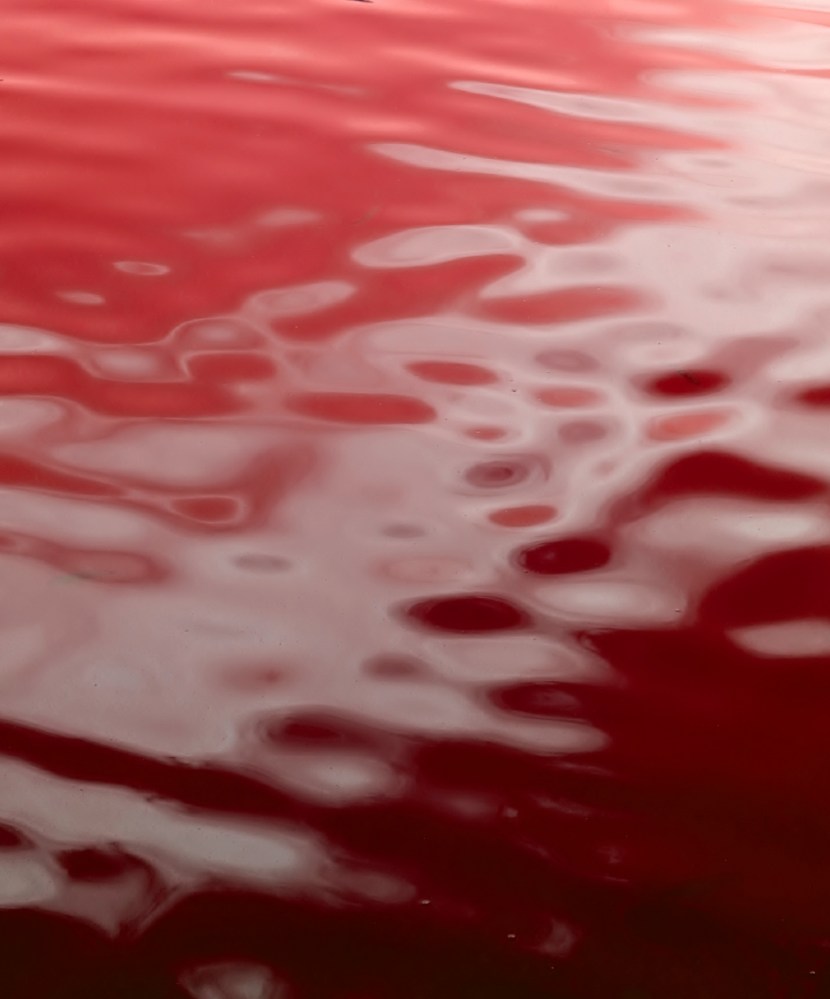
Rev. 16:3 –The second [angel] poured out his bowl into the sea. It turned to blood like a dead man’s, and all life in the sea died. (HCSB)
The sea turned to blood
 John records that the target of the second angel’s bowl of divine wrath is the sea, which turns to blood like a dead man’s. There are two key questions to be addressed here. First, what is meant by the “sea?” And second, what is the significance of the sea turning to blood “like a dead man’s?”
As we have noted in previous chapters, Bible scholars interpret the meaning of the sea differently in Revelation:
- Some understand it literally to mean the salty bodies of water that cover much of the earth’s surface. The seas turn red by the hand of God, or as a result of divinely orchestrated human battles; some argue that a bacterial “red tide” may be the cause of perishing sea life. The widespread death of people and/or animals in the sea would create a putrid environment that clogs the waterways with coagulating blood like a dead man’s.
- Others argue for a narrower but equally literal view, saying John is referring to the Mediterranean Sea, or to the waters between Patmos, where John is exiled, and Rome; this would include not only the Mediterranean Sea, but the Aegean, Adriatic and Tyrrhenian Seas. This presupposes that the bowl judgments are poured out on the known world of John’s day rather than on all the earth’s seas.
- Many preterists contend that the Sea of Galilee is in John’s view since that is where the Roman armies inflict a particularly horrifying slaughter of the Jews during their first-century rebellion against the empire. In fact, the result of the battle is that the sea becomes a floating tide of corpses, severed limbs and bloody pools.
- Some historicists say the sea depicts the ocean centuries later as the navies of France, Spain and Portugal suffer bloody defeats while defending a corrupt papacy. Matthew Henry suggests the bloody seas may describe “the whole system of [Papal Rome’s] religion, their false doctrines, their corrupt glosses, their superstitious rites, their idolatrous worship, their pardons, indulgences, a great conflux of wicked inventions and institutions, by which they maintain a trade and traffic advantageous to themselves, but injurious to all who deal with them…. God discovered not only the vanity and falsehood of their religion, but the pernicious and deadly nature of it – that the souls of men were poisoned by that which was pretended to be the sure means of their salvation” (Matthew Henry’s Commentary on the Whole Bible: Complete and Unabridged in One Volume, 16:1-7).
- Still others take a symbolic approach, contending that the sea stands for the Gentile nations, or the restless mass of humanity in general.
Whether this vision is to be understood literally or figuratively, the sea turning to blood “like a dead man’s” conveys the idea of massive and complete death. The waters swell with putrefied corpses. Life’s blood has been spilled beyond the hope of healing. Death, destruction, and decay assault the eyes and inflame the nostrils. This is graphic, violent, sense-numbing death. Even if we take John’s description symbolically, the corruption of people, nations, and institutions is complete. The false doctrines are a stench in God’s nostrils. The corrupt practices of people, governments, and religious institutions are beyond repair; like corpses, they must be discarded. John seems here to be telling us that God’s punishment fits the crime. The wicked are so depraved nothing short of death will vindicate His holiness.
Continue reading

The sanctuary was filled with smoke – Revelation 15:8
Previously: Seven gold bowls – Revelation 15:7
The scripture
Rev. 15:8 – Then the sanctuary was filled with smoke from God’s glory and from His power, and no one could enter the sanctuary until the seven plagues of the seven angels were completed. (HCSB)
The sanctuary was filled with smoke
 Finally in this chapter John writes, “Then the sanctuary was filled with smoke from God’s glory and from His power, and no one could enter the sanctuary until the seven plagues of the seven angels were completed” (Rev. 15:8). Smoke and clouds are manifestations of God’s presence. At Sinai, the Lord comes to Moses in a “dense cloud” so the people will hear God speak with Moses and believe him (Ex. 19:9). After the tabernacle is assembled in the wilderness, Moses cannot enter the tent of meeting as long as the cloud rests on it and the glory of the Lord fills the tabernacle (Ex. 40:34-35). God instructs Moses in the way that Aaron must enter the holy of holies on the Day of Atonement so that he, unlike his two sons, will live. God’s reason: “I appear in the cloud above the mercy seat” (Lev. 16:2).
While this awesome divine presence no doubt strikes terror in the hearts of some Israelites, there is a strong element of comfort to be found. As promised, God reveals Himself to His redeemed people at a place of meeting. Much later, when Solomon finishes a prayer of dedication for the newly built temple, fire descends from heaven and the glory of the Lord fills it. The priests are not able to continue ministering for this same cloud Moses once encountered now inhabits the place where holy God has condescended to meet sinful people (1 Kings 8:10-11; 2 Chron. 7:1-2). Later, in Isaiah’s vision of the Lord, he sees the temple filled with smoke (Isa. 6:4).
Continue reading
Seven gold bowls – Revelation 15:7
Previously: The heavenly sanctuary was opened – Revelation 15:5-6
The scripture
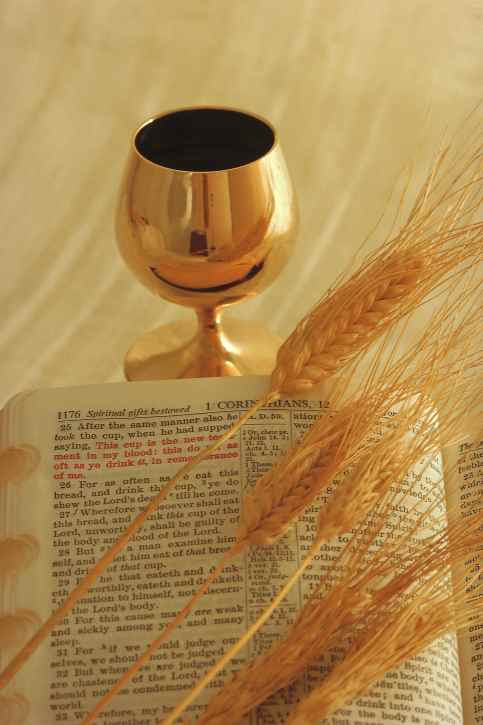
Rev. 15:7 – One of the four living creatures gave the seven angels seven gold bowls filled with the wrath of God who lives forever and ever. (HCSB)
Seven gold bowls
 In verse 7 John writes, “One of the four living creatures gave the seven angels seven gold bowls filled with the wrath of God who lives forever and ever.” The King James Version uses the term “vials” instead of “bowls,” as though they are bottles. The Greek word is phiale, which denotes a shallow pan or broad-rimmed chalice. Some commentators call them censers, the receptacles into which coals from the altar are placed and mingled with incense to burn unto God. “The breadth of the vials in their upper part would tend to cause their contents to pour out all at once, implying the overwhelming suddenness of the woes” (A Commentary, Critical and Explanatory, on the Old and New Testaments, Rev. 15:7).
Note that one of the four living creatures gives these bowls to the angels. In Revelation 6 the four living creatures announce the first four seal judgments. The first living creature thunders, “Come!” and the white horse and its rider emerge. The second creature says “Come!” and the rider on the red horse bursts onto the scene. The third creature shouts “Come!” and the horseman on a black horse appears. Finally, the fourth creature says “Come!” and Death comes riding a pale green horse with Hades in hot pursuit. While the living creatures reside closely to the throne of God and lead angels and people in worship, they also are the standard bearers of God’s holiness as revealed in His wrath.
Continue reading
The heavenly sanctuary was opened – Revelation 15:5-6
Previously: They sang the song – Revelation 15:3-4
The scripture
Rev. 15:5 – After this I looked, and the heavenly sanctuary – the tabernacle of testimony – was opened. 6 Out of the sanctuary came the seven angels with the seven plagues, dressed in clean, bright linen, with gold sashes wrapped around their chests.
The heavenly sanctuary was opened
 In verse 5 John writes, “After this I looked, and the heavenly sanctuary – the tabernacle of testimony – was opened.” We last read about the heavenly sanctuary in Rev. 11:19 in connection with the sounding of the last trumpet. The previous uses of the word “tabernacle” – in Greek, skeyney – are revealing. In Rev. 7:15, the One seated on the throne will “shelter” the ones coming out of the great tribulation; that is, He will tabernacle (skeyney) with them – pitch His tent with them and spread His tent over them, providing His presence as comfort and security. In Rev. 13:6, the beast from the sea begins to blaspheme God’s name and His “dwelling – those who dwell in heaven.” Again, the word is skeyney, and here it refers to believers around the throne in heaven.
What a marvelous picture of God’s grace. He pitches His tent with us, and in redemption we are His temple. John writes of Jesus, “The Word became flesh and took up residence among us” (John 1:14). Literally, Jesus “tabernacled” with us, a reference not only to His incarnation but also to His presence in the ancient tabernacle and at the joyous Feast of Tabernacles (see Ex. 40:34-38; John 7:2). But equally amazing, He makes believers His dwelling place, abiding in us by way of the Holy Spirit (see John 14:16-18). The apostle Paul exhorts us to be ever mindful of our role as God’s sanctuary: “Don’t you yourselves know that you are God’s sanctuary and that the Spirit of God lives in you? If anyone destroys God’s sanctuary, God will destroy him; for God’s sanctuary is holy, and that is what you are” (1 Cor. 3:16-17).
They sang the song – Revelation 15:3-4
Previously: A sea of glass mixed with fire – Revelation 15:2
The scripture
Rev. 15:3 – They sang the song of God’s servant Moses and the song of the Lamb: Great and awe-inspiring are Your works, Lord God the Almighty; righteous and true are Your ways, King of the Nations. 4 Lord, who will not fear and glorify Your name? Because You alone are holy, for all the nations will come and worship before You because Your righteous acts have been revealed. (HCSB)
They sang the song
 Those who have won the victory over the beast, his image, and the number of his name now sing the song of God’s servant Moses and the song of the Lamb (vv. 3-4). It appears these are two songs with a common theme. They show the unity of the Old Covenant and the New Covenant in redemption. The song of Moses alludes to Ex. 15:1-19, where Moses thanks God for deliverance from the Egyptians at the Red Sea. However, it’s possible that John has Deuteronomy 32 in mind because the first phrase – “Great and awe-inspiring are Your works, Lord God, the Almighty; righteous and true are Your ways, King of the Nations” – may be drawn from Deut. 32:3-4.
The song of the Lamb may be what John hears in Rev. 5:9:
You are worthy to take the scroll
and to open its seals;
because You were slaughtered,
and You redeemed [people] for God by Your blood
from every tribe and language and people and nation.
You made them a kingdom and priests to our God,
and they will reign on the earth.
 OnceDelivered.net