

Seven promises in Revelation 22 (Part 1)
 There are at least seven promises given to us in Revelation 22 that confirm Jesus’ victory over Satan, sin and death. These promises also assure us that all the effects of the Fall are reversed in Christ’s finished work and the salvation He has provided for us by grace through faith.
In this regard, we should view Revelation not merely as a book of frightening – and often confusing – imagery, but as a book of warm and assuring promises about God’s sovereignty over human affairs and angelic conflict. In the end, we who read, hear and heed the words of this prophecy are indeed blessed because we know the God who created all things is faithful.
Promise No. 1: Living water (v. 1; see also Rev. 21:6; 22:17)
There was a river in the Garden of Eden (Gen. 2:10) that served as the source of four other rivers. But when Adam and Eve were banished from the Garden they lost access to this pure source of water and drank from streams now affected by the Fall. A person may live for up to 40 days without food but only three days without water. The body itself is made up largely of water, so water is essential to life. Jesus often spoke about water as an image of eternal life supplied by the Holy Spirit (see John 4:10-14; 7:37-39).
In the New Jerusalem, we see a river of pure, living water flow from the throne of God and of the Lamb, and all whose names are written in the Lamb’s book of life may drink freely from it. Ezekiel also had a vision of pure water in the glorious future temple (Ezek. 47:1-12; see also Zech. 14:8). This living water depicts the Holy Spirit who inhabits the human spirits of believers but is cut off from unbelievers (Rom. 8:9).
Continue reading

 This is the 12th in a series of articles on the Trinity, excerpted from “What Every Christian Should Know About the Trinity,” available by contacting the MBC or through
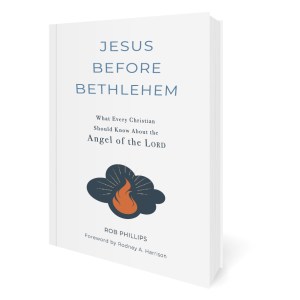 Our newest resource from High Street Press is Jesus Before Bethlehem: What Every Christian Should Know about the Angel of the LORD. It’s being featured today (July 7) in a webcast from Midwest Christian Outreach, hosted by president Don Veinot.
 The ultimate destiny of the wicked is the same habitation created for Satan and his demons – a place in English we call “hell,” and a place Jesus and the New Testament writers describe variously as Gehenna, “outer darkness,” “eternal fire,” “eternal punishment,” “lake of fire,” and “the second death.”
 This is the 11th in a series of articles on the Trinity, excerpted from “What Every Christian Should Know About the Trinity,” available through
  OnceDelivered.net