God the Father and Scripture

This is another in a series of excerpts from “What Every Christian Should Know About the Trinity,” published by the MBC’s High Street Press (visit highstreet.press).


In the previous column, we introduced the biblical teaching that while the Holy Spirit is the divine agent of God’s written revelation, He moved in concert with the Father and the Son to give us the Bible. 

Now, let’s survey a sampling of Bible passages that show how the Father, Son, and Holy Spirit work together to give us the Scriptures. In this column, we focus on the Father. In future columns, we turn our attention to Jesus and the Spirit.

Consider just a few of the dozens of people to whom the Father speaks directly. In these verses, the Father either is implied as the speaking member of the Trinity, or the context identifies Him as such:

Cain: “Then the Lord said to Cain …” (Gen. 4:6-16)

Noah: “God said to Noah …”  (Gen. 6:13-21)

Job and his friends: “Then the Lord answered Job …” (Job 38:1 – 42:8)

Abimelech: “But God came to Abimelech in a dream by night and said …” (Gen. 20:3-7)

Continue reading
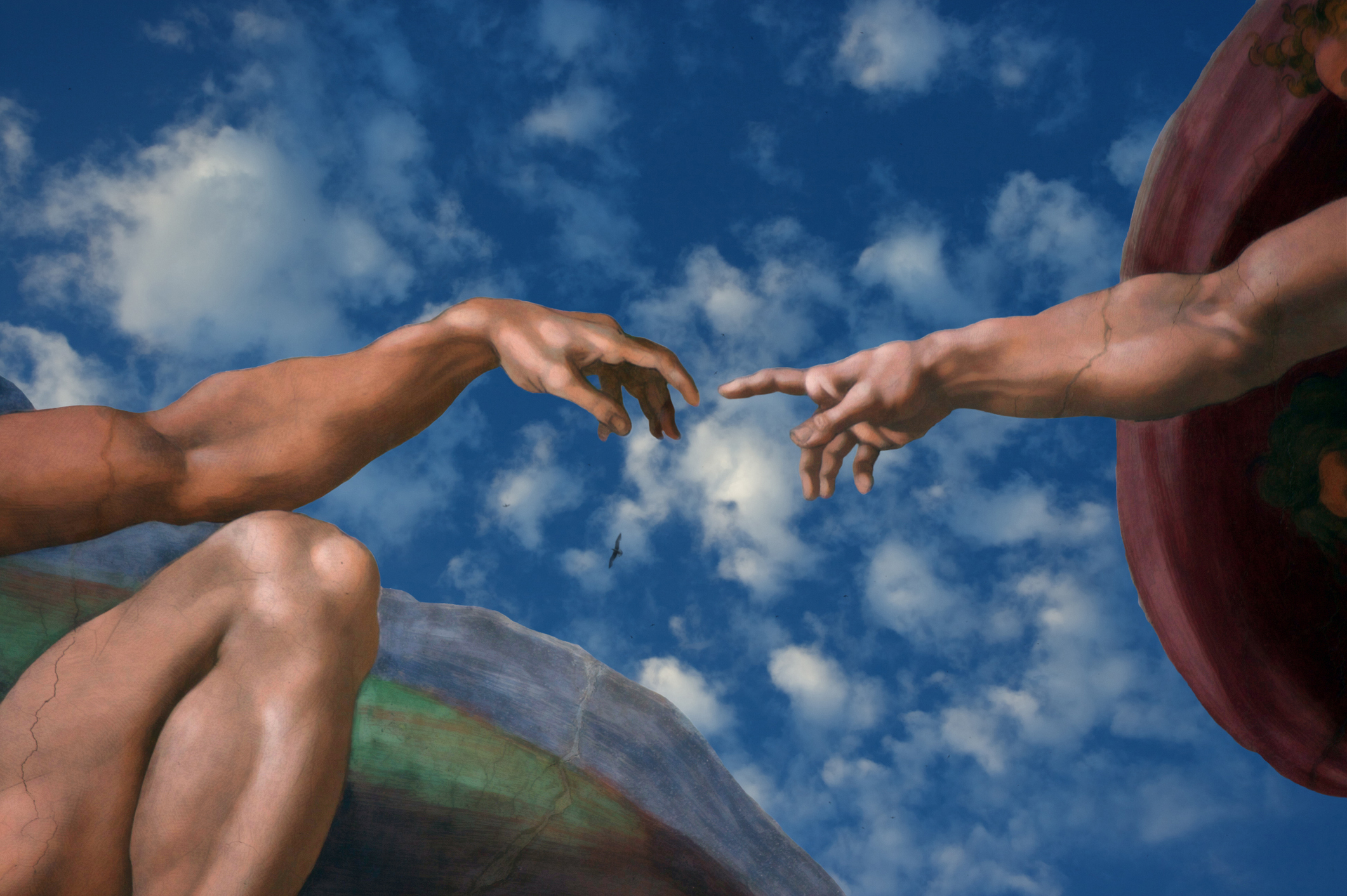
A special angel

Following is another in a series of excerpts from What Every Christian Should Know About the Angel of the LORD, released by High Street Press.


Of all the angels we encounter in Scripture, one stands apart from the rest. In his many Old Testament appearances, he alone speaks for God as God. He alone bears the divine name. He alone is all-knowing and all-powerful. He alone breaks into the natural realm in a variety of disguises: a flame in a thorn bush, a sword-wielding warrior, a voice from a pillar of cloud and fire; a king riding a heavenly chariot-throne. 

He is divine, yet he talks face-to-face with selected people, from a female Gentile runaway slave to a young prophet in his bed. He delivers. He destroys. He brings messages. He forgives sins. He is malak YHWH, the angel of the LORD.

This messenger is above all others. He is eternal and uncreated. He appears or is mentioned dozens of times in the Old Testament, but never in the same sense in the New Testament – except for references to the Book of Exodus in Acts 7 and Jude 5. Among other names, he is called “the angel of the LORD,” “commander of the LORD’s army,” “the God of Abraham,” “Judge,” and “I AM WHO I AM” – a name only the one true God ever claims for himself.

Who is this awe-inspiring messenger? Ancient Jews believed him to be a special angel, the highest revelation of the unseen God. Similarly, Roman Catholics generally regard the angel of the LORD as an angelic representative of God, as do some Protestants. Many evangelicals, however, consider him either a manifestation of Yahweh – a theophany, derived from the Greek words theos (God) and pheino (to appear) – or a Christophany, an appearance of the Son of God prior to the Incarnation.

Continue reading

The Trinity and Scripture

This is another in a series of excerpts from “What Every Christian Should Know About the Trinity,” published by the MBC’s High Street Press (visit highstreet.press).


We know the Bible as the Word of God. That means God is the source of Scripture, revealing truths we are incapable of knowing without divine help. 

The Bible is special revelation in that it is a record of God’s work before time, in time, and beyond time, with a particular emphasis on creation, sin, redemption, and restoration. As such, Scripture complements God’s general revelation, which all people witness in creation and conscience (Rom. 1:18-32; 2:14-16).

In the Bible, God is revealed as one being in three persons – Father, Son, and Holy Spirit. While these divine persons carry out distinct roles in creation and salvation, they are unified in purpose. 

The holy, loving, self-giving persons of the Godhead set the standard for how human beings created in God’s image should relate to God and to one another. At the same time, without Scripture, we would not be able to comprehend God as a Trinity.

Our ability to observe the natural world points us to a divine Designer. Yet, nature itself cannot adequately explain how Yahweh is one being in three persons. And mankind’s universal conscience compels us to conclude that there is a divine moral Law Giver. Even so, conscience can’t tell us the reason behind or the remedy for our violations of standards that have been written on our hearts. 

It takes special revelation from this divine Designer and divine moral Law Giver. That’s where the Bible steps into the picture.

Continue reading

Cherubim and seraphim

3D illustration of the Ark of the Covenant inside the Holy Temple illuminated by a shaft of light from heaven.

Following is another in a series of excerpts from What Every Christian Should Know About the Angel of the LORD, released by High Street Press.


In Scripture, we encounter two peculiar types of heavenly creatures who look nothing like angels. That’s because cherubim and seraphim are never called angels in the Bible. They do not deliver messages or appear in human likeness. Yet cherubim and seraphim share certain features and carry out the same function: to guard the presence of God. This sometimes brings them into contact with people, but they are never sent to people. 

In a sense, cherubim and seraphim are hybrid figures. That is, they possess human attributes as well as animal features. We find such beings in the Ancient Near East, especially as creatures who represent power or prevent evil. So, cherubim and seraphim are welcome protectors of those they’ve come to guard. At the same time, they are terrifying creatures to trespassers.

Note some distinguishing characteristics of these heavenly creatures:

First, cherubim and seraphim are said to have wings, though the number of wings varies (Exod. 25:20; 37:9; Isa. 6:2).

Continue reading

The Trinity in salvation

This is another in a series of excerpts from “What Every Christian Should Know About the Trinity,” published by the MBC’s High Street Press (visit highstreet.press).


In his book Reordering the Trinity, Rodrick Durst notes that there are 75 Trinitarian references in the New Testament. Many of these passages reveal the collaborative work of the Father, Son, and Holy Spirit in securing our salvation. Space does not permit a full exploration of every reference, but we list several for the purpose of demonstrating how the Trinity is woven into the fabric of the greatest story ever told.

Romans 8:14-17 – “For all those led by God’s Spirit are God’s sons. You did not receive a spirit of slavery to fall back into fear. Instead, you received the Spirit of adoption, by whom we cry out, ‘Abba, Father!’ The Spirit himself testifies together with our spirit that we are God’s children, and if children, also heirs – heirs of God and coheirs with Christ – if indeed we suffer with him so that we may also be glorified with him.”

Followers of Jesus have received the indwelling Holy Spirit, who also serves as the agent in our adoption as sons and daughters of the Father. As adopted children, we are coheirs with Jesus in His inheritance of all things. This includes glorification, which is received when we are resurrected from the dead and clothed in Christ’s immortality. Paul shares a similar message of the Trinity’s work of adoption in Galatians 4:4-7. 

Continue reading