When and How Did Satan Fall?

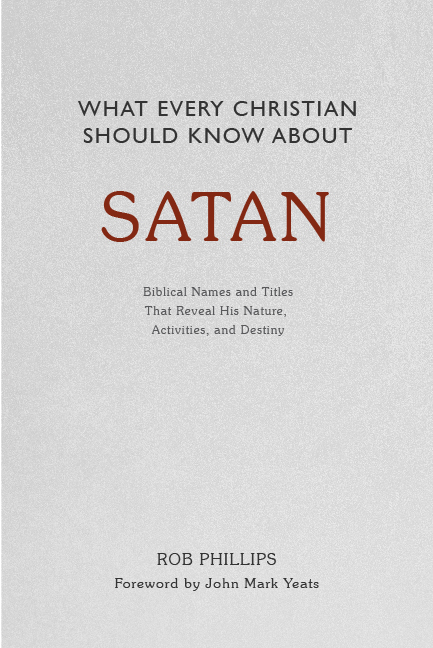
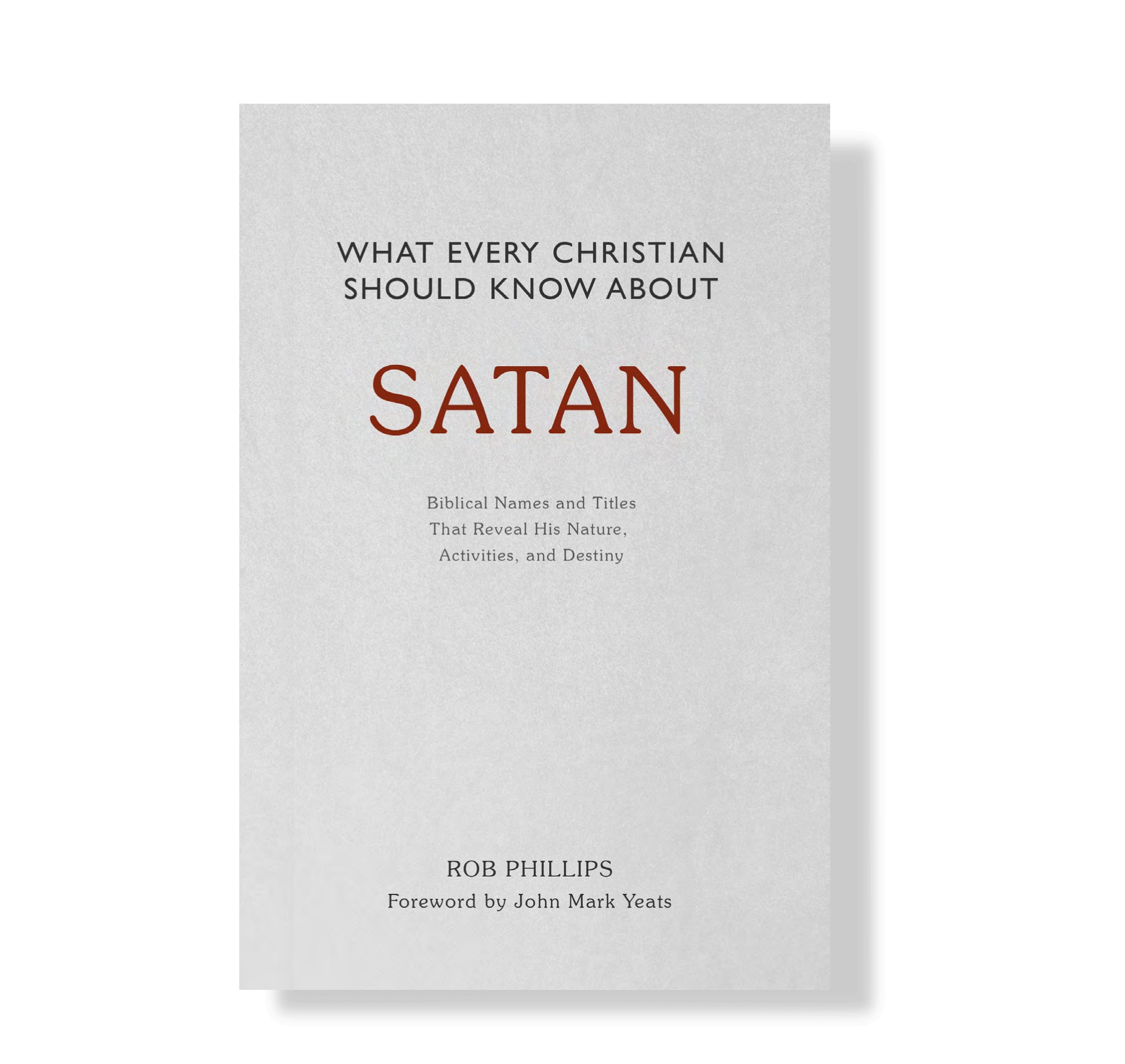
This excerpt is taken from What Every Christian Should Know About Satan from High Street Press. Order your paperback, Kindle, or Audible copy here.

Scripture offers no clear answers as to when and how Satan originally falls – or even why a sovereign God permits the evil one’s rebellion and all its horrific consequences. Genesis 3 does not introduce us to the origin of evil, but reveals the presence of unexplained evil in the serpent. Adam and Eve are created innocent, and shortly thereafter the already-fallen serpent shows up. John Piper’s candid perplexity is a welcome perspective.

In response to a listener’s question about where Satan even got the desire to sin, Piper replies, in part: “As far as I can see, no explanation is offered in the Bible for how Satan became evil…. How could a perfectly good being – with a perfectly good will and a perfectly good heart – ever experience any imperfect impulse that would cause the will to move in the direction of sin? The answer is that nobody knows ….”

Piper goes on:

Here is what I do know. God is sovereign. Nothing comes to pass apart from his plan, which includes things he more or less causes directly – things he more or less permits indirectly. There is no doubt in my mind that Satan’s fall and all the redemptive plan of God for the glory of grace afterward were according to God’s eternal plan….

God can see to it that something comes to pass which he hates. This is what he did, for example, when he planned the crucifixion of Jesus, according to Acts 4:27-28. The murder of Jesus was sinful, and it was planned down to the detail by God.… I think the Bible leads us to believe that he is sovereign over all sin and that he never sins. That is what I believe the Bible teaches. 

John Piper
Continue reading

Article XVII of The Baptist Faith & Message 2000: Religious Liberty

Following is another in a series of columns on the Baptist Faith & Message 2000.

Practically speaking, religious liberty means equality before the law for Christians and non-Christians alike. It means the freedom to worship God, or not to worship God.

Article XVII of The Baptist Faith & Message 2000 reads:

“God alone is Lord of the conscience, and He has left it free from the doctrines and commandments of men which are contrary to His Word or not contained in it. Church and state should be separate. The state owes to every church protection and full freedom in the pursuit of its spiritual ends. In providing for such freedom no ecclesiastical group or denomination should be favored by the state more than others. Civil government being ordained of God, it is the duty of Christians to render loyal obedience thereto in all things not contrary to the revealed will of God. The church should not resort to the civil power to carry on its work. The gospel of Christ contemplates spiritual means alone for the pursuit of its ends. The state has no right to impose penalties for religious opinions of any kind. The state has no right to impose taxes for the support of any form of religion. A free church in a free state is the Christian ideal, and this implies the right of free and unhindered access to God on the part of all men, and the right to form and propagate opinions in the sphere of religion without interference by the civil power.”


Religious liberty is the God-given right of all people to worship according to their consciences. As Herschel Hobbs notes, “Religious liberty is the mother of all true freedom. It is rooted in the very nature of both God and man created in God’s likeness. It implies the competency of the soul in religion, and denies to any person, civil government, or religious system the right to come between God and man.” 

Practically speaking, religious liberty means equality before the law for Christians and non-Christians alike. It means the freedom to worship God, or not to worship God. If our creator does not compel us to acknowledge him in this life, no human being should force another to adopt any belief system, no matter how true or widely held. 

At the same time, the Bible is clear that our beliefs have consequences – in this life and in the life to come. One day, all people will stand before God and give an account of our lives – not just what we believed, but how we acted on those beliefs (see Dan. 12:2; Rom. 14:10; 1 Cor. 4:5; 2 Cor. 5:10; 2 Thess. 1:6-7; Heb. 9:27; Rev. 20:11-15; 22:12). 

That means religious liberty is neither a license to live recklessly, with no regard for others, nor is it merely toleration of those who believe differently. Religious liberty does not stand on political platforms or hang from legal pillars. While civil authorities may proclaim religious tolerance, only God may grant religious freedom. 

George W. Truett, the longtime pastor of First Baptist Church in Dallas, and president of the Southern Baptist Convention from 1927-1929, preached a message from the steps of the U.S. Capitol in 1920. In part, he proclaimed, “Our contention is not for mere toleration, but for absolute liberty. There is a wide difference between toleration and liberty…. Toleration is a matter of expediency, while liberty is a matter of principle. Toleration is a gift from man, while liberty is a gift from God…. God wants free worshipers and no other kind.” 

Continue reading

Anointed Guardian Cherub

Following is an excerpt from What Every Christian Should Know About Satan. Order your copy now in paperback, Kindle, or Audible versions.

Marcus Licinius Crassus was one of the wealthiest and most powerful men in ancient Rome. Born in 115 BC, he amassed a fortune through various enterprises, which ranged from dealing in slaves to restoring fire-ravaged land and selling it at huge profits. His wealth enabled him to crush rivals and buy influence with Julius Caesar. In fact, he bankrolled the army sent out to quash the Spartacus-led slave rebellion.

In gratitude, Caesar named Crassus governor of Syria, a land rich in resources. It should have been one more step in Crassus’ meteoric rise, but he flamed out like a falling star. He led a disastrous campaign against the Parthian Empire. After the battle of Carrhae, he parlayed for peace. But the Parthians poured liquid gold down his throat. One of the richest men who ever lived choked to death from a scalding dose of what he valued most in life. An exalted crony of Caesar, Crassus died in humiliation – a spectacle for the ancient world to behold.

Curiously, we know more about Crassus’ rise and fall than we do about Satan’s. The Bible offers little insight into the evil one’s exaltation and rebellion, although it does tell us something of his fall and ignominious destiny. We know the devil is a created being. We know he is powerful, clever, deceitful, rapacious, and deadly. We know he throws his full weight into a guerilla campaign against God and God’s people. We know he has a vast army of evil spirits who engage holy angels and humans in spiritual warfare. We know he has a kingdom and great authority over those he has taken captive.

But we also know his limits. Satan is neither omniscient, omnipotent, nor omnipresent, for these attributes belong to God alone. Equally important, we know that no matter how highly exalted he once was, or makes himself appear today, he is on a steep downward trajectory. He has been cast out of God’s throne room and banished from the heavenly realm. Today, he furiously bides his time prowling the earth. One day, the fires of hell – stoked particularly for him and his minions – are to be his everlasting place of torment (Matt. 25:41). 

But when did Satan become the evil one? How did wickedness rise in his heart? How did he ever get the notion he could defeat his creator? And why does he insist on taking as many people to hell with him as possible?

Continue reading

Article XVI of The Baptist Faith & Message 2000: Peace and war

Following is another in a series of columns on The Baptist Faith & Message 2000.

The reconciliation of people to God must precede reconciliation of people to one another. We cannot truly live at peace with our neighbors until “the God of peace” resides in our hearts (Rom. 15:33).

Article XVI of The Baptist Faith & Message 2000 reads:

“It is the duty of Christians to seek peace with all men on principles of righteousness. In accordance with the spirit and teachings of Christ they should do all in their power to put an end to war. 

“The true remedy for the war spirit is the gospel of our Lord. The supreme need of the world is the acceptance of His teachings in all the affairs of men and nations, and the practical application of His law of love. Christian people throughout the world should pray for the reign of the Prince of Peace.”


God’s word commands Christians to love peace and to make peace. Jesus tells his listeners in the Sermon on the Mount, “Blessed are the peacemakers, for they will be called sons of God” (Matt. 5:9). And the apostle Paul instructs his Roman readers, “If possible, as far as it depends on you, live at peace with everyone” (Rom. 12:18).

Even so, followers of Jesus understand that conflicts of every kind have punctuated human history since the Fall. Adam and Eve’s firstborn son, Cain, strikes his brother in a murderous rage, and the human race quickly descends into a spiral of personal, societal, and global conflict that continues today.

According to the New York Times, over the last 3,400 years, humans have been entirely at peace for only 268 years, or just eight percent of recorded history. At least 108 million people were killed in the wars of the twentieth century. And estimates of the total loss of life in wars throughout history range from 150 million to one billion.

Add to this the war-induced spread of disease, displacement of people groups, reduced birthrates, and financial impact – World War II alone cost each American $20,388 – and it’s clear that sinful and fallen people are our own worst enemies.

The Prince of Peace himself said that “wars and rumors of wars” would characterize the present age (Matt. 24:6). Jesus offers no hope of lasting peace until he reigns supremely in our hearts and returns one day to establish his kingdom in fullness. Even then, his glorious appearing is one of warfare against the wicked, who violently oppose his righteous rule  (Rev. 19:11-21).

Continue reading

Satan: What’s in a name?

Learn more above the evil one from a biblical view, and order your copy of this new resource from High Street Press.

What’s in a name? Our parents may have named us after beloved ancestors, movie stars, heroic leaders, or even favorite songs. Our daughter Aubrey, for example, shares the name of the title character in a 1970s pop hit. Popular names in one generation may fade as trendy new names emerge, only to return later. Others seem timeless, like James and Mary, which have remained the most popular U.S. baby names for a century.

It’s hard to know what on earth celebrity parents are thinking when they christen their kids “Moon Unit” or “Pilot Inspektor.” But even lyricist Shel Silverstein revealed a motive behind the dad who named his son “Sue”: 

But ya ought to thank me, before I die
For the gravel in ya guts and the spit in ya eye 

Biblical names seem a bit more purposeful. God names the first human Adam, which generally denotes “human being” or “mankind” and links to the Hebrew adama to indicate the earth from which he is formed. Pharaoh’s daughter names her adopted baby Moses, based on a Hebrew term that means “to draw out [of the water].” 

The LORD commands Hosea to name his sons Jezreel and Lo-ammi, and his daughter Lo-ruhamah, all of which signify pending judgment on Israel. Elizabeth and Zechariah insist on naming their child John, resisting all pressure to name him after his father, because that’s what the angel Gabriel has instructed them to do.

And then, of course, there are nicknames and descriptive titles. The son of Elizabeth and Zechariah comes to be known as John the Baptizer. God changes the names of Abram and Sarai to Abraham and Sarah, who receive a portion of the divine name, Yahweh, as a sign of God’s covenant with them. 

Disciples James and John are the sons of thunder. The apostle Thomas is called Didymus, which means “the twin.” And Saul of Tarsus becomes Paul, who gives himself a scathing nickname, “the worst of them [sinners].”

Continue reading